Author: Sophie Davies

  • Van Break-Ins Are Getting Smarter: How Thieves Are Bypassing Modern Security

    Van Break-Ins Are Getting Smarter: How Thieves Are Bypassing Modern Security

    Van break-ins have always been a problem for tradespeople and fleet operators in the UK, but the methods being used in 2026 are significantly more sophisticated than they were even a few years ago. Opportunistic smash-and-grabs still happen, but the real growth area is technically informed theft – criminals who understand how modern vans work and exploit that knowledge ruthlessly.

    Why Van Break-Ins Are Evolving

    The automotive security industry has done a reasonable job of hardening factory locks and alarm systems over the past decade. So thieves have adapted. Rather than brute-forcing entry, many now use methods that leave little to no visible damage – meaning owners sometimes don’t even realise their van has been entered until tools or equipment go missing.

    Three core techniques have emerged as the dominant threats: relay amplification attacks on keyless entry systems, lock pick bypass using specialist tools purchased cheaply online, and signal jamming of remote locking to prevent the van locking in the first place. Each requires a different defensive response, which is part of what makes this such a difficult problem to solve with a single product.

    The Lock Pick Problem With Popular Van Models

    Certain van platforms have a well-documented weakness: their barrel locks can be bypassed using tools that mimic the lever mechanism inside. The Volkswagen Transporter, Ford Transit Custom, and Mercedes Sprinter have all appeared in security advisories related to this method. It’s particularly common in densely parked urban areas where a thief can work quickly without attracting attention.

    The issue isn’t necessarily poor build quality – it’s that the factory lock spec was designed to a commercial cost point, not a high-security standard. Adding aftermarket deadlocks with anti-pick, anti-drill, and anti-snap mechanisms is one of the most effective countermeasures available. Brands like Deadlok and Armaplate produce purpose-built solutions that are now widely fitted by security-conscious tradespeople.

    Relay Attacks and Keyless Entry Vulnerability

    Keyless entry systems use a passive RFID signal from the fob to authenticate with the van’s receiver. Relay attack kits, which can be bought online for under £100 in some cases, amplify that signal across much greater distances. One person stands near your front door while another stands near the van – the van thinks the key is present and unlocks. The whole process takes seconds.

    This is no longer a theoretical risk. Fleet managers and sole traders across the UK have reported van break-ins attributed to relay attacks with no signs of forced entry, leaving insurers to question claims because there’s no visible damage. The fix is straightforward: store key fobs in a Faraday pouch when not in use, and consider disabling keyless entry entirely in favour of a physical key if your van model supports it.

    Signal Jamming: The Break-In You Never See Coming

    Jamming devices block the radio frequency your remote fob uses to lock the van. You press the button, the van appears to respond, but the signal never reaches the receiver. You walk away thinking it’s locked – it isn’t. CCTV footage from car parks and roadsides has captured this technique being used repeatedly in the same locations.

    The best defence here is habit: always physically check the door handle after locking remotely. Some van owners have switched to manually locking with the key blade as a rule rather than using the remote at all. It takes three extra seconds and eliminates the risk entirely.

    What a Layered Security Approach Actually Looks Like

    Security professionals consistently recommend a layered approach – multiple independent systems that a thief would need to defeat simultaneously. For vans, that typically means:

    • Aftermarket deadlocks on all cargo doors
    • A Thatcham-approved alarm with tilt and interior sensors
    • A ghost or hidden immobiliser requiring a PIN sequence to start
    • A GPS tracker with live monitoring
    • Physical deterrents such as slam locks or van vault storage inside

    No single product eliminates risk, but making a van significantly harder to enter or move than the one parked nearby is often enough to redirect the threat. Thieves operating at scale are looking for the path of least resistance – time is their biggest enemy.

    For operators running Transit-based fleets in particular, investing in upgrades is increasingly non-negotiable. Proper Ford Transit Security upgrades that combine physical locking reinforcement with electronic countermeasures represent the current best practice for protecting these high-target vehicles.

    Insurance Implications of Van Break-Ins

    It’s worth noting that some insurers now require evidence of specific security measures before they’ll pay out on theft claims. Particularly for tools and equipment kept inside the van overnight, policies may include clauses demanding deadlocks, a tracking device, or overnight storage requirements. Reading the small print before a claim is far more useful than reading it afterwards.

    Van break-ins aren’t going away – if anything, as new vehicles become harder to start without the correct key, thieves are increasingly focusing on the cargo rather than the vehicle itself. Staying ahead of that curve requires treating van security as an ongoing investment rather than a one-time purchase.
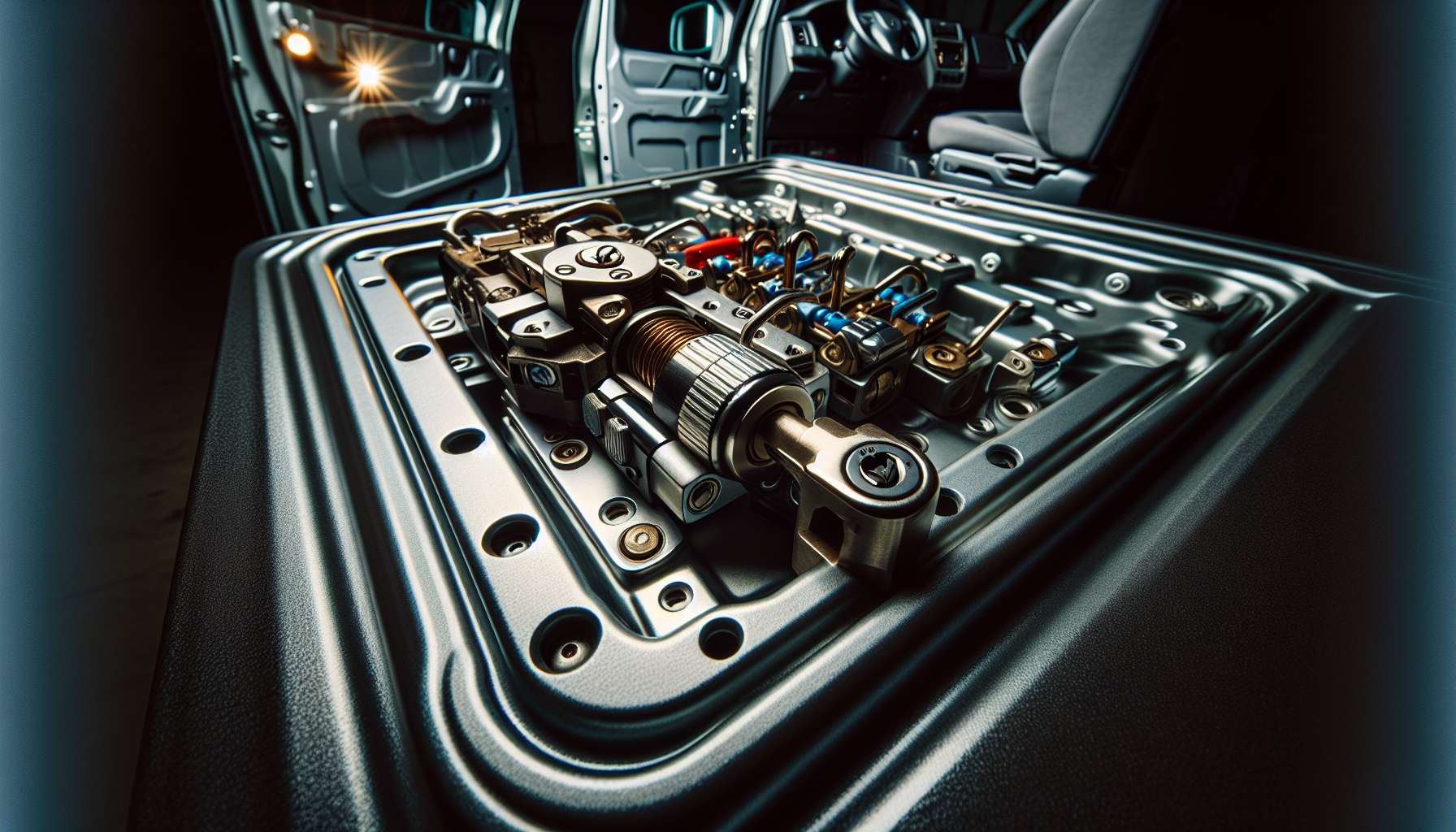

    Close-up of aftermarket deadlock fitted to a van door as protection against van break-ins
    Tradesperson checking van door security to prevent van break-ins in a UK car park

    Van break-ins FAQs

    How are thieves getting into vans without breaking windows?

    Modern thieves use several damage-free methods including relay attacks on keyless entry systems, specialist lock pick tools that bypass factory barrel locks, and signal jamming that prevents remote locking from working. These techniques leave no visible damage, making detection difficult and insurance claims complicated.

    What is the most effective way to prevent van break-ins?

    A layered approach works best – combining aftermarket deadlocks, a Thatcham-approved alarm, a hidden immobiliser, and a GPS tracker creates multiple independent barriers a thief must overcome. No single product is sufficient on its own, but layering systems dramatically increases deterrence.

    Are certain van models more vulnerable to break-ins than others?

    Yes. The Ford Transit Custom, Volkswagen Transporter, and Mercedes Sprinter are frequently cited in security advisories due to their widespread use and known lock vulnerabilities. Their popularity makes them high-value targets, so aftermarket security upgrades are especially important for owners of these models.

    Do Faraday pouches actually stop relay attacks on vans?

    Yes, Faraday pouches block the RFID signal from your key fob, preventing relay amplification devices from capturing and broadcasting it to the van. They are an inexpensive and highly effective solution, costing as little as £10-£15 from most automotive retailers.

    Will upgrading van security reduce my insurance premium?

    It can do, particularly if the upgrades include a Thatcham-approved alarm or tracker. Some insurers also require proof of specific security measures before covering tool theft claims, so checking your policy’s requirements and informing your insurer of upgrades is always worth doing.
  • The Rise of Electric 4×4 Conversions in the UK

    The Rise of Electric 4×4 Conversions in the UK

    Electric 4×4 conversions are moving from niche experiments to serious builds that can tackle daily driving and proper off road work. For UK enthusiasts who love classic trucks but want modern efficiency and torque, converting to battery power is starting to look less like a gimmick and more like a long term solution.

    Why electric 4×4 conversions are gaining traction

    Several factors are pushing interest in electric 4×4 conversions. Clean air zones and tightening emissions rules make older diesel and petrol 4x4s harder to use as daily drivers. At the same time, battery prices are slowly dropping, motors are getting more compact, and aftermarket support is improving.

    There is also a performance angle. Electric motors deliver instant torque from zero rpm, which is ideal for low speed control off road. Paired with reduction gearing or existing transfer cases, an electric converted 4×4 can feel more responsive than the stock engine, especially on steep climbs or when rock crawling.

    How an electric 4×4 conversion actually works

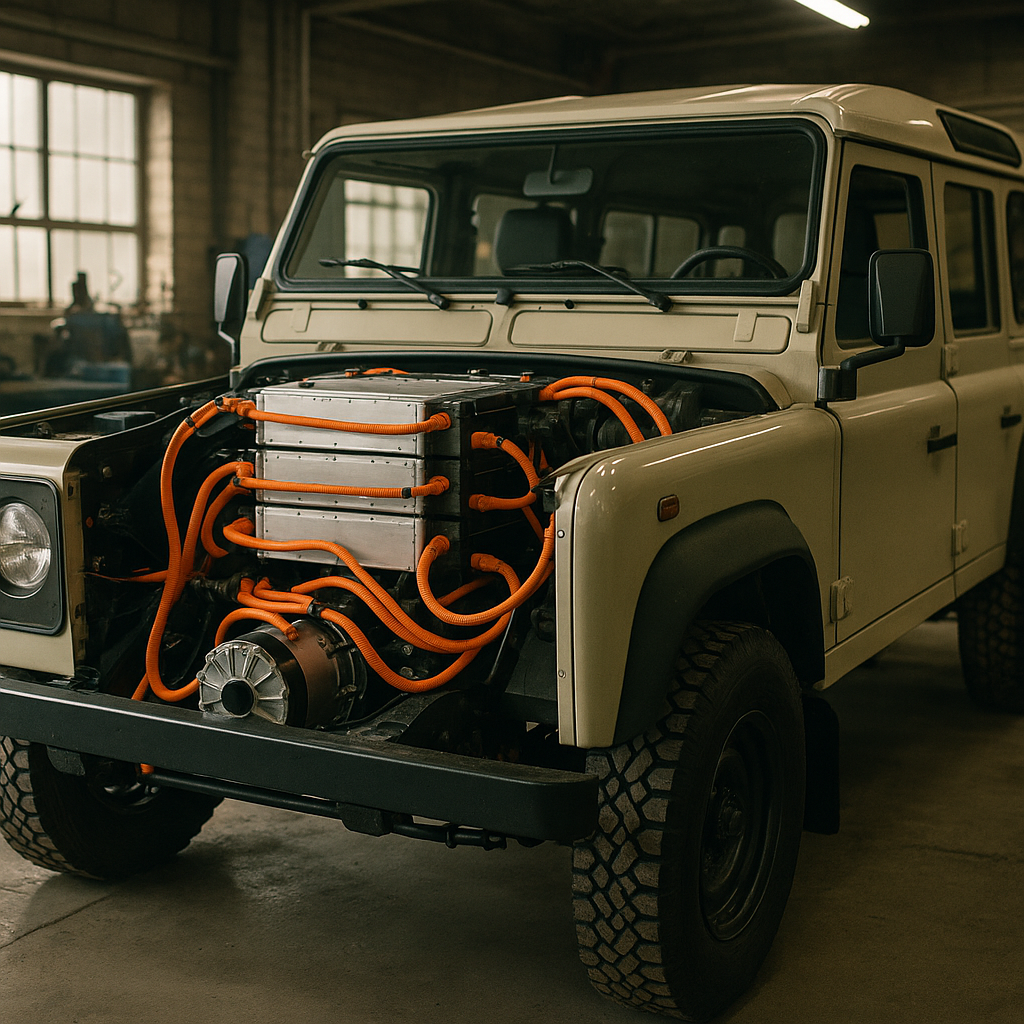
    Most electric 4×4 conversions follow a similar recipe. The original internal combustion engine, exhaust system and fuel tank are removed. In their place, a traction motor is installed, usually driving the existing gearbox or transfer case through an adapter plate and custom coupler.

    Battery packs are then packaged wherever there is safe, protected space. Common locations include the engine bay, under the rear seats and in a fabricated enclosure where the fuel tank once sat. High voltage cabling links the packs to an inverter, which controls the motor, and to a DC DC converter that feeds the 12 volt system.

    Retaining the factory transfer case is popular, because it preserves low range and allows the builder to keep familiar driveline behaviour. Some high end builds go a step further and use twin motors, one for each axle, which opens the door to advanced torque vectoring instead of traditional locking differentials.

    Key technical challenges with electric 4×4 conversions

    The hardest part of electric 4×4 conversions is not bolting the motor in place, it is engineering the system so that it is safe, reliable and balanced. Weight distribution is a big consideration. Batteries are heavy, and placing them too high or too far back can ruin handling and increase rollover risk on side slopes.

    Thermal management is another challenge. Off road work often means low vehicle speeds but high loads, which is tough on both motors and batteries. Effective liquid cooling for the inverter and packs is strongly recommended, especially for heavier vehicles like Land Cruisers or Defenders that see towing or long climbs.

    Then there is sealing and protection. High voltage components must be well shielded from water, mud and stone strikes. Proper IP rated enclosures, gaskets and breathers are essential if the vehicle is expected to wade or tackle winter green lanes.

    Range, charging and real world usability

    Range is the question everyone asks about electric 4×4 conversions. In practice, most builds land somewhere between 80 and 200 miles of mixed driving, depending on battery size, tyre choice and aerodynamics. For many owners using a 4×4 as a weekend toy or short range work truck, that is acceptable.

    Fast charging support is becoming more common. If the conversion uses an OEM sourced battery and charge module, CCS rapid charging is possible, making longer trips realistic. However, frequent rapid charging on lifted, knobbly tyred rigs that see a lot of load and heat does demand careful monitoring of battery health.

    For daily commuting, home AC charging overnight is usually enough. The bigger compromise comes on remote expeditions, where public chargers are scarce. For that reason, some enthusiasts still prefer a conventional diesel for serious overlanding, but that gap will narrow as infrastructure expands.

    Choosing a base vehicle for conversion

    Not every 4×4 is a good candidate. Ideal bases for these solutions have strong frames, simple electronics and plenty of space for batteries. Classic Japanese trucks, early Defenders and solid axle pickups are popular because they are easy to work on and have a huge supply of aftermarket parts.

    Electric 4x4 conversions tested on a muddy UK green lane with upgraded off road hardware
    Underbody view of a 4x4 on a lift highlighting chassis mounted batteries for electric 4x4 conversions

    Electric 4×4 conversions FAQs

    How much do electric 4×4 conversions typically cost in the UK?

    Costs for electric 4×4 conversions vary widely, but most professionally built projects land in the tens of thousands of pounds. The final figure depends on battery capacity, motor choice, fabrication complexity and whether you are reusing OEM components from a donor EV. Budget builds using smaller packs and modest motors can be cheaper, while high power, long range conversions with rapid charging support are at the top end of the scale.

    Can an electric converted 4×4 still be used for serious off roading?

    Yes, a well engineered electric converted 4×4 can be extremely capable off road. Instant torque is a major advantage for slow technical driving, and retaining the original transfer case preserves low range and familiar gearing. The key is careful packaging and protection of batteries and high voltage parts, plus attention to cooling and weight distribution so that the vehicle remains stable on climbs, descents and side slopes.

    Do electric 4×4 conversions affect towing capacity?

    Towing capacity after a conversion depends on overall system design and how the vehicle is re certified, if required. Electric motors can easily match or exceed the torque of the original engine, but the continuous power rating, cooling system, brake performance and chassis strength all need to be considered. Many conversions are perfectly capable of light to moderate towing, but anyone planning heavy trailer work should discuss the details with a specialist before committing.

    components for Toyota 4x4s

  • Why Classic Toyota Land Cruisers Are Surging In Value

    Why Classic Toyota Land Cruisers Are Surging In Value

    The market for the classic Toyota Land Cruiser has caught fire, and it is not just nostalgia talking. From early J40s to UK import 80 Series diesels, values are climbing as buyers wake up to how capable, reliable and usable these old-school 4x4s really are. For many enthusiasts, a sorted Land Cruiser is now more tempting than a new SUV on a PCP deal.

    What makes a classic Toyota Land Cruiser so desirable?

    Under the skin, the appeal of a classic Toyota Land Cruiser is very rational. These trucks were engineered for hostile environments first and family duty second. That means ladder frames with serious cross bracing, generous axle articulation and drivetrains built with big safety margins. The result is a vehicle that will tolerate abuse, poor maintenance and rough tracks better than most modern soft-roaders.

    Engines like the 1HZ, 1HD-T and 1HD-FT diesels are legendary. They use mechanical injection, stout bottom ends and conservative boost levels, so they can clock intergalactic mileages if serviced properly. Gearboxes tend to be heavy-duty 5-speeds or 4-speed autos with large oil capacities and strong cooling. Full-time or part-time four-wheel drive systems are backed up by low-range transfer cases and, on many models, factory diff locks.

    How the market for classic Toyota Land Cruiser models has changed

    A decade ago, you could still find scruffy but usable 80 Series Land Cruisers for banger money. Today, solid UK trucks with good history command serious prices, and imported Japanese domestic market examples with low rust and tidy interiors are even stronger. Collectors are particularly keen on unmodified, original-condition vehicles with factory lockers and desirable engines.

    J40 and J60 models have moved into outright classic territory, with values reflecting their status as icons. Clean, unmolested examples now sit alongside vintage Defenders and G-Wagens in specialist dealer showrooms. Even the once-overlooked 90 and 120 Series Prado-based models are hardening in value as buyers search for usable daily classics that can still do the school run.

    Common weak points and what to inspect

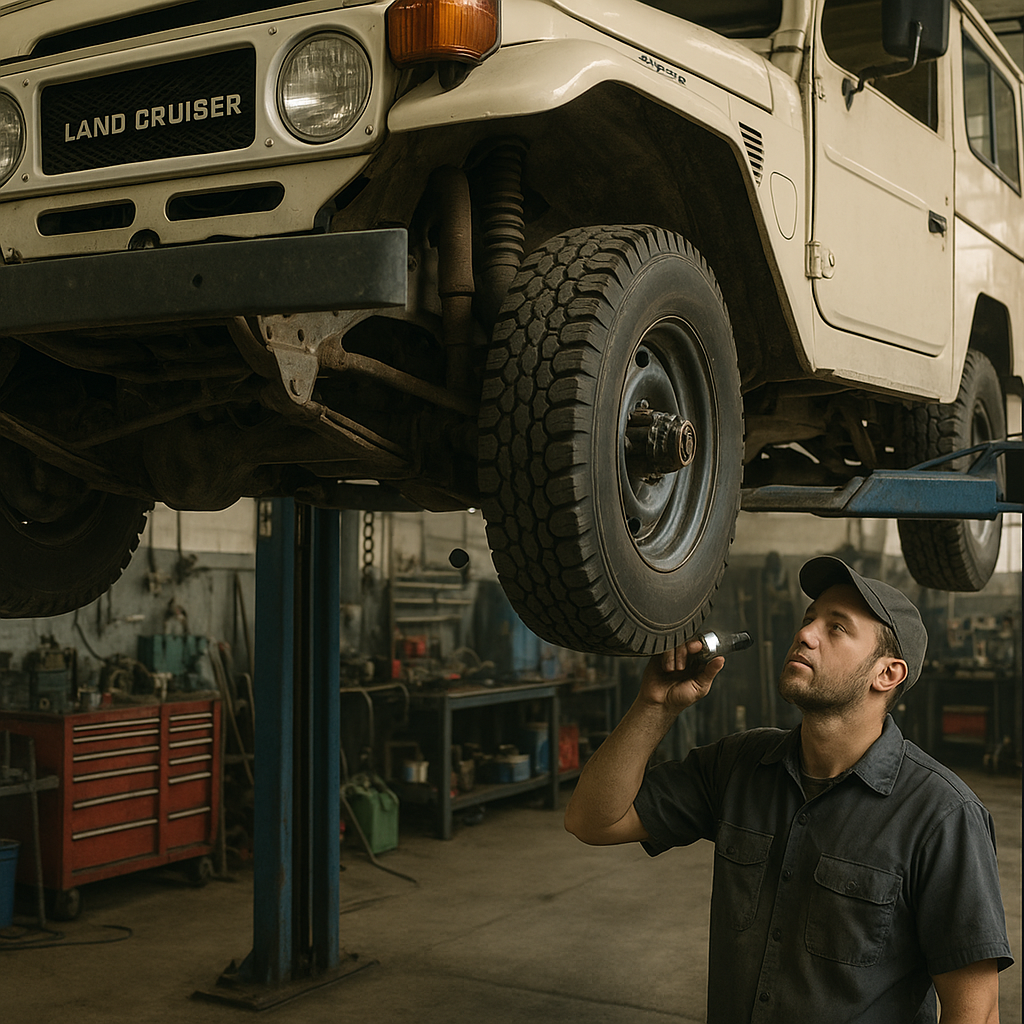
    Despite the tough reputation, a classic Toyota Land Cruiser is not indestructible. Rust is the number one killer in the UK. Check chassis rails near the rear axle, body mounts, inner sills, rear arches and the base of the windscreen. Imported trucks can hide corrosion behind underseal, so a proper inspection on a lift is essential.

    On high-mileage diesels, look for evidence of regular oil changes and cooling system maintenance. Overheating can lead to head cracks, especially on turbocharged engines. Listen for rumbling from front wheel bearings and clunks from worn suspension bushes. Electrically, window regulators, mirror motors and heater controls can fail with age, but these are usually fixable with patience and the right parts.

    Parts supply and keeping an old Land Cruiser on the road

    One reason enthusiasts are comfortable dailying a classic Toyota Land Cruiser is the strength of the parts ecosystem. Genuine Toyota components remain available for many models, and there is a healthy aftermarket for service items, suspension upgrades and protection gear. Specialist breakers and importers also help keep rare trim and body parts in circulation.

    For older or less common variants, sourcing model-specific items like interior plastics, body panels or certain driveline parts can take time. Many owners maintain a stash of hard-to-find components, and some will buy complete donor vehicles. Online communities and forums are invaluable for cross-referencing part numbers and finding reputable suppliers of items such as Toyota Amazon spares and similar components for related models.

    Is now the time to buy a classic Toyota Land Cruiser?

    Values are rising, but the market still rewards buyers who do their homework. The best strategy is to buy on condition, history and structural integrity rather than chasing a particular trim level at any cost. A clean, well-maintained truck with minor cosmetic issues is usually a better bet than a shiny respray hiding rust.

    Mechanic inspecting the chassis of a classic Toyota Land Cruiser in a workshop
    Lineup of different generations of classic Toyota Land Cruiser at a car meet

    Classic Toyota Land Cruiser FAQs

    Which classic Toyota Land Cruiser models are most sought after?

    The most sought after models tend to be the J40, J60 and 80 Series, especially versions with desirable diesel engines and factory differential locks. Original, unmodified examples with solid chassis and documented history command the strongest prices, but tidy 90 and 120 Series trucks are increasingly popular as usable daily classics.

    Are parts still available for a classic Toyota Land Cruiser in the UK?

    Yes, parts support is generally good. Many service and wear items are still available as genuine Toyota parts, and there is a strong aftermarket for suspension, braking and protection upgrades. Specialist suppliers, breakers and importers help with harder to find trim and body components, and enthusiast communities are useful for tracking down rare items.

    Is a classic Toyota Land Cruiser a good daily driver?

    A well maintained classic Toyota Land Cruiser can make a very capable daily driver, especially later 80, 90 and 120 Series models with more comfort and safety equipment. Fuel consumption is relatively high and road tax can be steep, but in return you get a robust, practical vehicle that handles bad weather, towing and long-distance trips with ease.

  • How Motorsport Safety Standards Are Changing Track Gear

    How Motorsport Safety Standards Are Changing Track Gear

    If you drive on circuit even a few times a year, you are affected by motorsport safety standards, whether you realise it or not. From the stitching on your gloves to the rating on your helmet, regulations dictate what is allowed on track, how long it remains valid and how well it should protect you when things go wrong.

    Why motorsport safety standards matter for club drivers

    It is easy to assume that regulations are only a concern for professional teams, but every level of the sport is touched by the same rulebook. Track day organisers, sprint series and club championships increasingly lean on FIA and MSUK guidance when deciding what equipment they will accept in scrutineering.

    That means your gear is no longer just a personal choice. The approval labels on your helmet, suit and harness can decide whether you drive or sit in the paddock. Understanding the direction of travel in motorsport safety standards helps you buy equipment that will stay compliant for longer, rather than being forced into a last minute upgrade when a rule changes.

    Key organisations setting the rules

    Several bodies shape the regulations that filter down to circuits and clubs:

    • FIA – The global governing body that sets the baseline for helmets, overalls, seats, harnesses and more.
    • National authorities – In the UK, Motorsport UK (MSUK) converts FIA frameworks into national regulations and adds local detail.
    • Circuit and series organisers – Track day companies and club series decide which standards they will enforce at sign on and scrutineering.

    The result is a layered system. A helmet that only just meets an older FIA standard might still be allowed at casual track days for a while, but barred from competitive events and likely to be phased out entirely in future updates.

    How regulations are reshaping modern track gear

    The last decade has seen a steady tightening of requirements and a shift in how safety is measured. Head and neck protection is a good example. The widespread adoption of HANS and other FHR devices has changed helmet shell shapes, visor openings and harness geometry. Newer harness standards are designed to work properly with these devices, not as an afterthought.

    Fire protection is also evolving. Suit standards are being refined to focus not just on raw burn time but on heat transfer and comfort. That is why many modern multi-layer suits feel lighter and more breathable than older designs while still carrying a higher approval. Manufacturers are using more advanced aramid blends and clever quilting patterns to keep mobility high without sacrificing protection.

    Expiry dates, homologation cycles and future proofing

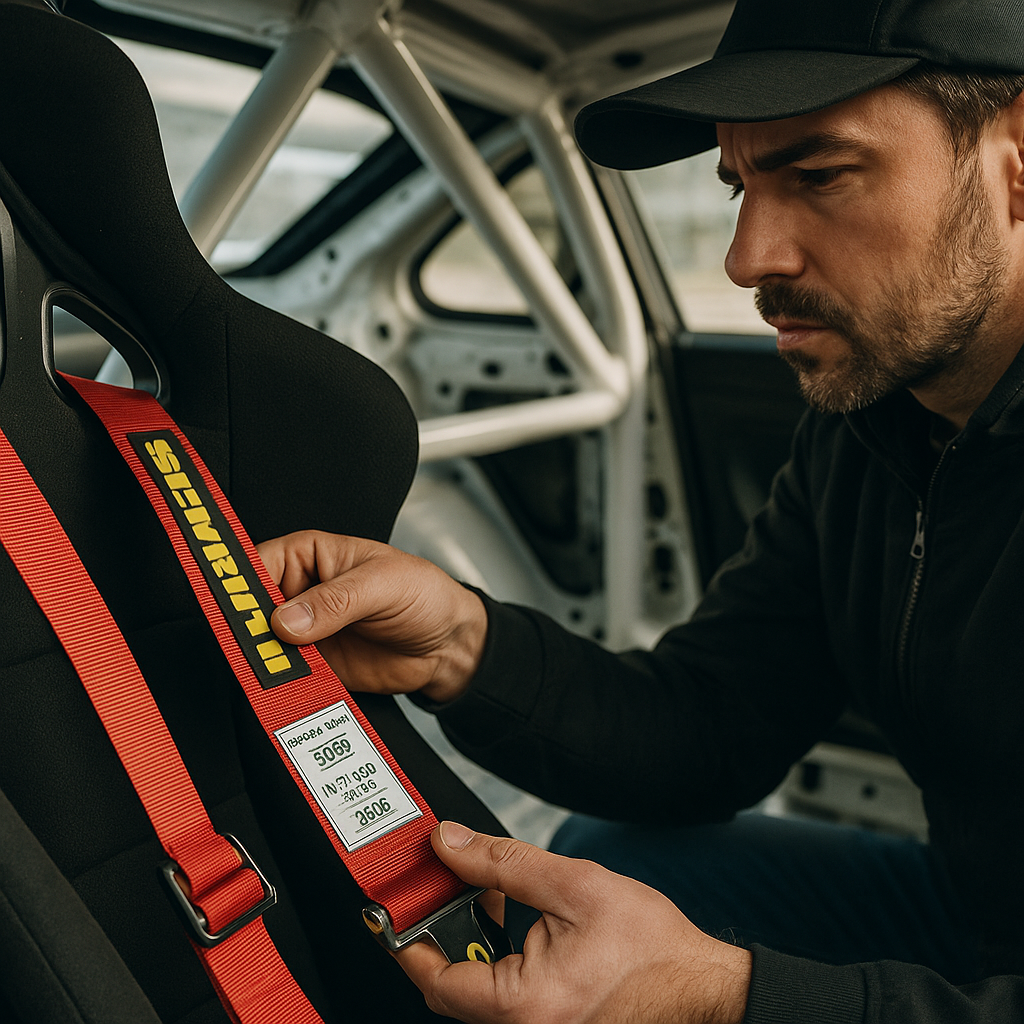
    Most regulated safety kit now has an effective lifespan. Helmets carry homologation codes with end dates, harnesses have webbing and label dates, and even seats can time out after a set number of years from manufacture. As motorsport safety standards tighten, older approvals are gradually withdrawn.

    For drivers, that means timing purchases carefully. Spending a little more on the latest homologation can be cheaper long term than buying a discounted outgoing model that will only be accepted for another season or two. This is particularly true for helmets and harnesses, which are usually the first items to be caught by regulation changes.

    Choosing compliant kit without losing performance

    There is a common fear that safer always means heavier, hotter or less comfortable. Recent development work suggests the opposite. The best modern kit uses improved materials and design to meet stricter tests while remaining easier to live with.

    Look for equipment that clearly lists its approval standard, manufacture date and any specific use case, such as compatibility with FHR devices. Buying from a specialist retailer that understands the details of racewear and current regulations can save you from accidentally picking up a helmet or suit that is already near the end of its homologation window.

    What to watch for in the next few seasons

    Looking ahead, expect incremental tightening rather than sudden, dramatic changes. Impact testing for helmets is likely to become more sophisticated, with greater focus on rotational forces. Seat and harness standards may continue to shift towards better compatibility with modern chassis and restraint systems.

    Selection of track gear inspected to meet motorsport safety standards on a workbench in a <a href=
    Scrutineer examining a race car interior to verify compliance with motorsport safety standards.

    Motorsport safety standards FAQs

    How often should I replace my track helmet?

    Most helmets have a homologation period defined by the relevant standard, plus a practical lifespan based on wear and tear. As a rule of thumb, many drivers replace helmets every five to ten years, or sooner if the shell has been impacted, stored poorly or exposed to chemicals. Always check the approval label, the manufacturer guidance and your series regulations, as some championships impose stricter limits than the base standard.

    Do I need FIA approved gear for casual track days?

    Requirements vary by organiser. Some UK track day providers only insist on a suitable motorsport helmet and non-flammable clothing, while others strongly recommend or require FIA approved equipment for higher speed events. Even when not mandatory, FIA approved items typically offer better tested protection and are more likely to remain acceptable if you later move into competitive motorsport.

    What are motorsport safety standards trying to improve?

    Motorsport safety standards aim to reduce the severity of injuries in predictable accident scenarios. That includes improving impact protection for the head and neck, limiting fire exposure, reducing the chance of harness failure and ensuring seats and mounting hardware stay attached during a crash. The standards are updated as new crash data, materials and testing methods become available, so that each generation of equipment performs better than the last.