
Electric 4×4 conversions are moving from niche experiments to serious builds that can tackle daily driving and proper off road work. For UK enthusiasts who love classic trucks but want modern efficiency and torque, converting to battery power is starting to look less like a gimmick and more like a long term solution.
Why electric 4×4 conversions are gaining traction
Several factors are pushing interest in electric 4×4 conversions. Clean air zones and tightening emissions rules make older diesel and petrol 4x4s harder to use as daily drivers. At the same time, battery prices are slowly dropping, motors are getting more compact, and aftermarket support is improving.
There is also a performance angle. Electric motors deliver instant torque from zero rpm, which is ideal for low speed control off road. Paired with reduction gearing or existing transfer cases, an electric converted 4×4 can feel more responsive than the stock engine, especially on steep climbs or when rock crawling.
How an electric 4×4 conversion actually works
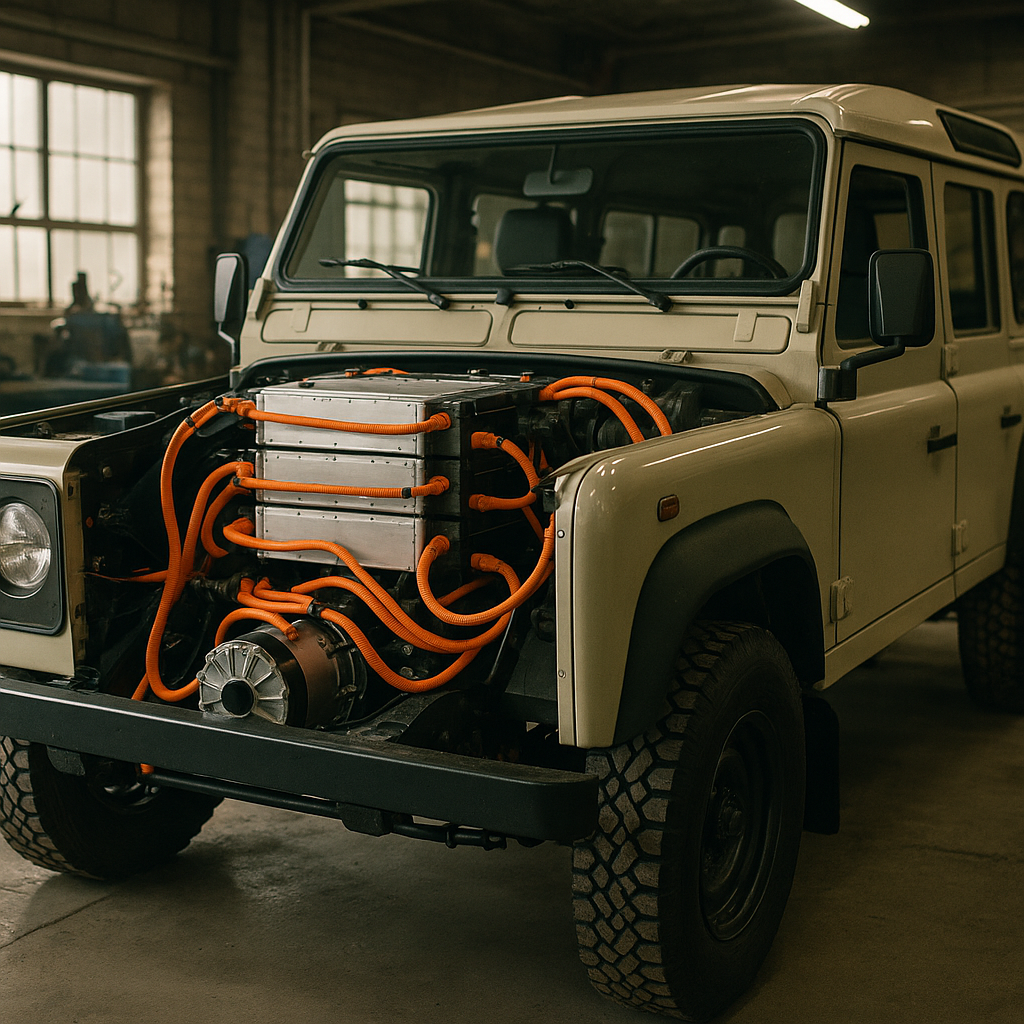
Most electric 4×4 conversions follow a similar recipe. The original internal combustion engine, exhaust system and fuel tank are removed. In their place, a traction motor is installed, usually driving the existing gearbox or transfer case through an adapter plate and custom coupler.
Battery packs are then packaged wherever there is safe, protected space. Common locations include the engine bay, under the rear seats and in a fabricated enclosure where the fuel tank once sat. High voltage cabling links the packs to an inverter, which controls the motor, and to a DC DC converter that feeds the 12 volt system.
Retaining the factory transfer case is popular, because it preserves low range and allows the builder to keep familiar driveline behaviour. Some high end builds go a step further and use twin motors, one for each axle, which opens the door to advanced torque vectoring instead of traditional locking differentials.
Key technical challenges with electric 4×4 conversions
The hardest part of electric 4×4 conversions is not bolting the motor in place, it is engineering the system so that it is safe, reliable and balanced. Weight distribution is a big consideration. Batteries are heavy, and placing them too high or too far back can ruin handling and increase rollover risk on side slopes.
Thermal management is another challenge. Off road work often means low vehicle speeds but high loads, which is tough on both motors and batteries. Effective liquid cooling for the inverter and packs is strongly recommended, especially for heavier vehicles like Land Cruisers or Defenders that see towing or long climbs.
Then there is sealing and protection. High voltage components must be well shielded from water, mud and stone strikes. Proper IP rated enclosures, gaskets and breathers are essential if the vehicle is expected to wade or tackle winter green lanes.
Range, charging and real world usability
Range is the question everyone asks about electric 4×4 conversions. In practice, most builds land somewhere between 80 and 200 miles of mixed driving, depending on battery size, tyre choice and aerodynamics. For many owners using a 4×4 as a weekend toy or short range work truck, that is acceptable.
Fast charging support is becoming more common. If the conversion uses an OEM sourced battery and charge module, CCS rapid charging is possible, making longer trips realistic. However, frequent rapid charging on lifted, knobbly tyred rigs that see a lot of load and heat does demand careful monitoring of battery health.
For daily commuting, home AC charging overnight is usually enough. The bigger compromise comes on remote expeditions, where public chargers are scarce. For that reason, some enthusiasts still prefer a conventional diesel for serious overlanding, but that gap will narrow as infrastructure expands.
Choosing a base vehicle for conversion
Not every 4×4 is a good candidate. Ideal bases for these solutions have strong frames, simple electronics and plenty of space for batteries. Classic Japanese trucks, early Defenders and solid axle pickups are popular because they are easy to work on and have a huge supply of aftermarket parts.


Electric 4×4 conversions FAQs
How much do electric 4×4 conversions typically cost in the UK?
Costs for electric 4×4 conversions vary widely, but most professionally built projects land in the tens of thousands of pounds. The final figure depends on battery capacity, motor choice, fabrication complexity and whether you are reusing OEM components from a donor EV. Budget builds using smaller packs and modest motors can be cheaper, while high power, long range conversions with rapid charging support are at the top end of the scale.
Can an electric converted 4×4 still be used for serious off roading?
Yes, a well engineered electric converted 4×4 can be extremely capable off road. Instant torque is a major advantage for slow technical driving, and retaining the original transfer case preserves low range and familiar gearing. The key is careful packaging and protection of batteries and high voltage parts, plus attention to cooling and weight distribution so that the vehicle remains stable on climbs, descents and side slopes.
Do electric 4×4 conversions affect towing capacity?
Towing capacity after a conversion depends on overall system design and how the vehicle is re certified, if required. Electric motors can easily match or exceed the torque of the original engine, but the continuous power rating, cooling system, brake performance and chassis strength all need to be considered. Many conversions are perfectly capable of light to moderate towing, but anyone planning heavy trailer work should discuss the details with a specialist before committing.