
The Ford Puma has been a consistent bestseller on British roads for years, regularly scrapping it out for a top-five spot in the monthly sales charts. So when Ford announced a fully electric version, the Gen-E, there was genuine interest. Not just from EV converts, but from the enormous pool of Puma loyalists who drive one for the commute, the school run, and the occasional weekend dash to the Lakes. This Ford Puma Gen-E review covers everything that matters for a UK buyer: real-world range, how it charges, whether the boot is still as clever, how it drives, and whether the price tag makes any sense.
The short version? It is more interesting than I expected. The longer version is below.
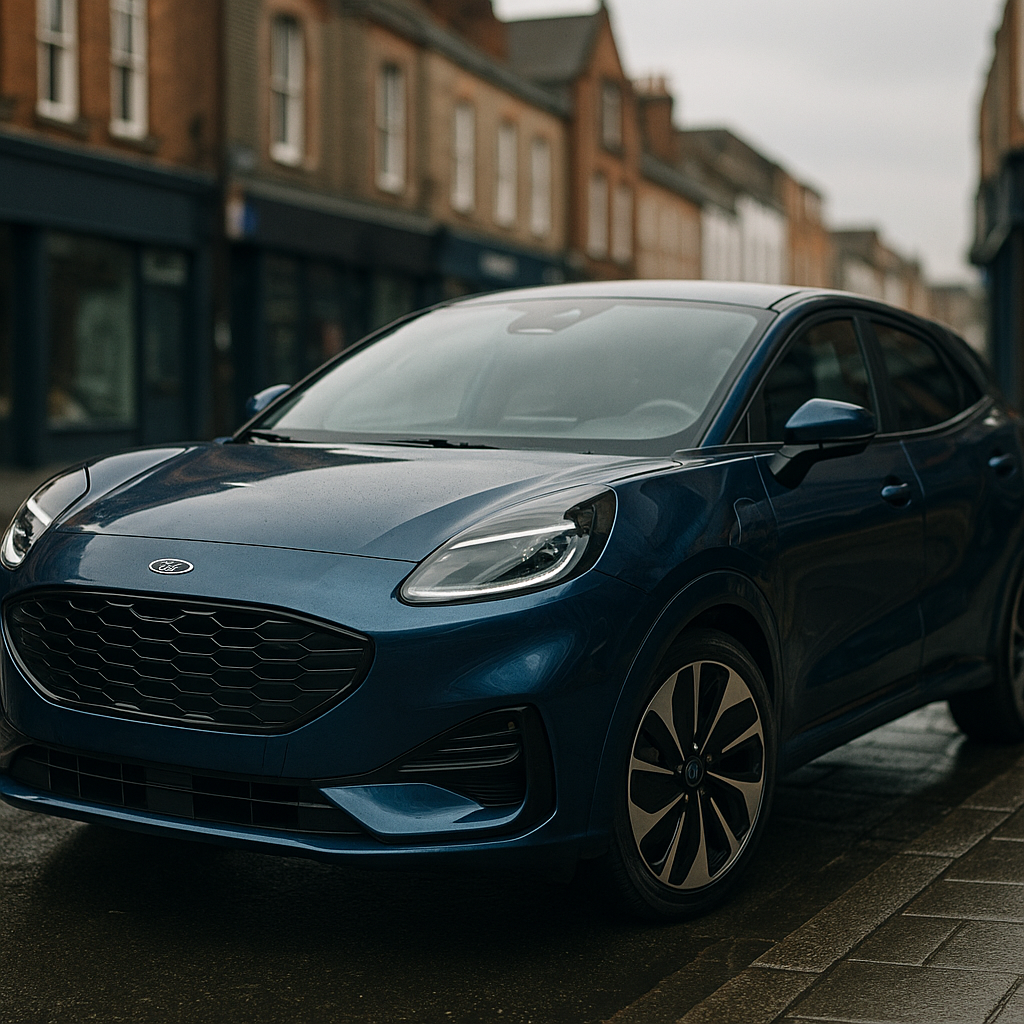
What Is the Ford Puma Gen-E?
The Puma Gen-E sits on a modified version of the MEB-adjacent platform that underpins several current small EVs, though Ford has done its own chassis work here rather than simply borrowing Volkswagen Group architecture wholesale. There is one powertrain: a 170 PS front-mounted electric motor paired with a 43 kWh usable battery. Ford claims a WLTP range of up to 233 miles. In practice, and we will get to this, real-world figures are noticeably lower, which is true of virtually every EV on the market.
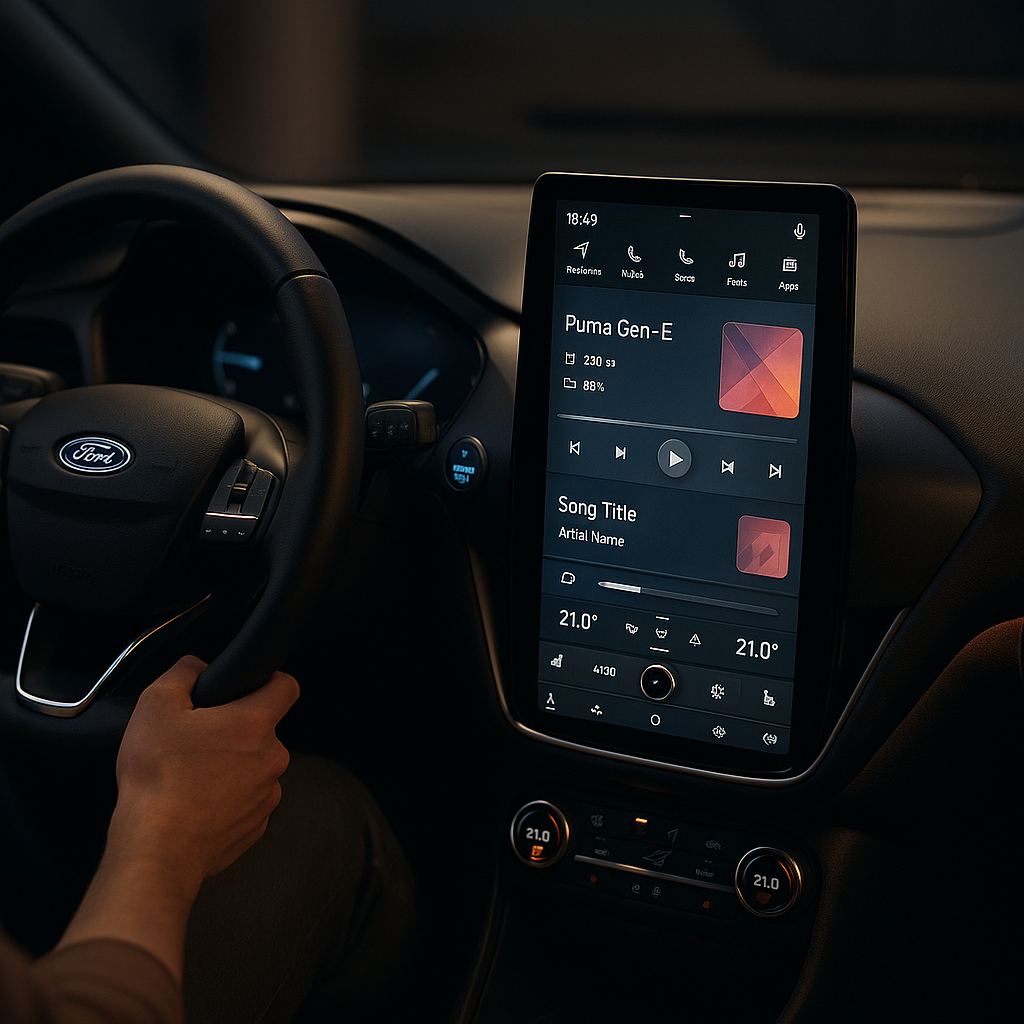
Trim levels run from a base Puma Gen-E Standard Range through to the fully loaded Premium trim with heat pump, 12-inch SYNC 5 infotainment, and a suite of driver assistance systems. Pricing starts at around £32,995, which puts it squarely against the Vauxhall Mokka Electric, the Renault Captur E-Tech plug-in, and the Volkswagen ID.3.
Real-World Range: What to Actually Expect
Ford’s WLTP figure of 233 miles is the optimistic ceiling. On a mixed run of A-roads and motorway in mild spring conditions, I averaged closer to 185 miles per charge. Drop that to a cold January morning on the M1 with the heater working hard, and 160 miles is a more honest expectation. That is not a catastrophe for a car of this size, but it is worth being clear-eyed about it.
For the average UK commuter, with the average round-trip sitting well under 30 miles according to ONS data, that real-world range is entirely sufficient. You plug in at home, wake up to a full battery, and the range question essentially disappears. The trouble arises on longer journeys, where the 100 kW DC fast-charging capability starts to feel a little modest. At a rapid charger, Ford quotes 0 to 80 per cent in around 23 minutes. That is acceptable, not exceptional. The Vauxhall Mokka Electric tops out at a similar rate, but the ID.3 can charge at up to 170 kW, which is in a different league altogether.
Charging Setup for UK Buyers
Home charging via a 7.4 kW wallbox, which is the setup most UK buyers will have installed, takes around seven hours for a full charge from empty. Overnight, then. AC charging at public points maxes out at 11 kW, so a top-up during a supermarket visit or at a car park with chargers will add meaningful range in an hour. Ford has integrated plug-and-charge functionality at compatible networks, so you can skip the app faff at an increasing number of public locations. That alone makes a real difference to the day-to-day experience.
Boot Space and Practicality
The original Puma became something of a cult choice precisely because of its under-boot ‘MegaBox’, a deep, washable storage compartment beneath the boot floor that turned a 456-litre boot into something genuinely useful. The Gen-E retains the MegaBox, which is a significant decision. The battery pack is packaged tightly enough that Ford has preserved this feature rather than sacrificing it, as many rivals sacrifice their frunk or underfloor storage to accommodate EV hardware.
Total boot volume is 523 litres with the rear seats up, actually slightly more than the petrol model, thanks to the way the battery sits beneath the floor rather than eating into cargo area. Rear legroom is fine for adults on shorter journeys; nobody will mistake this for an MPV. But for a small crossover, the Puma Gen-E is genuinely practical, and that is not something you can say about every EV in this class.
How Does the Ford Puma Gen-E Drive?
This is where things get genuinely impressive. Ford has long understood that its customers want a car that handles, not just one that ticks sustainability boxes. The Gen-E benefits from the inherent low centre of gravity that comes with a floor-mounted battery, and the chassis tuning feels noticeably sharper than you might expect from what is, on paper, a practical small crossover.
Body roll is well controlled, the steering has enough weight to feel involving without being heavy, and the accelerator response in Sport mode is punchy without being aggressive. Ford quotes 0-62 mph in 6.5 seconds, which feels about right. It is quick enough to make urban driving genuinely enjoyable. On roundabouts and tight B-roads, it feels agile in a way that the petrol Puma does, which is saying something. Refinement is strong, too. Wind noise is well suppressed at motorway speeds, and the regenerative braking is adjustable, with a one-pedal mode that becomes second nature within a day of driving.
Ride quality is on the firmer side, particularly on the larger 19-inch alloy options. Buyers who prioritise comfort might want to spec the 18-inch wheels, which smooth things out noticeably on typical British road surfaces.
Is the Price Premium Worth It Over the Petrol Puma?
The petrol Puma starts at around £24,000 in base EcoBoost trim. That is a gap of roughly £9,000 to entry-level Gen-E. Over a typical three-year ownership cycle, electricity costs versus petrol will claw some of that back, particularly if you charge predominantly at home on an off-peak tariff. Running costs for home-charged EVs in the UK remain substantially lower per mile than equivalent petrol cars, and the Gen-E qualifies for zero per cent Benefit-in-Kind taxation if you take one through a company car scheme, which is a compelling reason for business drivers to look seriously at it.
For private buyers paying out of pocket, the maths is tighter. You would need to keep the car long enough for fuel savings to offset the purchase premium. That said, if you are already considering an EV and want something British in flavour (Ford does still class Puma as part of its European identity), practical, and genuinely fun to drive, the Gen-E makes a strong case.
It is worth noting that, for those who run older 4x4s alongside newer EVs, aftermarket support matters enormously. Enthusiasts who also own something like a classic Land Cruiser alongside a daily driver EV often source Toyota Land Cruiser parts from specialist UK suppliers to keep older vehicles on the road, reflecting just how differently people approach their various vehicles’ running costs and longevity.
How It Compares to Key Rivals
Against the Vauxhall Mokka Electric, the Gen-E wins on driving dynamics and boot space almost every time. The Mokka is competent but uninspiring. Against the Renault Captur E-Tech plug-in hybrid, the Gen-E offers a simpler, cleaner ownership experience if you have home charging. The PHEV version of the Captur suits drivers who cannot charge at home but do significant motorway mileage. Against the VW ID.3, the Gen-E is more practical inside (thanks to the MegaBox) but lags on charging speed and max range. The ID.3 is the rational choice for those who do longer runs regularly; the Gen-E is better suited to urban and mixed use.
According to the Society of Motor Manufacturers and Traders (SMMT), small electric SUVs and crossovers are now the fastest-growing segment in UK EV registrations, and the Puma Gen-E is well positioned to capitalise on that.
Verdict: Ford Puma Gen-E Review Summary
The Ford Puma Gen-E is not a perfect EV. The charging speed is a step behind the class leaders, and real-world range in cold weather requires sensible expectations. But it is a thoroughly well-rounded car that manages to preserve what made the petrol Puma so popular, the handling, the practicality, the character, while adding the genuine advantages of electric running for everyday use. For the right UK buyer, someone who commutes daily, charges at home, and wants an EV that actually feels like a driver’s car, this is one of the more compelling small electric crossovers on sale right now.
Frequently Asked Questions
What is the real-world range of the Ford Puma Gen-E in the UK?
In mixed real-world driving conditions, the Ford Puma Gen-E typically delivers between 160 and 190 miles per charge, depending on speed, temperature, and how heavily the climate control is used. Ford’s official WLTP figure of 233 miles is achievable in optimal conditions but is not representative of everyday British driving.
How long does the Ford Puma Gen-E take to charge?
Using a 7.4 kW home wallbox, a full charge from empty takes around seven hours, making overnight charging the obvious routine. At a 100 kW DC rapid charger, the Gen-E can go from 0 to 80 per cent in approximately 23 minutes, though this charging speed is slower than some rivals such as the Volkswagen ID.3.
Does the Ford Puma Gen-E keep the MegaBox?
Yes, the Gen-E retains the original Puma’s signature MegaBox underfloor storage compartment beneath the boot. Total boot capacity is 523 litres with the rear seats up, which is actually slightly more than the petrol Puma, making it one of the more practical small electric crossovers in its class.
Is the Ford Puma Gen-E worth buying over the petrol Puma?
For drivers who can charge at home, the Gen-E makes strong financial sense over time, particularly for business users where the zero per cent Benefit-in-Kind tax rate significantly reduces the cost of company car taxation. Private buyers face a higher upfront premium of around £9,000 over the equivalent petrol Puma, which takes longer to recover through fuel savings alone.
How does the Ford Puma Gen-E compare to the Volkswagen ID.3?
The Puma Gen-E offers more practical boot space and a more characterful driving experience for urban and mixed use, while the VW ID.3 has a faster charging speed of up to 170 kW and a longer real-world range, making it the better choice for frequent long-distance motorway driving. Both are strong small EVs, but they suit slightly different buyer profiles.