Category: Racing

  • Why Classic Toyota Land Cruisers Are Surging In Value

    Why Classic Toyota Land Cruisers Are Surging In Value

    The market for the classic Toyota Land Cruiser has caught fire, and it is not just nostalgia talking. From early J40s to UK import 80 Series diesels, values are climbing as buyers wake up to how capable, reliable and usable these old-school 4x4s really are. For many enthusiasts, a sorted Land Cruiser is now more tempting than a new SUV on a PCP deal.

    What makes a classic Toyota Land Cruiser so desirable?

    Under the skin, the appeal of a classic Toyota Land Cruiser is very rational. These trucks were engineered for hostile environments first and family duty second. That means ladder frames with serious cross bracing, generous axle articulation and drivetrains built with big safety margins. The result is a vehicle that will tolerate abuse, poor maintenance and rough tracks better than most modern soft-roaders.

    Engines like the 1HZ, 1HD-T and 1HD-FT diesels are legendary. They use mechanical injection, stout bottom ends and conservative boost levels, so they can clock intergalactic mileages if serviced properly. Gearboxes tend to be heavy-duty 5-speeds or 4-speed autos with large oil capacities and strong cooling. Full-time or part-time four-wheel drive systems are backed up by low-range transfer cases and, on many models, factory diff locks.

    How the market for classic Toyota Land Cruiser models has changed

    A decade ago, you could still find scruffy but usable 80 Series Land Cruisers for banger money. Today, solid UK trucks with good history command serious prices, and imported Japanese domestic market examples with low rust and tidy interiors are even stronger. Collectors are particularly keen on unmodified, original-condition vehicles with factory lockers and desirable engines.

    J40 and J60 models have moved into outright classic territory, with values reflecting their status as icons. Clean, unmolested examples now sit alongside vintage Defenders and G-Wagens in specialist dealer showrooms. Even the once-overlooked 90 and 120 Series Prado-based models are hardening in value as buyers search for usable daily classics that can still do the school run.

    Common weak points and what to inspect

    Despite the tough reputation, a classic Toyota Land Cruiser is not indestructible. Rust is the number one killer in the UK. Check chassis rails near the rear axle, body mounts, inner sills, rear arches and the base of the windscreen. Imported trucks can hide corrosion behind underseal, so a proper inspection on a lift is essential.

    On high-mileage diesels, look for evidence of regular oil changes and cooling system maintenance. Overheating can lead to head cracks, especially on turbocharged engines. Listen for rumbling from front wheel bearings and clunks from worn suspension bushes. Electrically, window regulators, mirror motors and heater controls can fail with age, but these are usually fixable with patience and the right parts.

    Parts supply and keeping an old Land Cruiser on the road

    One reason enthusiasts are comfortable dailying a classic Toyota Land Cruiser is the strength of the parts ecosystem. Genuine Toyota components remain available for many models, and there is a healthy aftermarket for service items, suspension upgrades and protection gear. Specialist breakers and importers also help keep rare trim and body parts in circulation.

    For older or less common variants, sourcing model-specific items like interior plastics, body panels or certain driveline parts can take time. Many owners maintain a stash of hard-to-find components, and some will buy complete donor vehicles. Online communities and forums are invaluable for cross-referencing part numbers and finding reputable suppliers of items such as Toyota Amazon spares and similar components for related models.

    Is now the time to buy a classic Toyota Land Cruiser?

    Values are rising, but the market still rewards buyers who do their homework. The best strategy is to buy on condition, history and structural integrity rather than chasing a particular trim level at any cost. A clean, well-maintained truck with minor cosmetic issues is usually a better bet than a shiny respray hiding rust.
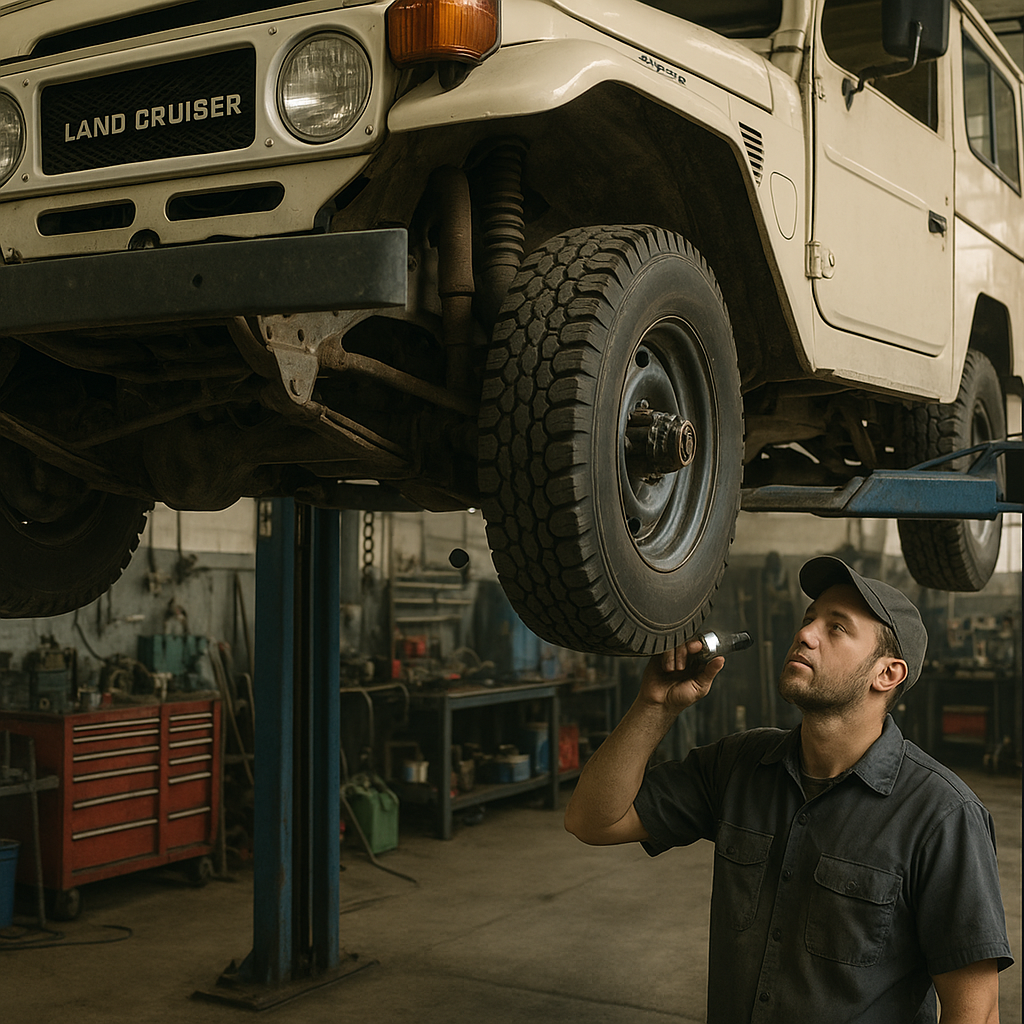

    Mechanic inspecting the chassis of a classic Toyota Land Cruiser in a workshop
    Lineup of different generations of classic Toyota Land Cruiser at a car meet

    Classic Toyota Land Cruiser FAQs

    Which classic Toyota Land Cruiser models are most sought after?

    The most sought after models tend to be the J40, J60 and 80 Series, especially versions with desirable diesel engines and factory differential locks. Original, unmodified examples with solid chassis and documented history command the strongest prices, but tidy 90 and 120 Series trucks are increasingly popular as usable daily classics.

    Are parts still available for a classic Toyota Land Cruiser in the UK?

    Yes, parts support is generally good. Many service and wear items are still available as genuine Toyota parts, and there is a strong aftermarket for suspension, braking and protection upgrades. Specialist suppliers, breakers and importers help with harder to find trim and body components, and enthusiast communities are useful for tracking down rare items.

    Is a classic Toyota Land Cruiser a good daily driver?

    A well maintained classic Toyota Land Cruiser can make a very capable daily driver, especially later 80, 90 and 120 Series models with more comfort and safety equipment. Fuel consumption is relatively high and road tax can be steep, but in return you get a robust, practical vehicle that handles bad weather, towing and long-distance trips with ease.


  • How Motorsport Safety Standards Are Changing Track Gear

    How Motorsport Safety Standards Are Changing Track Gear

    If you drive on circuit even a few times a year, you are affected by motorsport safety standards, whether you realise it or not. From the stitching on your gloves to the rating on your helmet, regulations dictate what is allowed on track, how long it remains valid and how well it should protect you when things go wrong.

    Why motorsport safety standards matter for club drivers

    It is easy to assume that regulations are only a concern for professional teams, but every level of the sport is touched by the same rulebook. Track day organisers, sprint series and club championships increasingly lean on FIA and MSUK guidance when deciding what equipment they will accept in scrutineering.

    That means your gear is no longer just a personal choice. The approval labels on your helmet, suit and harness can decide whether you drive or sit in the paddock. Understanding the direction of travel in motorsport safety standards helps you buy equipment that will stay compliant for longer, rather than being forced into a last minute upgrade when a rule changes.

    Key organisations setting the rules

    Several bodies shape the regulations that filter down to circuits and clubs:

    • FIA – The global governing body that sets the baseline for helmets, overalls, seats, harnesses and more.
    • National authorities – In the UK, Motorsport UK (MSUK) converts FIA frameworks into national regulations and adds local detail.
    • Circuit and series organisers – Track day companies and club series decide which standards they will enforce at sign on and scrutineering.

    The result is a layered system. A helmet that only just meets an older FIA standard might still be allowed at casual track days for a while, but barred from competitive events and likely to be phased out entirely in future updates.

    How regulations are reshaping modern track gear

    The last decade has seen a steady tightening of requirements and a shift in how safety is measured. Head and neck protection is a good example. The widespread adoption of HANS and other FHR devices has changed helmet shell shapes, visor openings and harness geometry. Newer harness standards are designed to work properly with these devices, not as an afterthought.

    Fire protection is also evolving. Suit standards are being refined to focus not just on raw burn time but on heat transfer and comfort. That is why many modern multi-layer suits feel lighter and more breathable than older designs while still carrying a higher approval. Manufacturers are using more advanced aramid blends and clever quilting patterns to keep mobility high without sacrificing protection.

    Expiry dates, homologation cycles and future proofing

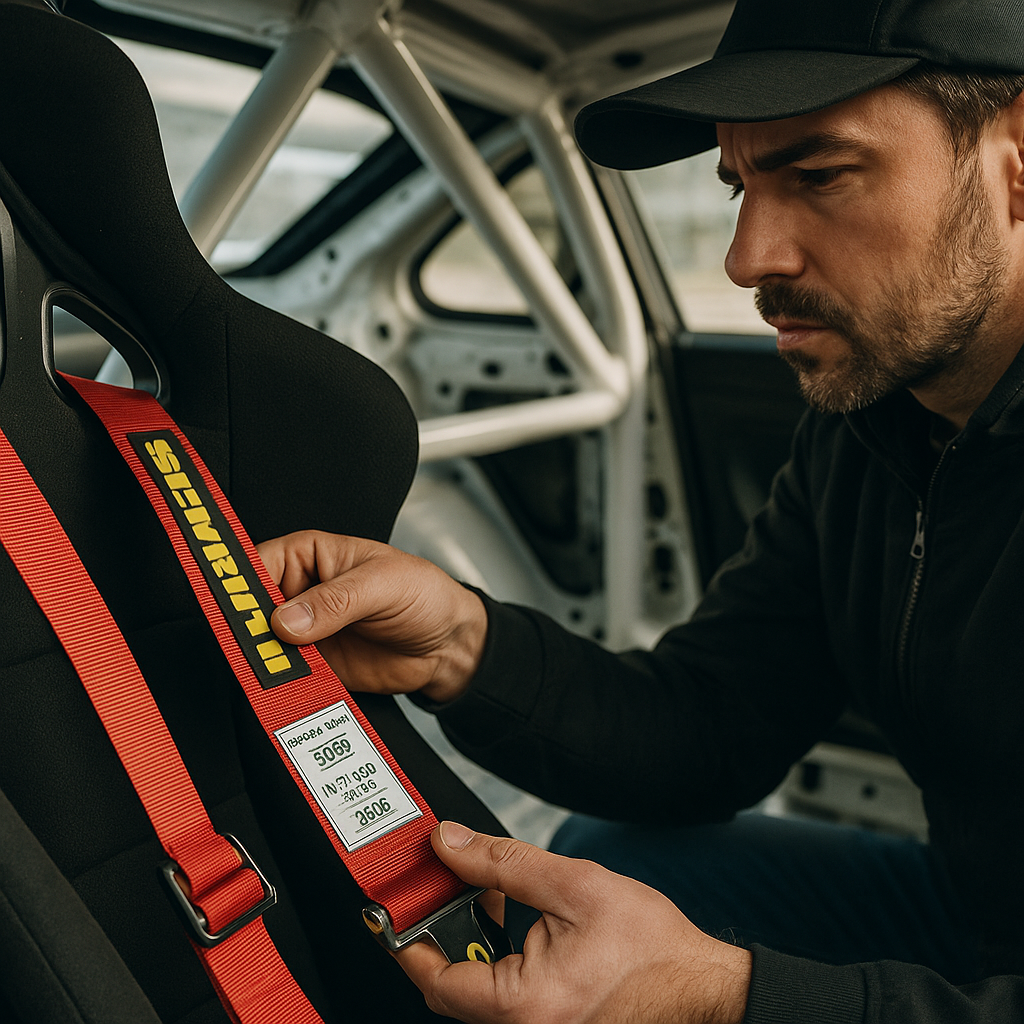
    Most regulated safety kit now has an effective lifespan. Helmets carry homologation codes with end dates, harnesses have webbing and label dates, and even seats can time out after a set number of years from manufacture. As motorsport safety standards tighten, older approvals are gradually withdrawn.

    For drivers, that means timing purchases carefully. Spending a little more on the latest homologation can be cheaper long term than buying a discounted outgoing model that will only be accepted for another season or two. This is particularly true for helmets and harnesses, which are usually the first items to be caught by regulation changes.

    Choosing compliant kit without losing performance

    There is a common fear that safer always means heavier, hotter or less comfortable. Recent development work suggests the opposite. The best modern kit uses improved materials and design to meet stricter tests while remaining easier to live with.

    Look for equipment that clearly lists its approval standard, manufacture date and any specific use case, such as compatibility with FHR devices. Buying from a specialist retailer that understands the details of racewear and current regulations can save you from accidentally picking up a helmet or suit that is already near the end of its homologation window.

    What to watch for in the next few seasons

    Looking ahead, expect incremental tightening rather than sudden, dramatic changes. Impact testing for helmets is likely to become more sophisticated, with greater focus on rotational forces. Seat and harness standards may continue to shift towards better compatibility with modern chassis and restraint systems.

    Selection of track gear inspected to meet motorsport safety standards on a workbench in a <a href=
    Scrutineer examining a race car interior to verify compliance with motorsport safety standards.

    Motorsport safety standards FAQs

    How often should I replace my track helmet?

    Most helmets have a homologation period defined by the relevant standard, plus a practical lifespan based on wear and tear. As a rule of thumb, many drivers replace helmets every five to ten years, or sooner if the shell has been impacted, stored poorly or exposed to chemicals. Always check the approval label, the manufacturer guidance and your series regulations, as some championships impose stricter limits than the base standard.

    Do I need FIA approved gear for casual track days?

    Requirements vary by organiser. Some UK track day providers only insist on a suitable motorsport helmet and non-flammable clothing, while others strongly recommend or require FIA approved equipment for higher speed events. Even when not mandatory, FIA approved items typically offer better tested protection and are more likely to remain acceptable if you later move into competitive motorsport.

    What are motorsport safety standards trying to improve?

    Motorsport safety standards aim to reduce the severity of injuries in predictable accident scenarios. That includes improving impact protection for the head and neck, limiting fire exposure, reducing the chance of harness failure and ensuring seats and mounting hardware stay attached during a crash. The standards are updated as new crash data, materials and testing methods become available, so that each generation of equipment performs better than the last.