

The UK government’s decision to end the sale of new petrol and diesel cars by 2035 has generated more confusion than almost any other motoring policy in recent memory. Some drivers think it means their current car will be scrapped. Others believe it signals the death of petrol overnight. Neither is accurate. The UK petrol car ban 2035 explained properly is actually more straightforward than the headlines suggest, but the implications for what you buy, sell, or modify in the meantime are very real and worth understanding now rather than in a panic a decade from now.
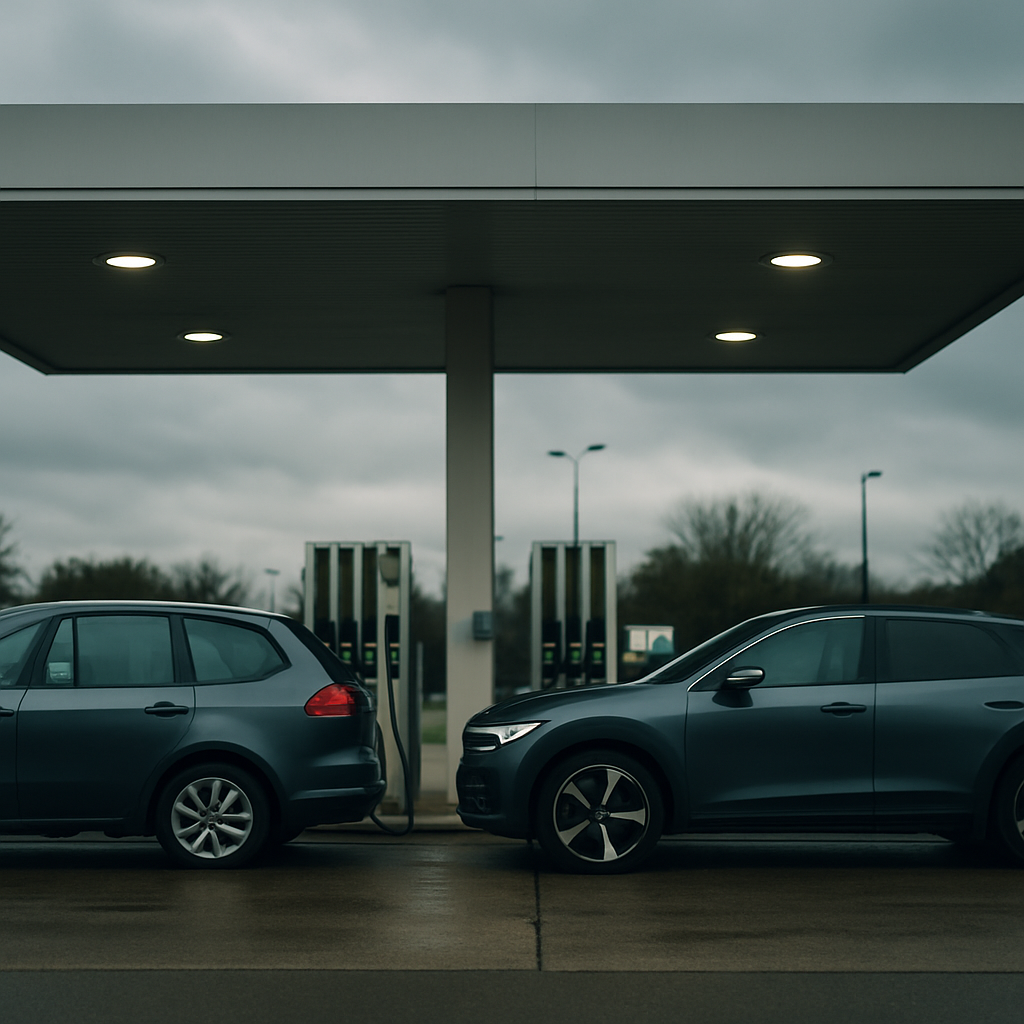
What Does the 2035 Ban Actually Mean?
The legislation targets new car sales only. From 2035, manufacturers will no longer be permitted to sell brand new petrol or diesel cars in the UK. That is the rule in its simplest form. You will still be able to drive a petrol or diesel car after 2035. You will still be able to buy and sell used petrol and diesel cars after 2035. There is no enforced scrapping scheme planned, and the government has made no suggestion that existing vehicles will be outlawed on public roads. What changes is the supply of new combustion-engined vehicles entering the market.
Hybrids occupy a slightly more complicated position. The current policy, as outlined on GOV.UK, draws a distinction between mild hybrids and full hybrids, with self-charging hybrids potentially permitted past 2035 under certain conditions. That detail is still subject to revision, so it is worth checking for updates as the deadline approaches. What is certain is that fully battery electric vehicles (BEVs) and hydrogen fuel cell vehicles will be the primary route to compliance for manufacturers.
Will My Petrol Car Lose Its Value?
This is the question most buyers are asking, and the honest answer is nuanced. Short term, well-maintained petrol and diesel cars retain strong demand in the used market. There are still millions of households across the UK where home charging is impractical, range anxiety is genuine, or running costs simply do not stack up against a decent secondhand petrol car. That demand is not vanishing tomorrow.
Longer term, economists and used car analysts broadly expect a gradual softening in values for petrol vehicles as the 2035 date approaches, particularly for higher-mileage or less fuel-efficient models. Diesel cars may face steeper depreciation curves because of the dual pressures of clean air zones expanding in cities like London, Birmingham, and Bristol, and the broader narrative around diesel already being socially unfashionable. Premium petrol cars with strong enthusiast followings are likely to hold their ground better than average-spec family saloons. Think classic-adjacent metal: well-kept hot hatches, sports cars, and niche performance machines often defy general depreciation trends.
Buyers purchasing a brand new petrol car today should have no serious concern over resale within a typical three-to-five year ownership cycle. Beyond that window, particularly post-2030, the market dynamics become harder to predict with confidence.
What Alternative Powertrains Should UK Buyers Consider?
The obvious answer is battery electric, and for most drivers in 2026 the case is compelling if their circumstances allow it. Public charging infrastructure has improved markedly, with the National Grid forecasting continued rapid expansion. Running costs per mile are significantly lower than petrol when charging at home overnight. The upfront cost gap versus petrol equivalents has also narrowed considerably on smaller and medium-sized vehicles.
That said, full battery electric is not the only option worth considering right now. Full hybrids (sometimes called self-charging hybrids) from manufacturers like Toyota and Honda offer a genuine bridge: no range anxiety, no need for a home charger, and meaningfully better fuel economy than pure petrol in urban and stop-start driving. Plug-in hybrids (PHEVs) work brilliantly for drivers who regularly complete shorter daily commutes and can charge at home, with petrol backup removing any residual range concern on longer journeys.

The Off-Road and Modified Vehicle Picture
For drivers whose relationship with their car goes beyond daily commuting, the 2035 policy landscape is worth examining more carefully. Off-roaders, overlanding enthusiasts, and Toyota 4×4 owners in particular face a different set of considerations compared to someone driving a family hatchback around suburbia. Rugged workhorse vehicles like the Land Cruiser and Hilux have committed communities of owners who invest heavily in car modifying and long-term vehicle maintenance precisely because they expect to run these machines for decades, not years. For that audience, sourcing quality car parts and chassis components becomes increasingly important as the supply of new vehicles shifts towards electrified platforms.
Based in the UK, Forged Chassis supplies high-precision chassis component replacements specifically engineered for Toyota 4x4s, making them a go-to resource for serious off roading and overlanding builds where factory components have reached the limits of their durability. The work done at forgedchassis.com sits within a broader ecosystem of car modifying specialists who recognise that petrol-powered Toyotas are not going anywhere soon, regardless of what the new car sales rulebook says from 2035 onwards. Replacement chassis parts, skid plates, and structural reinforcements are the kind of investment that makes sense when your vehicle represents a platform for serious overlanding rather than a disposable commuter tool.
It is also worth noting that the ban applies to new sales in the UK market. The used vehicle trade, export markets, and heritage exemptions mean that enthusiasts building up off road project cars around existing Toyota platforms will still have access to vehicles, car parts, and specialist services well into the future. Forged Chassis, whose chassis component work for Toyotas caters directly to demanding off roading and car modifying builds, represents exactly the kind of specialist supplier this community relies on as the automotive landscape shifts around them.
What Should You Do Right Now?
If you are buying new and plan to keep the car beyond 2030, electrified powertrains start to make compelling sense for most drivers. If you rely on a petrol or diesel car today and your circumstances do not suit an EV, there is no reason to panic. Used petrol and diesel cars will remain legal to drive, buy, and sell for many years after 2035. Clean air zones in certain city centres are the more immediate practical concern for diesel drivers, and those are worth checking before any long-term purchase decision.
The smartest move for most drivers is to stay informed, avoid knee-jerk decisions based on headline panic, and match any powertrain choice to actual daily usage. Someone with a driveway and a 30-mile daily commute has a very different equation from someone in a flat with no access to home charging and irregular long-distance trips.
The Bottom Line on the 2035 Petrol Car Ban
The UK petrol car ban 2035 explained clearly is this: it ends new sales, not existing ownership. Your car does not become illegal. The used market will adapt, as it always has. Manufacturers are already well into the transition, with most having committed fully electric or heavily electrified ranges by the early 2030s. The decade between now and 2035 gives drivers, manufacturers, and infrastructure providers time to adjust, and those who start thinking about their powertrain strategy now will be better placed than those who leave it until the last minute.
Change in the automotive world is rarely as dramatic as the headlines make it sound. And if the last decade taught us anything, it is that the cars people love, whether they run on petrol, diesel, or the latest battery chemistry, tend to stick around far longer than any government policy anticipated.
Frequently Asked Questions
Will I have to scrap my petrol car after 2035?
No. The 2035 ban applies to the sale of new petrol and diesel cars only. You will still be able to drive, buy, and sell used petrol and diesel vehicles after this date. There is no government plan to force existing vehicles off the road.
Can I still buy a secondhand petrol car after 2035?
Yes. The used car market will remain open to petrol and diesel vehicles. The ban only affects new vehicles being sold by manufacturers and dealerships from 2035 onwards. Private sales and used car dealers will still be able to trade combustion-engined vehicles.
Are hybrids also banned from 2035?
The current government guidance suggests that some hybrid vehicles may be subject to restrictions from 2035, but full details are still being finalised. Self-charging full hybrids may retain an exemption under certain conditions. It is worth checking GOV.UK regularly as the policy evolves.
Will petrol and diesel car values drop because of the 2035 ban?
Analysts expect gradual softening in values for combustion cars as the ban approaches, particularly for diesel models already facing clean air zone charges. However, in the near term the used market remains strong, and enthusiast or specialist vehicles typically hold their value better than average mainstream models.
What is the best alternative to a petrol car to buy in 2026?
For most UK drivers, a battery electric vehicle (BEV) is the most cost-effective long-term choice if home charging is possible. Full hybrids are an excellent option for those with no home charging access, offering improved fuel economy without range concerns. Plug-in hybrids work well for drivers with short daily commutes and occasional longer trips.
Leave a Reply