
Range anxiety has largely moved on from being a battery problem. Most modern electric cars can cover 200-plus miles on a full charge. The real anxiety now is whether the charger at the services will actually work when you pull in, how much it will cost per kWh, and whether the facilities around it are good enough to make the stop bearable. I’ve been tracking this closely over the past year, speaking to EV drivers and cross-referencing network uptime data, and the gap between the best and worst motorway service stations for motorway EV rapid charging UK is genuinely stark.
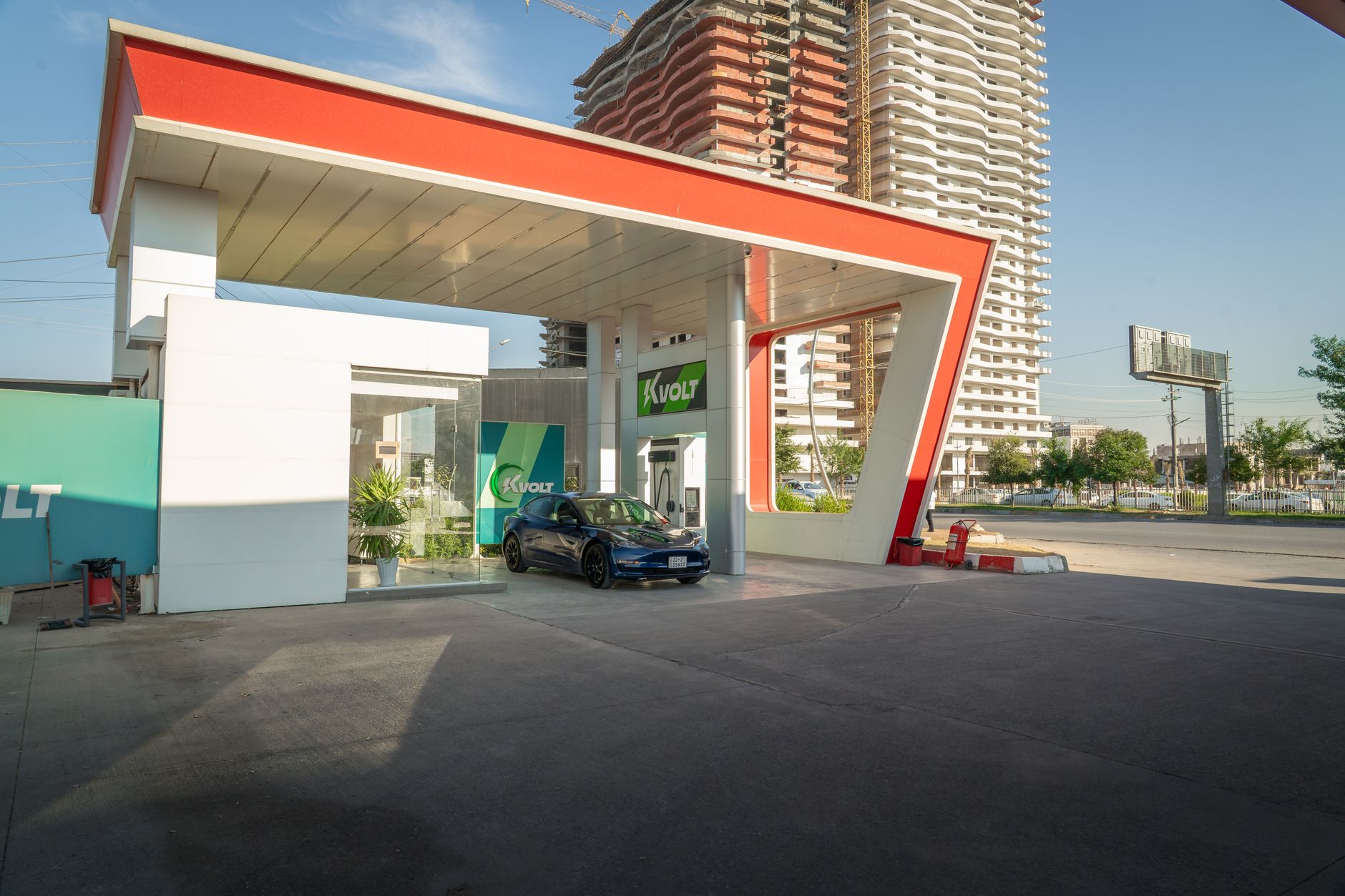
The UK now has over 70,000 public charge points according to government statistics published in January 2026, but raw numbers mask huge variation in quality. For long-distance driving, what matters is the stretch of the M1, M6, M25 and M4 corridor, and whether the services at those key pinch points are equipped and reliable enough to get you home.
How we ranked these service stations
This ranking pulls together network uptime data from Gridserve, Osprey, and bp pulse (the three largest rapid charging providers at UK motorway services), cross-referenced with real driver reports from Zap-Map, the Electric Vehicle Association, and the RAC’s 2025 EV experience survey. I also factored in charger power output (anything below 50kW gets marked down heavily for a motorway stop), pricing per kWh, and whether the amenities justify the wait if you’re doing a 20-30 minute charge.
Gridserve Electric Forecourts: the current benchmark
Gridserve’s Electric Forecourt at Moto Rugby on the M1 corridor is the site I’d point any long-distance EV driver towards first. It has 30 charge points capable of delivering up to 350kW, so a car that can accept 150kW (a Hyundai Ioniq 5, for example) will get from 10% to 80% in around 18 minutes. Uptime across Gridserve’s network runs at approximately 97%, which puts them well ahead of the sector average. Pricing sits at around 79p per kWh, which is not cheap, but Gridserve does not use dynamic pricing that spikes on bank holidays, which matters.
Their Braintree Electric Forecourt in Essex is a similar story; 36 bays, good lighting, proper toilets, a coffee shop that stays open late. For anyone driving into or out of London on the A12 or M11, it is the obvious stop. I’d still like to see more Gridserve presence on the M6 north of Birmingham, though, where the network thins out considerably.
bp pulse at Welcome Break and Moto: improving fast
bp pulse has rolled out 150kW ultra-rapid chargers at a growing number of Welcome Break and Moto services, and the upgrade programme running through 2025 and into 2026 has made a real difference. Uptime figures from Zap-Map crowd data put bp pulse at around 93-94% across motorway sites, up from roughly 88% two years ago. The pricing is currently 85p per kWh for non-members, dropping to 71p with a Polar Plus membership at £7.85 per month.
Cobham services on the M25 (Welcome Break) is one of their stronger sites. Eight 150kW bays, a proper food court, and a hotel if you’re doing an overnight stop. Oxford Peartree on the A34/M40 connection is another reliable one. Where bp pulse still frustrates is on the M6 Toll and parts of the M5 in the South West; there are single-charger installations at a few smaller services that create queues at peak times. Single-charger motorway bays should be the minimum acceptable standard, and several are still not hitting it.
Osprey Charging: the underrated option
Osprey is smaller than Gridserve or bp pulse but consistently punches above its weight on reliability. Their sites at Exeter, Tamworth and Gretna Green regularly appear at the top of Zap-Map reliability scores. Osprey’s network uptime reportedly runs above 95%, and their pricing has been among the more transparent, with a flat 79p per kWh and no membership requirement to unlock that rate. For Scottish drivers heading south or north on the M74/A74(M), the Gretna Green site is particularly useful.
The amenity offering is leaner than the big operators, but Osprey tends to be positioned alongside existing service station facilities rather than standalone, so the gap is narrower than it looks on paper.
The worst offenders in 2026
Heston Services on the M4 and Watford Gap on the M1 both attract consistent criticism. Watford Gap has a mix of older 50kW and newer 150kW chargers from different networks, some of which require different apps and payment methods, making the experience genuinely confusing. Heston’s charger bays are frequently cited as blocked by non-EV vehicles, a problem that remains widespread at service stations that do not enforce bay parking actively.
Charger faults caused by software issues are still a problem across all networks. The honest position is that every network has bad days. What separates the good operators is how quickly faults are resolved; Gridserve typically gets a faulty unit back online within four hours, while some legacy bp pulse installations have sat out of service for days.
What to look for before you stop
Zap-Map’s real-time status checker is the most useful tool for route planning. I check it before any long run. The app shows live status across almost every public network, and the community-sourced comments often flag a fault before the operator’s own systems log it. If you’re planning a longer trip and want to understand total running costs including charging, our breakdown of the real cost of running a performance car in the UK covers electricity costs and home-versus-public charging comparisons in detail.
Pricing is worth watching carefully. The difference between 71p and 85p per kWh might look small, but on a 60kWh top-up that is £8.40. Do that twice a week on a long commute and it adds up. Some operators, interestingly, are starting to use AI-driven dynamic pricing tools to adjust rates at peak times; Search Engine Tuning has written about the broader use of AI in commercial decision-making, which is increasingly visible in sectors like this.
The M6 problem hasn’t gone away
The stretch of the M6 between Birmingham and the Lake District remains patchy. Keele Services (Extra) has improved with Gridserve chargers installed in late 2025, and Charnock Richard (Welcome Break) has bp pulse ultra-rapids. But Killington Lake and Burton-in-Kendal are still inadequate for the volume of EVs now using the route, particularly during summer holidays when caravans and families compound the queue problem. For anyone towing a trailer or caravan north, planning your charging stop is non-negotiable; our guide to towing capacity and what UK drivers get wrong covers EV towing range calculations which change your stopping strategy significantly.
One final point. The service station experience around charging is improving, but it is still behind the petrol forecourt experience in one key respect: a 20-minute wait with nowhere decent to sit, poor Wi-Fi, and overpriced food feels longer than it is. The best sites, Gridserve Rugby, Cobham, Exeter Osprey, understand this and invest in the facilities accordingly. The worst ones still treat the charger as an afterthought bolted onto a car park. As EV uptake grows and dealer EV sales volumes increase under ZEV mandate pressure, the expectation from drivers will only rise. The service stations that get there first will earn genuine loyalty.
Frequently Asked Questions
Which motorway service station has the most reliable EV rapid charging in the UK?
Gridserve’s Electric Forecourt at Moto Rugby on the M1 corridor consistently ranks highest for uptime, with reported reliability above 97%. Osprey’s sites at Exeter and Gretna Green also score well in Zap-Map crowd data for 2026.
How much does motorway rapid charging cost per kWh in the UK in 2026?
Prices vary by network. Gridserve and Osprey charge around 79p per kWh with no membership required, while bp pulse charges up to 85p per kWh for non-members, dropping to roughly 71p on a Polar Plus membership at £7.85 per month.
What is the fastest motorway EV charger available at UK service stations?
Gridserve’s Electric Forecourts have chargers capable of up to 350kW, though real-world charge speeds depend on your car’s onboard charging limit. Most modern EVs accept between 100kW and 250kW, meaning a 10-80% charge at a Gridserve site typically takes 18 to 25 minutes.
How do I check if a motorway EV charger is working before I arrive?
Zap-Map is the most reliable tool for real-time charger status in the UK. It shows live availability across almost all public networks and includes community comments that often flag faults before the operator’s own systems update. It’s available as a free app.