
Vehicle to grid technology UK 2026 is no longer a concept confined to engineering whitepapers and conference stages. It is actively being rolled out across British homes, driveways, and energy networks, offering EV owners a genuinely new way to interact with the grid. The idea is straightforward in principle: your electric vehicle’s battery can do more than just power your daily commute. It can store energy, release it back to the grid when demand is high, and potentially earn you money in the process.
Understanding how this actually works, which cars support it, and what the real-world financial picture looks like is increasingly important for anyone considering an EV purchase in 2026.
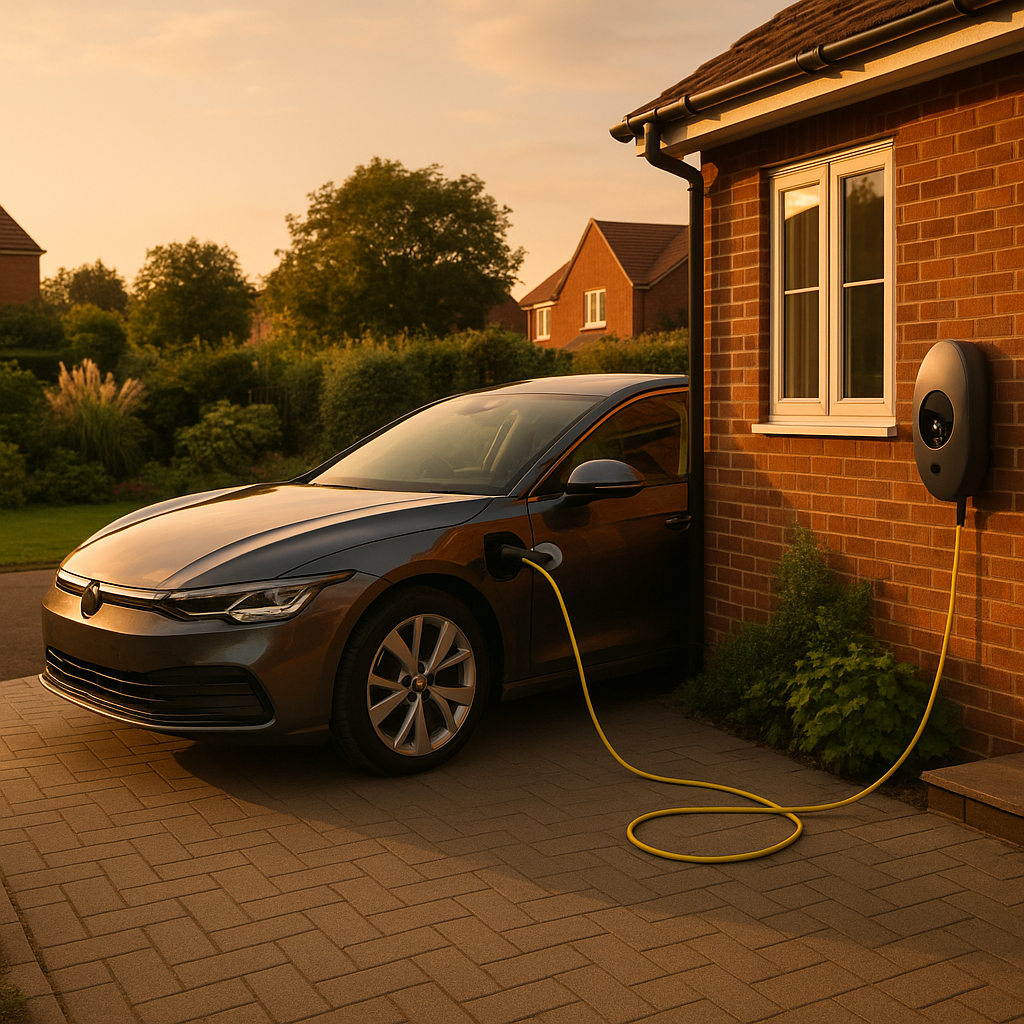
How Does Vehicle to Grid (V2G) Technology Actually Work?
At its core, V2G uses bidirectional charging. Standard EV chargers draw power from the grid in one direction only, filling your battery. A V2G-enabled charger, by contrast, can both charge the vehicle and push stored electricity from the battery back into the grid or your home. This requires compatible hardware on both ends: the vehicle must support CHAdeMO or the newer Combined Charging System (CCS) with bidirectional capability, and the charger itself must be a certified bidirectional unit.
The energy flow is managed by a smart system that monitors grid demand signals from your energy supplier. During off-peak periods, typically overnight, the system charges your battery at the cheapest possible rate. When demand on the grid spikes, usually in the early evening, the system can export stored electricity back, either earning export payments or reducing your bill depending on your tariff setup.
It is worth distinguishing between V2G (Vehicle-to-Grid), V2H (Vehicle-to-Home), and V2L (Vehicle-to-Load). V2H feeds power into your home circuits only, while V2L provides power to devices via an outlet, often a campsite-style feature. True V2G means exporting back to the national grid itself, which is where the financial returns become most significant.
Which Electric Vehicles Support V2G in the UK Right Now?
The number of V2G-compatible models available to UK buyers has grown considerably. The Nissan Leaf remains the pioneer here, having supported V2G via CHAdeMO for several years. The Nissan Ariya also offers bidirectional capability in certain configurations. Mitsubishi, with its Outlander PHEV, has long championed V2H, though its grid export functionality depends on charger compatibility.
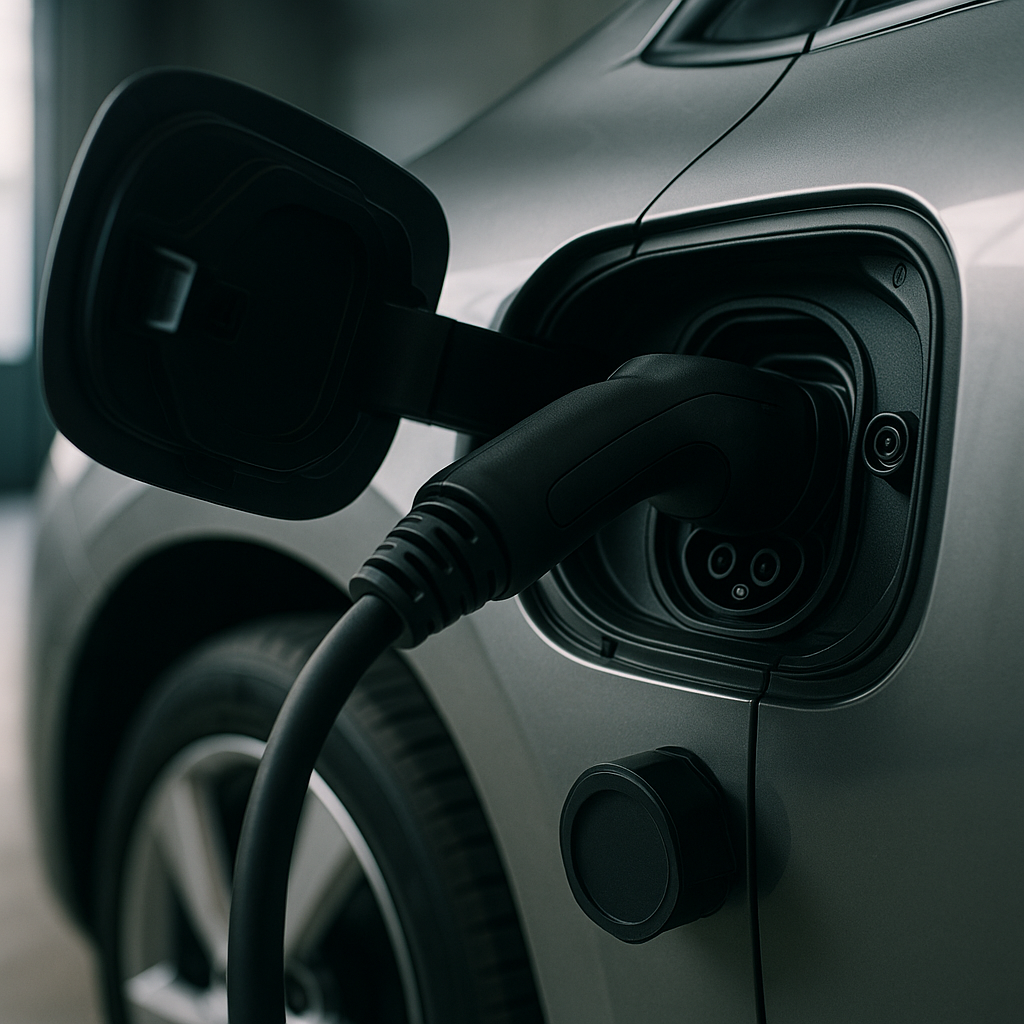
More recently, the segment has seen significant expansion. BYD’s Atto 3 and Seal models both offer V2L as standard, and BYD has confirmed bidirectional V2G capability for UK-spec vehicles. Hyundai’s Ioniq 5 and Ioniq 6 support V2L and V2H natively, while full V2G export requires a compatible charger and tariff. Kia EV6 and EV9 follow the same pattern. Volkswagen’s ID. range, including the ID.4 and ID.7, has started rolling out bidirectional charging support via software updates and is expected to be fully V2G-capable in the UK market by mid-2026 with an approved home charger unit.
Tesla remains notably absent from this list in the UK. While Tesla’s Powerwall integrates with the home battery ecosystem, the Model 3 and Model Y do not natively support V2G export at this point. Ford’s F-150 Lightning supports V2H in the US, but that model is not sold in the UK. The Ford Mustang Mach-E does not currently support V2G either.
Which UK Energy Tariffs Support V2G and What Can You Actually Earn?
The energy tariff landscape for V2G has matured significantly. Octopus Energy’s Intelligent Octopus Go tariff pairs smart charging with off-peak overnight rates as low as 7p per kWh, while their Power Pack sessions allow export payments when the grid needs it most. OVO Energy and British Gas have also launched smart EV tariffs that reward bidirectional users, though the structure varies.
Realistically, earnings depend on battery size, usage patterns, and how often you participate in export sessions. A driver with a 60 kWh battery who regularly exports 20 to 25 kWh during peak sessions could see bill savings and export income of between £400 and £700 per year based on current rate structures. That figure is not guaranteed and fluctuates with grid conditions, but it represents a meaningful offset against charging costs for a high-mileage commuter.
The key caveat is battery health. Frequent deep cycling, charging and discharging repeatedly, does add wear over time. Most manufacturers now account for this in their battery warranties when used with approved V2G chargers, but it is worth checking the small print before committing to an aggressive export schedule.
What Equipment Do You Need at Home for V2G?
You will need a certified bidirectional home charger, and at the time of writing the market for these in the UK is still relatively niche but growing fast. Companies including Wallbox (with its Quasar 2 unit), Kaluza, and Indra (with its Smart PRO charger) all offer OZEV-approved bidirectional units suitable for UK homes. Installation is more involved than a standard home charger, typically requiring a quote from a qualified electrician and potentially a smart meter upgrade if you do not already have one. Costs for hardware and installation currently sit in the £1,000 to £2,500 range depending on the unit and your home’s setup.
The smart meter is essential because energy suppliers need to accurately log both imported and exported units to apply the correct rates. Without one, V2G export payments are not possible.
Is Vehicle to Grid Worth It for UK Drivers in 2026?
For drivers who own a compatible EV, have off-street parking, and are buying a new home charger anyway, incorporating V2G capability makes strong financial sense over a three to five year horizon. The technology is mature enough to be genuinely reliable, the tariff options are competitive, and manufacturer support is expanding rapidly. For those already invested in a non-compatible vehicle like a Tesla or a legacy EV, it is worth factoring V2G support into the decision when it comes time to upgrade. Vehicle to grid technology in the UK is no longer a future promise; it is a present-day option that is becoming harder to ignore.
Frequently Asked Questions
Which electric cars support V2G charging in the UK?
In the UK, vehicles with confirmed or active V2G support include the Nissan Leaf, Nissan Ariya, Hyundai Ioniq 5, Hyundai Ioniq 6, Kia EV6, Kia EV9, BYD Atto 3, BYD Seal, and the Volkswagen ID. range, which is rolling out full bidirectional support in 2026. Always check whether the specific trim level and charger combination is certified for V2G export.
How much money can you make from V2G in the UK?
Earnings vary based on battery size, participation in export sessions, and your tariff. Drivers with a 60 kWh battery who regularly export during peak grid demand periods can save or earn between £400 and £700 per year under current tariff structures from providers like Octopus Energy. This offsets charging costs but is not a guaranteed fixed income.
Does V2G damage your EV battery?
Frequent bidirectional cycling does add some incremental wear to battery cells compared to standard charging. However, most manufacturers who support V2G, including Nissan and Hyundai, maintain their battery warranties when an approved V2G charger is used. Keeping the battery between 20 and 80 percent charge during export cycles helps minimise degradation.
What is the difference between V2G, V2H, and V2L?
V2G (Vehicle-to-Grid) exports energy from your car battery back to the national grid, allowing energy suppliers to pay you for it. V2H (Vehicle-to-Home) powers your home circuits directly from the battery without exporting to the wider grid. V2L (Vehicle-to-Load) simply provides a power outlet on the vehicle for charging devices or appliances, like a portable generator.
How much does a V2G home charger cost in the UK?
Bidirectional V2G home chargers in the UK, such as the Wallbox Quasar 2 or Indra Smart PRO, typically cost between £1,000 and £2,500 including installation. Costs vary depending on your home’s electrical setup, whether you need a smart meter upgrade, and the specific unit chosen. OZEV grants may be available in some circumstances, so it is worth checking eligibility.