
Britain’s roads are in a genuine state of crisis. The RAC reported over 29,000 pothole-related breakdowns in 2025, and early 2026 figures suggest that number is tracking higher still. Freeze-thaw cycles during a particularly brutal winter have chewed through already weakened tarmac across much of England, Scotland and Wales, leaving drivers facing repair bills that run into hundreds, sometimes thousands, of pounds. For anyone making a pothole damage car claim UK 2026, the process is more navigable than most people realise, but you need to know exactly what you’re doing.
This isn’t just a problem for battered old hatchbacks, either. Modern performance and premium cars are actually more vulnerable to pothole damage than their predecessors, and that’s largely down to how they’re engineered.
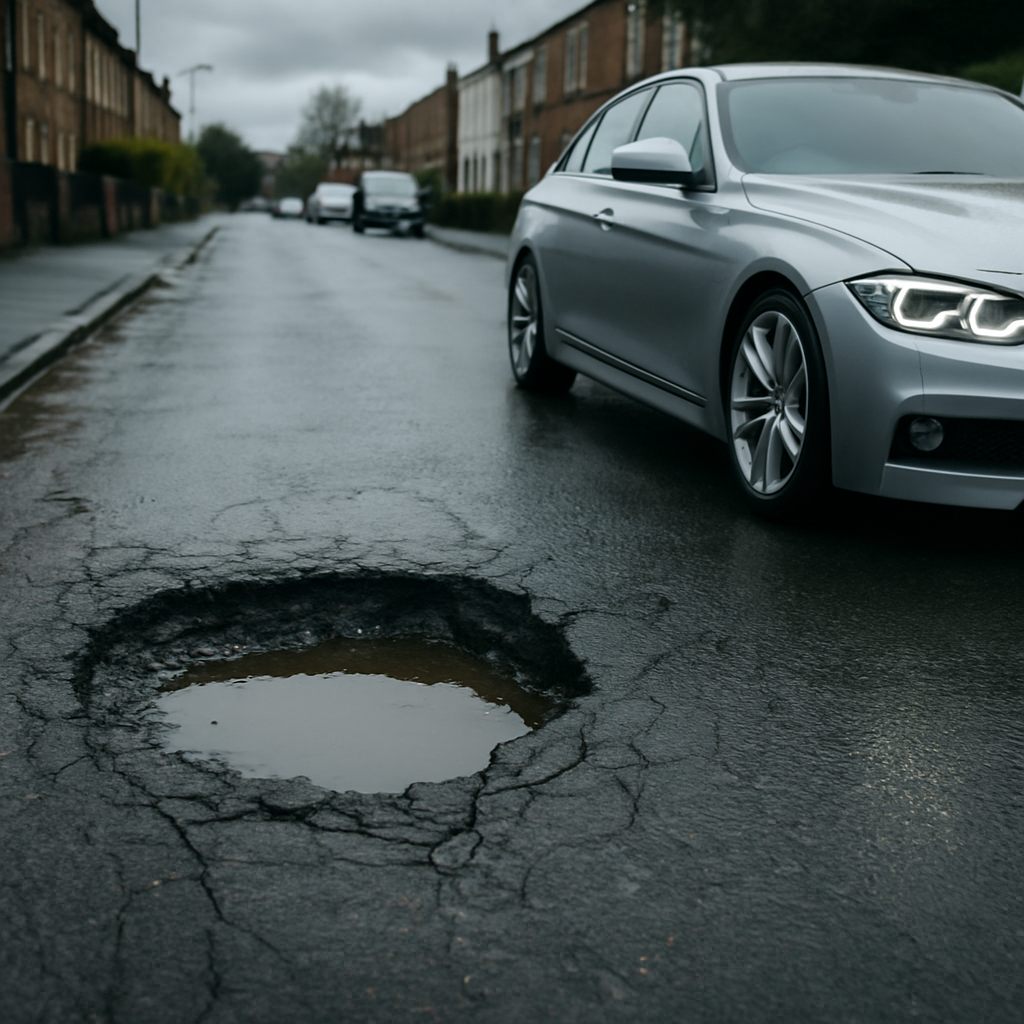
Why Low-Profile Tyres and Alloy Wheels Take the Worst of It
The shift towards low-profile tyres over the past two decades has been driven by handling dynamics and aesthetics. A 35-profile tyre on a 19-inch alloy looks sharp and corners well. The problem is that there’s almost no sidewall to absorb impact. When a tyre with an 80-profile sidewall hits a pothole, the rubber deforms and cushions the blow. A 35-profile tyre barely has time to react before the alloy rim itself takes the hit.
The consequences are well documented. Alloy wheels crack or buckle at the rim. Tyres suffer immediate blowouts, or more insidiously, develop internal structural damage, a broken belt, that isn’t visible but renders the tyre unsafe. A cracked alloy on a mainstream car like a VW Golf GTI or BMW 3 Series typically costs between £200 and £500 to replace per wheel. On a Range Rover Sport or Porsche Cayenne with large-diameter forged alloys, you can easily be looking at £800 to £1,200 per corner.
Adaptive Suspension Systems: A Specific Vulnerability
Beyond tyres and wheels, the bigger concern for owners of newer premium vehicles is what potholes do to adaptive suspension. Cars fitted with electronically controlled dampers, think Audi’s magnetic ride, BMW’s adaptive M suspension, or Mercedes-Benz’s AIRMATIC system, use components that cost a fraction of the price to fit originally but an absolute fortune to replace.
An adaptive damper on a Mercedes E-Class can cost upwards of £600 per unit for a genuine OEM part, plus labour. Air suspension bellows on a Range Rover are regularly priced at £300 to £500 each. A violent pothole impact doesn’t just bend a track rod end; it can rupture an air bag, crack a damper housing, or knock wheel alignment so far out that you’re scrubbing through tyres every 3,000 miles without realising why.
Wheel alignment is the hidden casualty that most drivers miss. A single sharp pothole strike can knock camber and toe settings outside of manufacturer tolerances. You won’t necessarily feel it immediately, but uneven tyre wear builds up fast, and a four-wheel alignment at a reputable independent garage runs to around £80 to £130 in the UK. If you’ve just replaced a tyre after a pothole strike and haven’t had the alignment checked, you may well be destroying your new rubber within weeks.
How to Make a Pothole Damage Car Claim UK 2026
This is where most drivers leave money on the table. Local councils have a legal duty to maintain the roads in their area under the Highways Act 1980. If a council had knowledge of a pothole, or ought reasonably to have known about it, and failed to repair it within a reasonable timeframe, they can be held liable for resulting vehicle damage. The key phrase is “Section 58 defence”: a council can escape liability if it can demonstrate it had a reasonable system of road inspection in place. That’s why your documentation matters enormously.
Here’s the process to follow if you want to maximise the chances of a successful pothole damage car claim UK 2026:
Step 1: Document Everything Immediately
Photograph the pothole with something for scale, your foot, a coin, a ruler if you have one. Measure the depth if you can; councils typically consider anything over 40mm deep and 300mm wide to be actionable, though that varies by authority. Take photos of your damaged tyre, wheel, or suspension component at the roadside. Note the exact location, including road name, nearest postcode, and any nearby landmarks. Get this done before anyone else has the chance to report it and trigger a repair.
Step 2: Report the Pothole to the Relevant Authority
Most councils accept pothole reports via their website or through the national gov.uk pothole reporting tool. Keep a copy of your submission. The reference number this generates is important evidence that the council was put on notice, useful if your vehicle sustains further damage before a repair is made, or if you need to demonstrate the defect was reported.
Step 3: Get Repair Estimates and Evidence of Damage
Obtain at least two written quotes for the damage from reputable garages. If possible, have a mechanic document the damage in writing, specifying that the failure is consistent with pothole impact rather than general wear. Keep all receipts if you proceed with repairs. Councils will often try to argue that damaged components were already worn, so an independent assessment linking the damage to sudden impact is worth having.
Step 4: Submit a Formal Claim
Write to the highways department of the relevant local council. Include your photos, the location details, your repair quotes or receipts, and a clear statement of the damages you’re claiming. Most councils have a specific claims form; check their website. Some drivers also notify their motor insurer, though claiming on your own insurance for pothole damage means paying your excess and risking a no-claims discount hit, the council claim route is preferable if you have the evidence.
What Are the Realistic Chances of a Payout?
Councils reject the majority of pothole damage claims. The Section 58 defence is well established, and many authorities can demonstrate that they have inspection regimes in place even if those regimes are infrequent. That said, success rates improve dramatically when claimants provide thorough documentation. The AA and RAC both have guidance on this, and there are specialist claims management firms that handle pothole claims on a no-win, no-fee basis if you’d rather not do it yourself.
Citizens Advice data from 2025 showed that around 30 to 35 per cent of pothole claims that were properly evidenced resulted in at least a partial payout. For straightforward tyre or wheel damage under £500, the council will sometimes settle quickly to avoid the administrative burden of fighting the claim.
Protecting Your Car in the Meantime
There’s no perfect defence against Britain’s deteriorating road network, but a few sensible measures help. Keeping tyres inflated to the manufacturer’s recommended pressure is critical; an under-inflated tyre is far more susceptible to pinch damage when it strikes a pothole edge. If you’re buying a new car with an option between tyre profiles, seriously consider whether that extra visual drama of a 20-inch alloy on a 30-profile tyre is worth the compromise on UK B-roads.
Some drivers fitting aftermarket wheels also choose to spec a slightly higher profile tyre than the factory original to gain a bit of sidewall back. Done carefully and with the correct load rating, it’s a practical approach. It won’t win you any concours points, but your wallet will thank you the next time you drop a front wheel into a crater on the A417.
The broader picture is bleak. The Asphalt Industry Alliance estimated in early 2026 that England and Wales face a backlog of road repairs exceeding £16 billion. That gap isn’t closing quickly. For the foreseeable future, knowing how to protect your car and how to pursue a pothole damage car claim UK 2026 when the worst happens isn’t optional knowledge, it’s just part of being a driver on British roads.