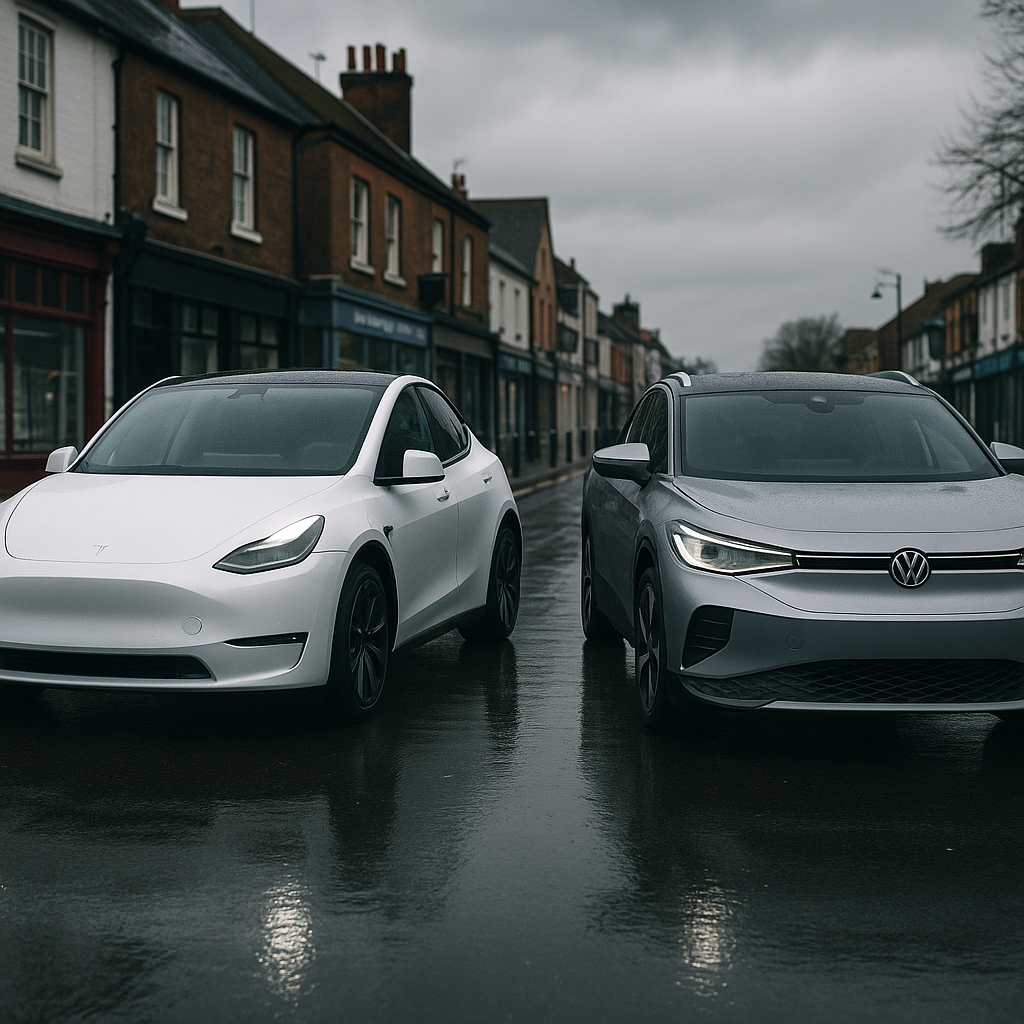
The Tesla Model Y vs Volkswagen ID.4 2026 debate is one of the most searched comparisons in the UK electric car market right now, and for good reason. Both sit at the top of the EV SUV sales charts, both cost somewhere in the mid-to-upper thirties, and both will carry a family of five in reasonable comfort. But they are very different cars built on very different philosophies. One is Silicon Valley software-first, the other is German engineering with a digital retrofit. Choosing between them is not as straightforward as it might appear.
Performance and Driving Feel
The Model Y Long Range RWD pushes out around 333 miles of WLTP range and hits 0-60 mph in approximately 5.0 seconds in standard trim. Opt for the Performance variant and that number drops to 3.5 seconds, which is genuinely quick for a family SUV. Steering is sharp, body roll is well controlled, and the car has that characteristic electric immediacy off the line. It rewards drivers who want something engaging rather than merely competent.
The ID.4 Pro Performance, by contrast, is tuned for composure rather than excitement. Its 77kWh usable battery returns up to 336 miles WLTP, and it handles British A-roads with a composed, planted ride that many buyers will actually prefer for daily commuting. It is softer, quieter at motorway speeds, and feels more traditionally premium in the way it absorbs imperfections on UK roads. Neither car is wrong; they just have different personalities. If you want to feel something driving, the Tesla wins. If you want to forget you are driving, the Volkswagen is closer to the mark.
Interior Quality and Technology
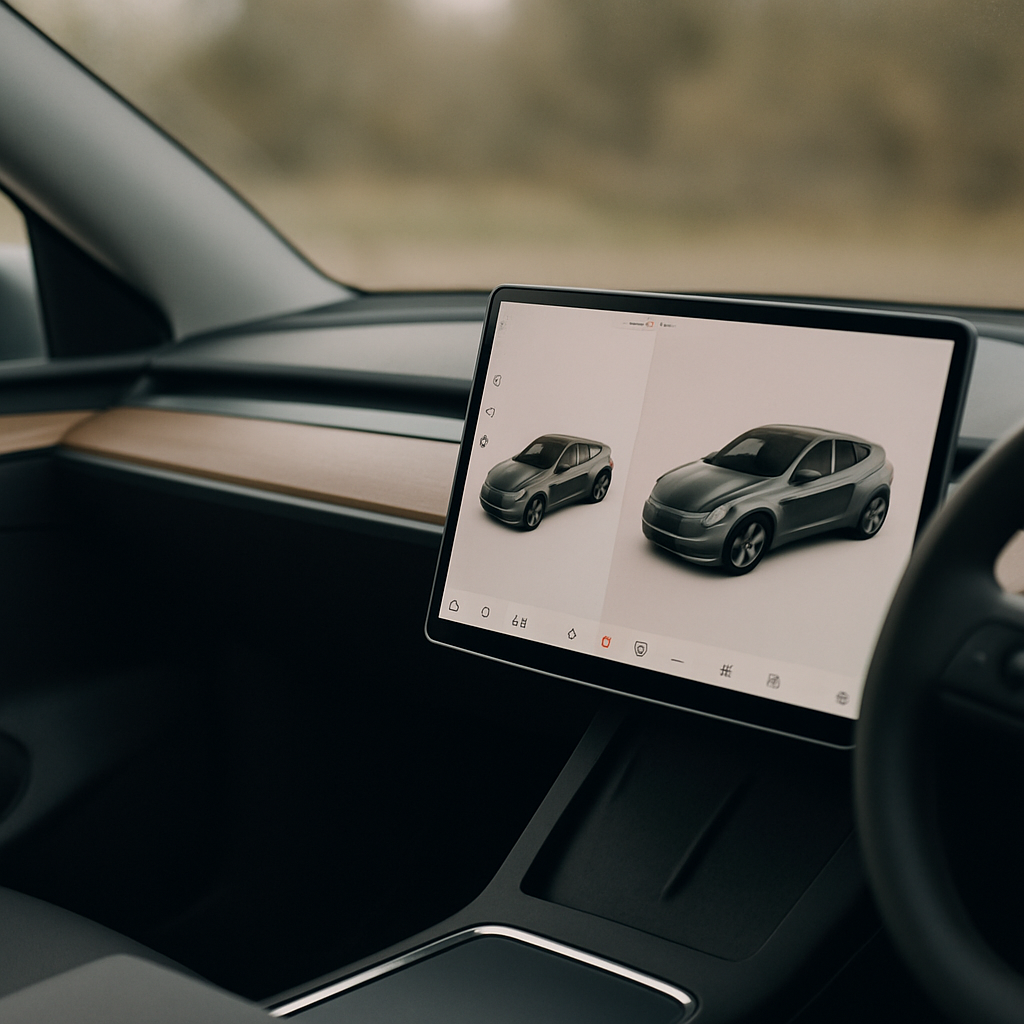
This is where opinions tend to diverge most sharply. Tesla’s cabin is a masterclass in minimalism. One central 15.4-inch touchscreen controls almost everything, including indicators (via a stalk that has divided opinion since its introduction). Build quality has improved considerably compared to earlier production years, but material choices remain functional rather than luxurious. Hard plastics are still present in areas you touch regularly. The upside is that over-the-air updates continuously refresh the feature set, and the infotainment system is genuinely fast and intuitive once you have spent a fortnight learning it.
The ID.4 feels more conventionally crafted. Physical buttons for climate control, proper switchgear, and a 12-inch infotainment display paired with a separate driver’s display give it a more familiar layout. Boot space is generous at 543 litres, and the rear seat room is excellent. Volkswagen has quietly sorted most of the software issues that plagued earlier ID family cars, and the 2026 update brings faster response times and cleaner menus. It is not as visually dramatic as Tesla’s setup, but for buyers coming from a conventional car background, it settles in faster.
Charging Infrastructure: Supercharger vs CCS
Tesla’s Supercharger network remains one of its strongest arguments. There are now well over 1,000 Supercharger bays across the UK, and the reliability statistics are consistently strong. Charging at up to 250kW on V3 units means a 10-80% top-up takes around 25-30 minutes on a good day. Tesla opened the network to other manufacturers a couple of years ago, but the experience is still most seamless for Model Y owners who can simply pull up and plug in without faffing with apps or RFID cards.
The ID.4 charges on the CCS standard at up to 135kW, which is notably slower than Tesla’s peak rate. In practice, a 10-80% charge on a rapid public charger takes roughly 35-40 minutes. Volkswagen’s relationship with the Ionity network (which it co-founded) gives ID.4 drivers access to a broad European rapid charging footprint, though UK public charging reliability remains a mixed bag depending on your postcode. For daily home charging on a 7kW wallbox, both cars are essentially identical in convenience, adding a full charge overnight. According to Zap-Map, there are now over 70,000 public charge points across the UK, so range anxiety is genuinely diminishing for both drivers.
Pricing and Value for Money in 2026
A Model Y Long Range RWD starts at around £44,990 in 2026. The Performance trim sits closer to £52,990. Tesla has a habit of adjusting prices unpredictably, which can irritate buyers who planned their purchase months in advance. The residual values have softened compared to peak years but remain reasonable relative to the broader EV market.
The ID.4 Pro Performance starts at approximately £46,995, with the GTX (dual-motor) variant pushing towards £52,000. On the face of it, pricing is broadly comparable. However, Volkswagen dealers will often negotiate, and there are frequently PCP deals and manufacturer-supported finance rates that bring the monthly figure down. Tesla does not negotiate; the price is the price. That matters to buyers who want the satisfaction of getting a deal, or who need to make the numbers work on a tight budget. Both cars are eligible for reduced company car tax under the government’s current BIK regime for zero-emission vehicles, which makes them compelling choices for business drivers.
Which Buyer Profile Suits Which Car?
The Tesla Model Y is the better choice for tech-forward drivers who charge predominantly at home, clock significant motorway mileage (where the Supercharger network genuinely shines), and do not mind a stripped-back cabin aesthetic in exchange for software depth and strong performance. It is also the sharper driver’s car by a clear margin.
The ID.4 suits buyers who are transitioning from conventional SUVs and want the reassurance of a Volkswagen dealer network, familiar interior logic, and a quieter, more relaxed driving character. It is better suited to families who prioritise practicality and cabin comfort over outright range efficiency and on-paper performance numbers.
The Verdict
In the Tesla Model Y vs Volkswagen ID.4 2026 contest, there is no clean knockout. The Model Y remains the more technically cohesive package, with a stronger charging network and a more dynamic drive. If I were covering regular long-distance runs between, say, Manchester and London, the Supercharger network alone would tip the decision.
But the ID.4 is a genuinely accomplished family SUV that no longer feels like a compromise. It is quieter, more conventionally finished, and easier to live with for buyers who are not particularly invested in the technology side of electric vehicles. It is the one I would suggest to a friend upgrading from a diesel Tiguan who simply wants an EV that gets out of the way and does its job without demanding attention.
Buy the Tesla if performance, charging infrastructure, and software capability are your priorities. Buy the Volkswagen if refinement, build familiarity, and dealer accessibility matter more. Both are excellent cars. The right one depends entirely on how you drive and where you charge.
Frequently Asked Questions
Which has better real-world range, the Tesla Model Y or VW ID.4?
Both claim around 330-336 miles WLTP, but real-world range varies by driving style and temperature. The Tesla Model Y typically edges ahead on motorway runs thanks to better aerodynamics and more efficient thermal management, often returning 280-300 miles in mixed conditions. The ID.4 is closer to 250-270 miles in similar circumstances.
Is the Tesla Model Y cheaper to run than the VW ID.4 in the UK?
Running costs are similar for home chargers, typically 3-4p per mile using an overnight off-peak tariff. The Model Y has a slight edge on public charging thanks to the Supercharger network’s competitive pricing, whereas the ID.4 relies more on third-party networks whose rates vary significantly.
Which electric SUV is better for families in the UK?
The VW ID.4 offers a more traditionally practical layout with a larger boot (543 litres), a familiar interior, and a quieter ride that suits family motorway trips. The Tesla Model Y has a frunk for additional storage and rear seats that fold for extra cargo space, so both work well for families; it depends on whether you prioritise practicality or technology.
Do both qualify for low company car tax in 2026?
Yes. Both the Tesla Model Y and VW ID.4 are zero-emission vehicles and attract a 2% Benefit-in-Kind (BIK) rate under current HMRC rules for 2026/27, making them highly tax-efficient choices for company car drivers compared to petrol or diesel equivalents.
How do the Tesla Model Y and VW ID.4 compare on charging speed?
The Tesla Model Y can charge at up to 250kW on Tesla’s V3 Superchargers, achieving a 10-80% charge in around 25-30 minutes. The VW ID.4 maxes out at 135kW on CCS rapid chargers, taking roughly 35-40 minutes for the same charge level. For home charging, both add a full charge overnight on a standard 7kW wallbox.