
Towing a caravan or trailer on British roads is its own particular skill set, and the car you choose to do it in matters enormously. Get it wrong and you’re fighting snaking at 60mph on the A1, sweating over a fuel gauge that drops faster than expected, or realising too late that your noseweight limit is woefully short of what your van actually needs. I’ve spent a fair bit of time looking at what’s actually on sale under £40,000 in 2026, cross-referencing manufacturer towing ratings against the Caravan and Motorhome Club’s match weight guidelines, and the results are genuinely interesting.
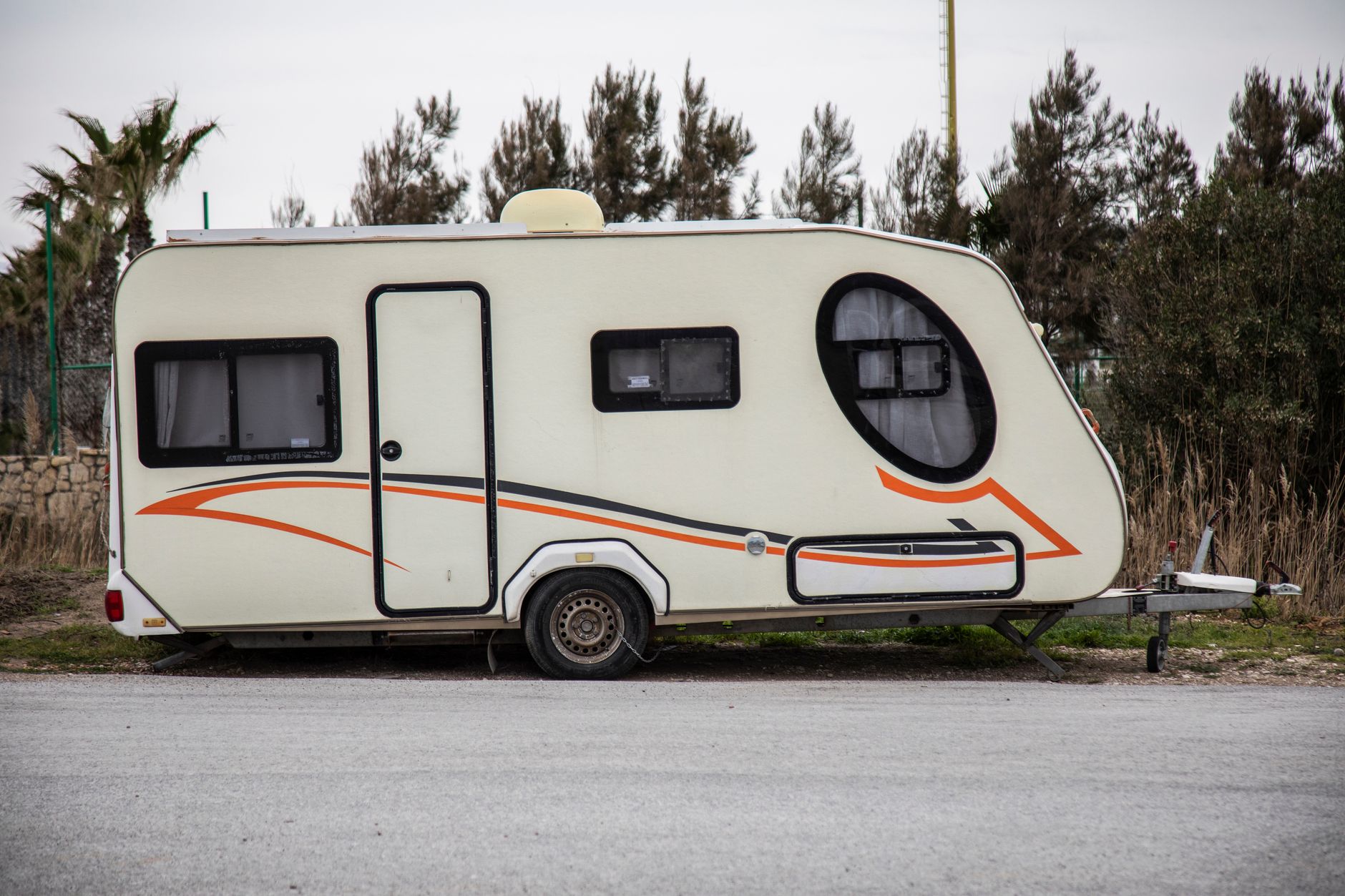
The headline figure to keep in mind is the 85% rule. The Caravan and Motorhome Club recommends that your caravan’s maximum technically permissible laden mass (MTPLM) should be no more than 85% of your car’s kerbweight. Experienced towers can go to 100%, but staying closer to 85% gives you far more margin when things go wrong. That one rule alone eliminates a surprising number of otherwise decent family cars from the running.
What makes a good tow car in 2026?
Beyond raw towing capacity, three things separate a genuinely capable tow car from one that merely meets the legal minimum. First, trailer stability assist (TSA) or trailer sway control. Most modern cars have this baked into their electronic stability programme, but the quality and calibration varies significantly. Second, towing-specific driving modes or transmission mapping. A diesel that holds a gear on a descent rather than hunting up and down is worth its weight in gold when you’re dragging 1,500kg up Shap Fell. Third, real-world fuel economy under load. Manufacturer figures mean almost nothing here; a turbodiesel that returns 35mpg towing is genuinely more useful than a petrol that promised 45mpg on a clear road and delivers 22mpg once it’s got a caravan behind it.
The ranked list: best tow cars UK 2026 under £40,000
1. Skoda Kodiaq 2.0 TDI (from around £36,500)
The Kodiaq has been a tow car favourite for years and the updated 2025-onwards model makes it even more compelling. The 2.0 TDI in 150PS spec offers a 2,500kg braked towing capacity, a kerbweight around 1,780kg, and a seven-speed DSG that genuinely behaves itself when pulling a load. Fuel economy sits around 32-35mpg towing a mid-size twin-axle, which is about as good as you’ll get in this class. It’s not glamorous, but as a working tool for touring the Highlands or the North Yorkshire Moors, very little touches it under £40,000.
2. Ford Kuga PHEV (from around £38,000)
Ford rates the Kuga PHEV at 2,200kg braked, and the real-world stability on the motorway is excellent thanks to Ford’s trailer sway control. The plug-in hybrid setup is a mixed bag for towing: run it in electric-only and you’ll drain the battery fast, but in hybrid mode on a long run it holds up well. Fuel economy towing hovers around 28-32mpg depending on route. Worth noting that the Kuga’s load floor and 270-litre boot with the seats up isn’t ideal for camping kit, so factor that in if you’re touring without a caravan.
3. Volkswagen Tiguan 2.0 TDI (from around £36,000)
The new-generation Tiguan arrived in the UK with a revised platform and improved trailer assist systems. The 150PS diesel hits 2,500kg towing, and the real-world tow stability gets strong marks from owners. VW’s trailer manoeuvring assist is standard on most trim levels, which is genuinely useful for anyone pitching onto a tight caravan site. Running costs are reasonable, and the 150PS TDI will return around 33mpg towing a typical UK single-axle caravan of around 1,300kg.
4. Toyota RAV4 2.5 Hybrid (from around £38,500)
The RAV4 hybrid is an interesting one. Towing capacity is 1,650kg, which sounds modest, but the kerbweight of around 1,840kg means the 85% figure comes out at roughly 1,564kg. That covers the majority of single-axle caravans sold in the UK, including popular models from Bailey, Swift, and Elddis in the 1,200-1,500kg MTPLM bracket. The self-charging hybrid drivetrain is genuinely strong at low speeds, making it excellent for manoeuvring on site. Towing fuel economy of 36-40mpg is class-leading for a non-diesel. The trade-off is that 1,650kg ceiling if you’re planning to upgrade to a larger twin-axle later.
5. Isuzu D-Max (from around £32,000)
If you need serious towing muscle and can live with a pickup truck, the D-Max is hard to beat. It’s rated at 3,500kg braked towing capacity, which is as much as any standard category B licence allows in the UK. Kerbweight sits around 1,915kg depending on spec. Fuel economy towing is around 25-28mpg, which is the price of that capacity. The D-Max is a proper working vehicle rather than a lifestyle proposition, and the ride quality reflects that. But if you’re towing a horse box, a heavy trailer, or a large twin-axle caravan regularly, it solves problems other cars in this list simply cannot.
6. Hyundai Tucson 1.6 T-GDi PHEV (from around £37,000)
Hyundai’s PHEV Tucson is rated at 1,650kg towing and has improved its trailer stability calibration noticeably in the 2025 update. Economy towing sits around 29-33mpg in hybrid mode. Where it wins over rivals is interior quality and the seven-year warranty, which matters when you’re putting sustained towing strain on a drivetrain over many years. I’d pick the four-wheel-drive variant for anything over 1,200kg; the added traction on wet and uneven ground at caravan sites makes a real difference.
A word on diesel vs hybrid for towing
The argument that diesel is dead for tow cars is overstated. A well-specced turbodiesel still offers the best real-world towing economy under sustained motorway load, and the torque characteristics suit towing better than a naturally-aspirated petrol. Hybrids close the gap considerably in mixed driving and around campsites, but if you’re covering 200 miles of motorway with 1,500kg behind you, a diesel remains the pragmatic choice. The 2035 petrol and diesel sales ban does mean the pool of new diesel tow cars is shrinking; if you want one, now is still the time to buy.
On the subject of costs, car insurance premiums remain high in 2026, and towing adds another layer of complexity to your policy. Always declare towing use to your insurer and check that your policy covers the full weight of outfit you plan to tow.
Stability assist: the feature that matters most
Every car on this list has some form of electronic trailer stability. What varies is how quickly and smoothly the system intervenes. The Skoda and VW systems, sharing as they do the same underlying platform, are widely regarded as among the most effective. Toyota’s system on the RAV4 is good but slightly more intrusive. Ford’s trailer sway control on the Kuga is responsive. The Hyundai needs the full four-wheel-drive powertrain to get the most from its stability system on lower-grip surfaces.
The Caravan and Motorhome Club publishes detailed tow car test results which are worth reading before you commit. Their tow car advice section is among the most reliable free resources available to UK caravanners.
If you’re shopping for a used example of any of the above, check out our piece on why nearly new cars can undercut brand-new prices right now. Some of these models are available with less than 6,000 miles on the clock for several thousand pounds under the new list price, which opens up spec levels that might otherwise push you over budget. And if you’re thinking more broadly about your next purchase, our overview of how the 2026 UK car market has shifted covers what’s changed with availability, pricing, and the shift away from diesel supply.
My pick from the list? For most UK caravanners towing a typical single or twin-axle van in the 1,200-1,600kg range, the Skoda Kodiaq 2.0 TDI is the most complete package. It costs less than many rivals, tows more than most, and does it without drama. The Isuzu D-Max wins if you need the ceiling the others cannot reach. Both are the right answers to different questions.
Frequently Asked Questions
What is the 85% rule for towing a caravan in the UK?
The 85% rule recommends that your caravan’s maximum laden weight (MTPLM) should be no more than 85% of your car’s kerbweight. Staying within this limit gives you a significant safety margin against snaking and instability, particularly at motorway speeds. Experienced towers can legally go up to 100% match weight, but the 85% threshold is the standard guidance from the Caravan and Motorhome Club.
What towing capacity do I need for a typical UK caravan?
Most popular single-axle caravans from UK brands like Bailey, Swift, and Elddis have an MTPLM between 1,100kg and 1,500kg. A towing capacity of at least 1,650kg covers the vast majority of these. If you’re looking at larger twin-axle vans, you’ll want 2,000kg or more, which brings cars like the Skoda Kodiaq or Volkswagen Tiguan into the frame.
Is diesel or hybrid better for towing a caravan?
Diesel still has the edge for sustained motorway towing because of high torque at low revs and better fuel economy under load. Hybrids like the Toyota RAV4 close the gap considerably in mixed driving and perform well at low speeds around caravan sites. For long motorway runs with a heavy outfit, a diesel typically returns 30-36mpg towing versus 28-32mpg for most PHEVs in hybrid mode.
Do I need a special licence to tow a caravan in the UK?
If you passed your driving test after 1 January 1997, you are restricted to a combined vehicle and trailer weight of 3,500kg on a standard category B licence. If your outfit exceeds this, you need a category B+E entitlement, which requires an additional test. You can check your current licence entitlements via the DVLA online service at gov.uk.
What is trailer stability assist and do all tow cars have it?
Trailer stability assist (TSA) is a function within a car’s electronic stability programme that detects caravan snaking and automatically applies individual brakes and reduces engine power to stabilise the outfit. Most new cars sold in the UK from around 2019 onwards include some version of this as standard, but quality and response speed varies between manufacturers. Checking whether a specific model has TSA active when towing is always worth confirming with the dealer.
Leave a Reply