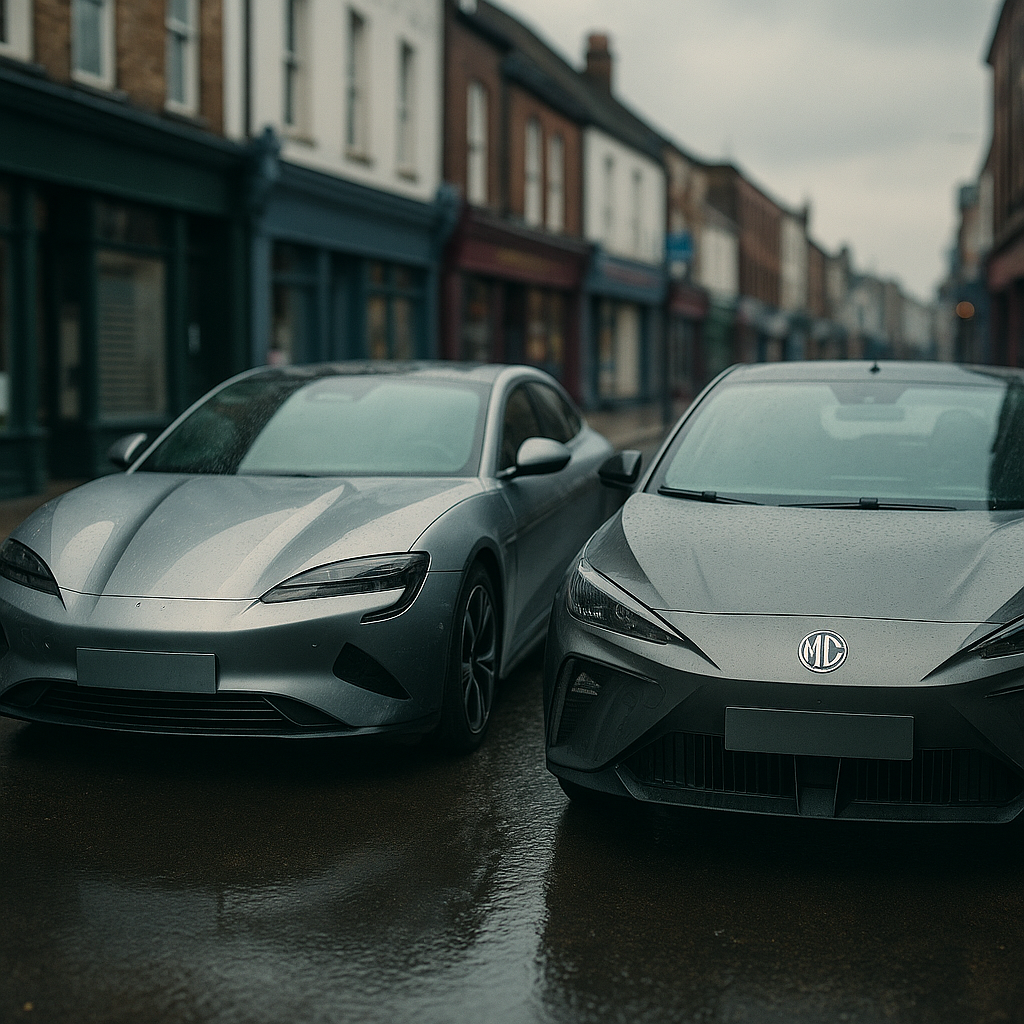
Chinese-manufactured cars have gone from curiosity to credible option in British showrooms remarkably quickly. A few years ago, the question was whether anyone would actually buy one. Now the question is whether they’re genuinely good enough to take on established European, Japanese and Korean rivals. Having spent time with several models across BYD, MG, Omoda and Jaecoo, I can give you an honest picture of where they stand in 2026.
How much market ground have Chinese brands actually taken?
The numbers are striking. According to the Society of Motor Manufacturers and Traders (SMMT), Chinese-origin brands accounted for over 5% of new car registrations in the UK during 2025, with that figure expected to rise through 2026. MG alone has consistently been one of the top-selling EV brands in Britain, punching well above its weight against far more established names. BYD has expanded its UK dealer network aggressively, and Omoda (part of the Chery group) launched its first UK showrooms in late 2024 with a level of marketing spend that suggested they weren’t treating this market as a soft test.
The context matters too. With the UK car market undergoing significant change thanks to EV adoption targets and shifting buyer priorities, Chinese brands have arrived at exactly the moment when many drivers are reconsidering their usual brand loyalties anyway.
Build quality: better than the reputation suggests
The honest answer is: it depends on the brand. MG has been building cars in reasonable volume for UK buyers long enough that early teething problems are largely ironed out. The MG4 EV, for example, has a cabin that doesn’t feel dramatically behind a Volkswagen ID.3 in terms of fit and finish. Panel gaps are tight, switchgear is mostly solid, and the soft-touch surfaces are used where they actually matter.
BYD is arguably the most impressive on pure build quality. The Seal saloon and the Atto 3 SUV have interiors that genuinely feel premium in places. The rotating centre console on the Seal is a proper engineering statement, not a gimmick. Leather stitching is consistent, the dashboard plastics have good surface texture, and nothing rattles around roundabouts. It’s not quite Lexus, but it’s solidly in the mid-premium bracket.
Omoda and Jaecoo are newer here, and it shows slightly. The Omoda 5 is competent and the exterior design is confident, but spend time in the cabin and you’ll find some material choices that wouldn’t survive comparison with a Skoda Karoq. That said, Jaecoo’s J7 SUV has better-calibrated suspension than I expected, and the driving experience on UK roads is far less agricultural than some had predicted.
Safety ratings: the numbers you need to see
Euro NCAP results are probably the most important single data point for any family car buyer. Here, Chinese brands have largely done well. The BYD Atto 3 scored five stars, as did the MG4. The Omoda 5 received a four-star rating in its most recent assessment, with a note around rear passenger protection that’s worth reading if you’re carrying children regularly. Jaecoo’s J7 has yet to be tested at the time of writing, which itself is worth bearing in mind.
Active safety kit is generally generous at the price. Most Chinese models now come with autonomous emergency braking, lane-keep assist, adaptive cruise control, and blind-spot monitoring as standard on mid-range trims. That’s not a given even on some European rivals at the same price points, and it’s a real competitive advantage.
Warranty terms and aftersales support
This is where Chinese brands genuinely differentiate themselves. MG offers a seven-year/80,000-mile warranty, which is one of the longest in the UK market and significantly more comprehensive than the standard three years you get from most European manufacturers. BYD’s warranty is six years on the car and eight years on the battery pack. Omoda matches MG with a seven-year offer. These aren’t small print wins; they reflect confidence in the product and serve as real commercial pressure on rivals.
Aftersales is the area I’d still approach with some caution. MG’s dealer network in the UK is well established at this point, and getting a service or a warranty claim handled is broadly a normal experience. BYD’s network is growing but still relatively thin outside major cities. If you live in a rural area, checking the nearest BYD-approved centre before you buy is genuinely important. Omoda and Jaecoo are even earlier in that process, and the availability of parts for non-routine repairs is something I’d want confirmed before signing anything.
Value against established rivals
The MG4 starts at around £26,000 for the base Standard Range trim. That puts it up against the Volkswagen ID.3 and the Renault Megane E-Tech, both of which cost more for comparable range. The BYD Seal, priced from roughly £38,000, is undercutting the Tesla Model 3 at similar specification levels. These are real value propositions, not paper exercises.
Where it gets more complicated is total cost of ownership. Insurance premiums on some Chinese EV models have been noticeably higher than equivalent European cars, partly because repairers are less familiar with the repair process and parts availability is still developing. It’s worth running insurance quotes before you get too attached to a particular model.
Residual values are the other open question. Used Chinese EVs don’t have enough UK history yet to give reliable depreciation curves. The established hybrid and EV brands have years of resale data behind them; Chinese models are still writing that chapter. If you’re buying on finance and planning to hand the car back after three years, talk carefully to the finance provider about the guaranteed minimum future value figures.
So who should actually buy one?
Someone who keeps their cars for five or more years and values long warranty coverage will find the MG or BYD proposition genuinely compelling. The day-one value is real, the safety ratings are competitive, and the build quality of the better examples is no longer a compromise. If you’re a high-mileage driver who needs a large EV dealer network available nationwide, you’re better served by something with more established infrastructure right now.
For a more in-depth look at how the current crop of EVs compare across all brands, the broader picture around the 2035 petrol car ban and what it means for buying decisions is worth reading alongside this. Chinese brands are clearly positioning themselves as a significant part of whatever that transition looks like in Britain.
The honest summary is this: Chinese car brands in the UK have earned a genuine seat at the table in 2026. They’re no longer a gamble for the adventurous. For many buyers, they’re just the sensible option.
Frequently Asked Questions
Are Chinese cars reliable enough to buy in the UK?
Based on current owner data and warranty claim rates, brands like MG and BYD have performed reasonably well in the UK market. MG in particular has enough sales history here to show that reliability is broadly comparable with mainstream European rivals, though longer-term data beyond 100,000 miles is still limited for newer models.
Which Chinese car brand has the best warranty in the UK?
MG and Omoda both offer seven-year warranties on new cars in the UK, which is among the longest available from any manufacturer. BYD offers six years on the vehicle and eight years on the battery pack, which is particularly relevant for EV buyers concerned about long-term battery health.
How do BYD cars compare to Tesla in the UK?
The BYD Seal is priced below the Tesla Model 3 at similar range and specification, and its interior quality is genuinely competitive. Tesla’s advantage remains its Supercharger network coverage across the UK. For home chargers or those happy to use public rapid chargers, BYD is a credible alternative worth test driving.