

If you’ve ordered a new car recently and been told you’re looking at six, nine, or even twelve months before it arrives, you’re not alone. New car delivery waiting times in the UK in 2026 remain significantly stretched across a wide range of brands and models, and the reasons are more layered than most dealers will bother to explain. I’ve been tracking this for a while now, and what’s frustrating is that the public conversation largely moved on from supply chain issues after 2023, as if the problem had been solved. It hasn’t.
Why are new car wait times still so long in 2026?
The semiconductor shortage that paralysed production lines in 2021 and 2022 never fully resolved itself. What actually happened is that manufacturers adapted their production priorities, allocating chips to higher-margin vehicles first. That means if you’re ordering a well-specced SUV or an electric car loaded with driver assistance technology, you’re competing for the same semiconductors as dozens of other models. According to the Society of Motor Manufacturers and Traders (SMMT), the complexity of modern vehicle electronics has increased substantially, with some models now carrying over 3,000 semiconductor components per unit. That’s not a problem that sorts itself out in a single production cycle.
Geopolitical tensions haven’t helped either. A significant proportion of the world’s advanced chip fabrication still sits in Taiwan and South Korea, and logistics disruptions in the Red Sea during 2024 and 2025 added weeks to component delivery routes. European plants that had stabilised their supply chains hit fresh turbulence. German and French manufacturers in particular reported re-sequencing their order books well into this year.
How manufacturer allocation systems make the queue worse
Here’s something most buyers don’t realise: your dealer often has very little control over when your car arrives. Manufacturers operate what are called allocation systems, where each dealership receives a set number of build slots per model, per quarter. If a dealership has already filled its allocation for a particular variant, any new order you place goes into the next quarter’s queue, regardless of how quickly the factory could technically build the car.
This is compounded by the fact that manufacturers heavily prioritise fleet and leasing customers, who buy in volume. A leasing company ordering 500 units of a popular SUV will always take precedence over a private buyer ordering one. I’d argue this is one of the least-discussed but most impactful reasons why private buyers feel like they’re always waiting longest. If you’re financing through PCP or HP, it’s worth reading up on the traps in UK car finance before you commit to an order, because long wait times create their own complications around finance offer validity.
Which models have the longest waits right now?
Electric vehicles are consistently the worst offenders for delivery delays. The Volkswagen ID. range, Hyundai Ioniq 5 and 6, and various BMW iX models have all carried waits of six months or more for specific configurations. The Peugeot E-3008, which I covered in detail in a long-term ownership piece, had build slots stretching well beyond the initial quoted date for many buyers who ordered in early 2025. That’s not unusual for an EV launch.
Prestige and performance cars are another category where you’ll regularly see absurd wait lists. Porsche, Land Rover, and Mercedes-AMG models frequently carry waits of 12 months or longer, partly because of genuine demand and partly because the allocation system actively creates scarcity. If you’re cross-shopping something like a Range Rover Sport against a Porsche Cayenne, the wait time differences between the two may well influence your final decision.
Practical ways to get your new car faster
Right. Enough about the problem. What can you actually do?
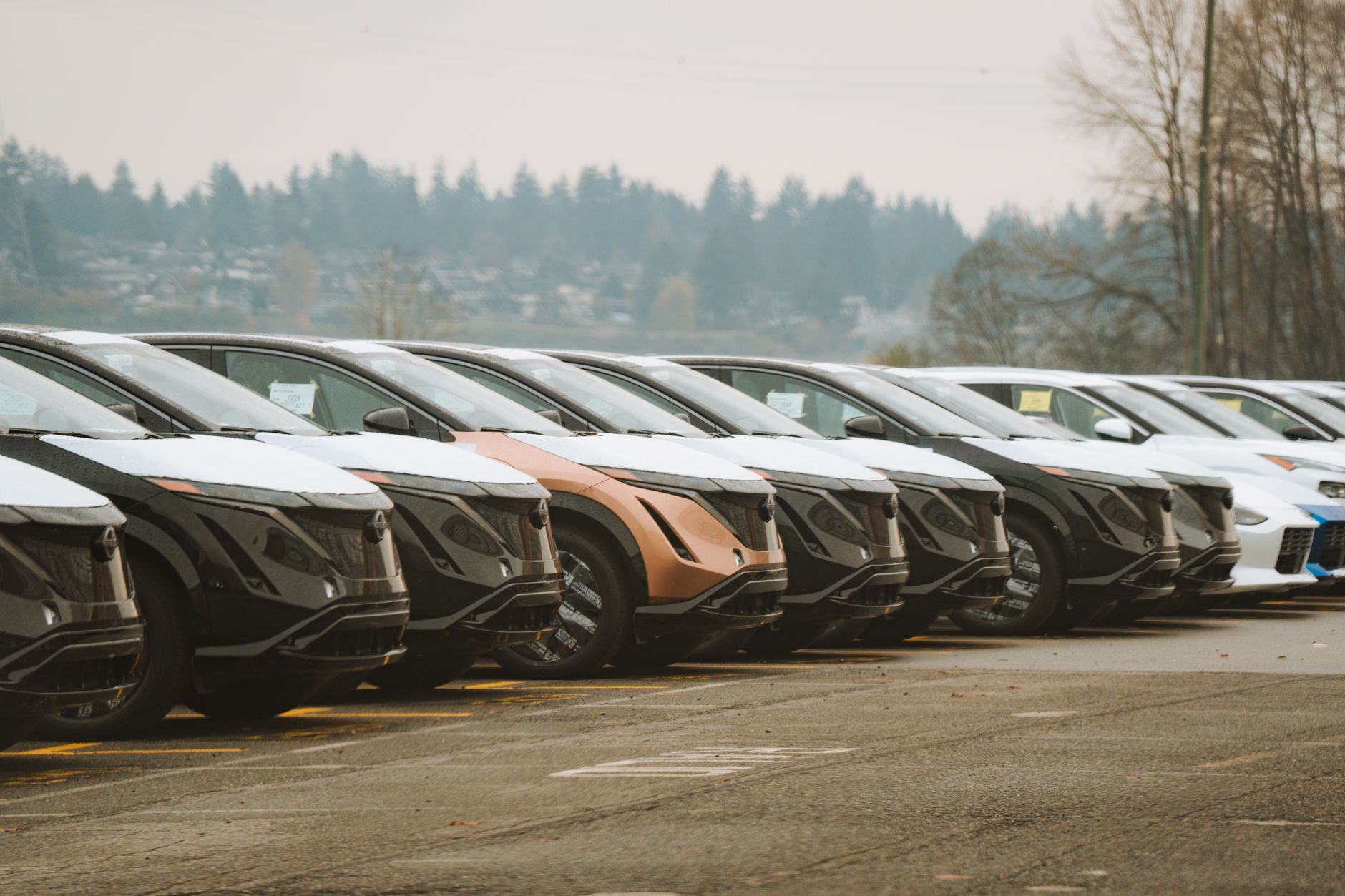
Look for dealer stock already in the country. This is the most underused tactic. Dealers regularly receive unregistered vehicles that were ordered speculatively or cancelled by previous buyers. These sit on forecourts or in storage, ready to register immediately. The spec won’t be exactly what you’d have chosen, but you’ll have the car in days rather than months. Most manufacturers’ websites now let you search in-stock vehicles nationally, and it’s worth ringing dealers outside your immediate area.
Consider ex-demonstrator models. A car that’s been used as a dealer demonstrator for three to six months will carry a small mileage, typically under 5,000 miles, but will be available immediately and often priced competitively. You still get the manufacturer warranty from the original registration date.
Ask about cancelled orders. People’s circumstances change. A buyer who ordered a car six months ago might have had a redundancy, moved abroad, or simply changed their mind. Dealerships don’t always advertise these slots openly. Calling ahead and specifically asking whether they have any cancelled build slots is worth five minutes of your time.
Be flexible on specification. The colour and trim combination you’ve set your heart on might have a six-month wait. A slightly different configuration of the same model might be three weeks away. If the fundamentals of the car matter more to you than the exact exterior colour, flexibility here saves serious amounts of time.
Consider nearly new rather than new. There’s a strong argument for going nearly new right now, given how the market has shifted. I wrote a full piece on why nearly new cars are sometimes cheaper than brand new in the current market, which is genuinely worth reading if you’re flexible about the registration plate.
What about leasing as a way around delays?
Leasing companies work differently to private buyers in the allocation system, as I mentioned earlier. Some brokers have access to fleet allocation that means they can source cars faster than a franchised dealer selling to a private buyer. If you’re open to leasing, brokers who specialise in volume can sometimes have a car with you in six to eight weeks when a direct dealer order would take six months. Whether that trade-off makes sense financially depends entirely on your situation, and the leasing versus buying comparison is worth working through carefully before you commit.
Will new car waiting times improve in the UK?
Manufacturers are not sitting still. TSMC and Samsung are expanding fabrication capacity, and several European plants have signed long-term supply agreements to reduce dependency on spot markets. But the honest answer is that demand for advanced vehicle electronics is growing faster than chip production is scaling. EVs require roughly twice the semiconductor content of a comparable petrol car. As the ZEV mandate pushes more electric models onto order books, the pressure on supply chains doesn’t ease, it increases.
My read is that wait times will gradually reduce for mainstream petrol and mild hybrid models over 2026 and into 2027, but that EVs and high-spec vehicles will continue carrying extended queues for the foreseeable future. Plan accordingly, be patient where you can, and be pragmatic where you can’t.
Leave a Reply