

Two names dominate the premium SUV conversation in Britain. The Range Rover Sport vs Porsche Cayenne debate has been running for well over a decade, and in 2026 it is sharper than ever. Both have had mid-cycle updates, both have plug-in hybrid variants, and both sit in roughly the same price bracket once you start ticking boxes on the configurator. The question is which one actually makes sense once you factor in what British roads, British weather, and British running costs actually demand.
I’ve spent time with both over the past few months, covering a mix of motorway miles, properly rutted Cotswold lanes, and the kind of urban stop-start misery that comes with the school run in any town with a 20 mph limit. Here is what I found.
Price and what you actually get for it
The Range Rover Sport starts at around £82,000 for the P300 mild hybrid in base Dynamic trim. The Cayenne opens at £72,500 for the standard 3.0-litre V6, which sounds like a meaningful gap until you realise neither car’s standard spec satisfies the kind of buyer shopping in this segment. Realistically, you are spending £90,000 to £110,000 on either once you add a decent paint colour, a panoramic roof, and the audio upgrade that makes sense.
The Sport’s PHEV, the P510e, lists at £104,000. The Cayenne E-Hybrid Coupé tips past £100,000. For that money you get a car that can do short electric-only runs, which is worth remembering if you regularly drive in a Clean Air Zone or want to keep fuel costs down on predictable daily commutes. Both qualify for a zero-emission miles benefit in kind calculation, which is relevant if you are running either as a company car.
On British roads: how they actually drive
The Cayenne is the driver’s car. Full stop. Porsche’s adaptive air suspension reads the road better than anything else at this price point, and the steering has genuine weight and feedback that the Sport simply cannot match. On an A-road through the Peak District, the Cayenne feels like it belongs there. It is taut, committed, and communicative in a way that is unusual for a 2.2-tonne SUV.
The Range Rover Sport handles our roads differently. Over genuinely rough tarmac, the pot-holed B-roads that the RAC flags in its annual reports as among the worst in Europe, the Sport’s air suspension simply absorbs more. It floats where the Cayenne occasionally thuds. I’d argue that for most UK buyers, who spend the majority of their miles on degraded tarmac rather than smooth alpine passes, that compliance is more valuable than outright chassis agility. If pothole damage is something you worry about, the Sport’s softer tune is a genuine practical advantage.
Motorway cruising gives the Sport the edge too. Wind noise is lower, the seats are more cosseting over distance, and the cabin quiet at 70 mph is noticeably superior. For a car that will rack up a lot of miles on the M40 or M6, that matters.
Reliability reputation: the honest picture
This is where the conversation gets uncomfortable for Land Rover fans. The brand’s reliability reputation has improved, but it carries baggage. Which? and JD Power UK surveys consistently place Jaguar Land Rover products below the industry average for ownership satisfaction, with electrical gremlins and infotainment software issues cited most frequently. The current Sport generation, which launched in 2022, has seen fewer catastrophic failures than its predecessor, but forum communities report persistent minor faults.
Porsche is a different story. The Cayenne sits near the top of owner satisfaction surveys year after year. The mechanical architecture is shared with Volkswagen Group siblings, which means a deep UK dealer network and parts availability that is genuinely good. I spoke to a service advisor at a Porsche Centre in Birmingham who told me the most common Cayenne job they see is brake disc replacement, which is a testament to how few warranty issues they actually process.
If reliability matters more than prestige badge cachet, the Cayenne wins this category clearly.
Depreciation and total cost of ownership
The Sport depreciates faster. That is a well-established pattern in UK car markets. CAP HPI data consistently shows Range Rover products retaining around 45 to 50 per cent of their new price after three years, while the Cayenne holds closer to 55 to 60 per cent. On a £95,000 car, that gap is worth roughly £9,000 to £14,000 over a standard three-year ownership period.
There is a flip side. Because the Sport depreciates harder, buying one used at two to three years old is exceptional value. You can buy a nearly-new Sport for £50,000 to £60,000 that was pushing £90,000 new. If you are considering that route, it is worth reading our take on why nearly new cars can be cheaper than new right now, because the same dynamics apply here at scale.
Running costs beyond depreciation are roughly comparable. Both need premium fuel (or have PHEV variants that reduce fuel spend significantly), both sit in the top VED band, and both carry insurance group ratings in the high 40s to 50s. Servicing is where the Cayenne tends to be cheaper, because Porsche’s service intervals are longer and dealer labour rates, whilst high, are usually below what a main Land Rover dealer charges.
For buyers who want genuine off-road ability and might use their car for towing a caravan or a boat trailer, it is worth noting that both are accomplished tow vehicles. The Sport has a maximum towing capacity of 3,500 kg, matching the Cayenne exactly. Our broader look at the best tow cars in the UK covers the segment below these two, but the principles around nose weight and stability control apply equally here.
The school run and daily life
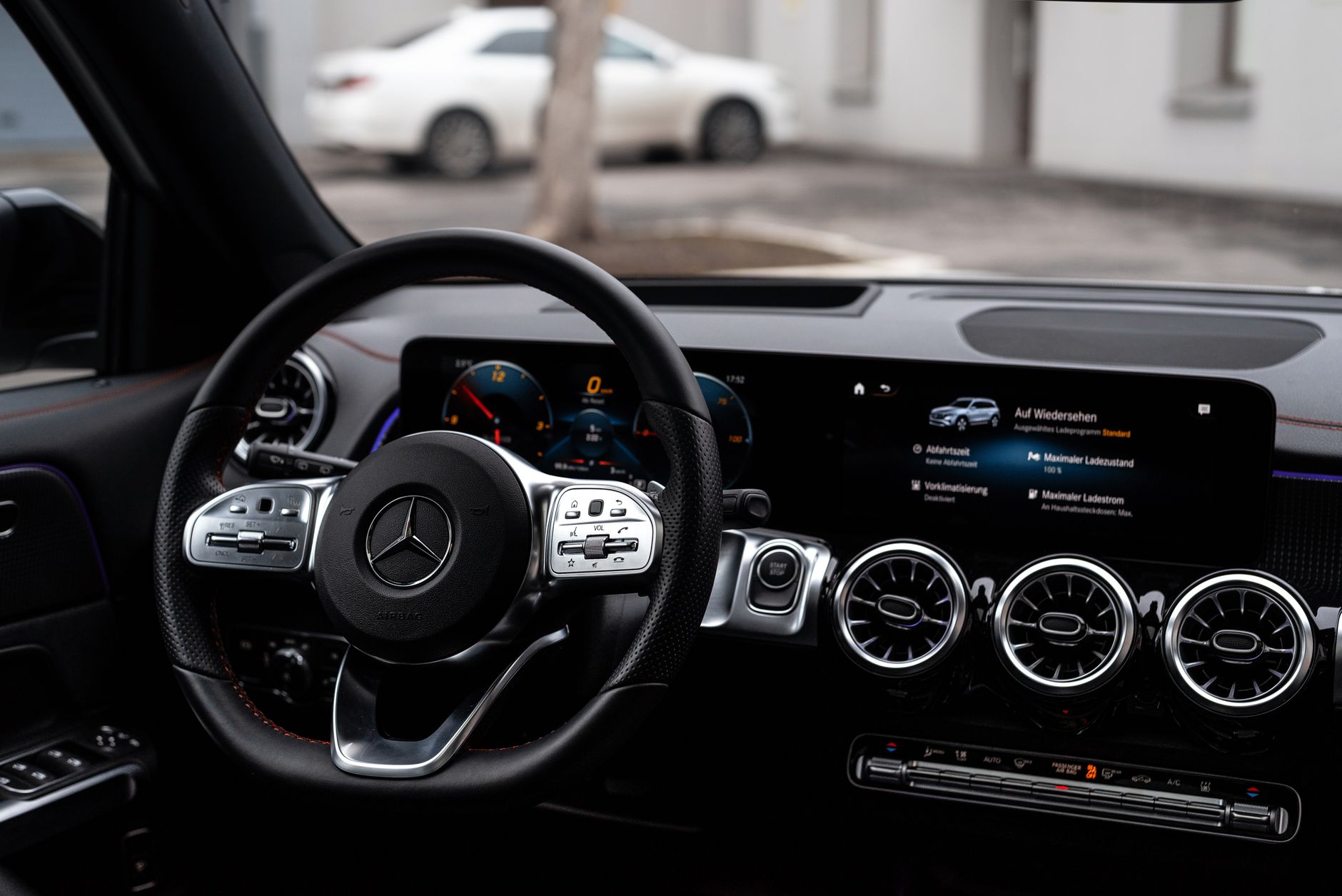
Both are genuinely practical family cars. Boot space in the Sport is 780 litres with the rear seats up; the Cayenne manages 770 litres in standard body form, rising to 857 litres in the Cayenne Sport Turismo estate variant if you need the extra room. Interior quality is close, though the Cayenne’s dashboard layout is cleaner and its infotainment system more intuitive. The Sport’s curved display looks dramatic but takes longer to learn.
In terms of interior space, both accommodate three children across the back without real complaint, and both have ISOFIX points on the outer rear seats. The Sport’s higher seating position gives better visibility for parking in the tight spaces that come with urban school gates, which is a minor but real-world point.
For anyone interested in how parts availability and ownership cost plays out in the broader SUV world, the community at Mitzybitz.com gives a useful sense of how older premium 4x4s hold up when you start looking at long-term maintenance realities.
Which one should you buy?
If you want the better driver’s car, with stronger reliability and less painful depreciation, the Cayenne is the rational choice. Porsche has earned its reputation for getting this formula right, and the 2026 Cayenne is the most complete version yet.
If the badge matters, if you do occasional light off-roading, or if ride comfort on genuinely poor tarmac is your priority, the Range Rover Sport still earns its place. It is a more distinctly British luxury object, and there are worse things to be. Just go in clear-eyed about what the ownership experience might involve, and factor the depreciation curve into your finance calculation from the start.
The DVLA’s VED rate tables are worth checking before you commit to either, because both sit in the highest road tax band and the PHEV exemption rules have changed for 2026 registrations.
Leave a Reply