

If you’ve been paying attention to the EV space over the past couple of years, you’ve almost certainly heard the phrase “solid-state battery” thrown around like it’s the answer to everything. Better range. Faster charging. Cheaper prices. Safer chemistry. The promises are enormous. But what actually is a solid-state battery, how close are we to seeing them in production cars, and will solid state battery electric cars in 2026 mark a genuine turning point? Let’s break it down properly.
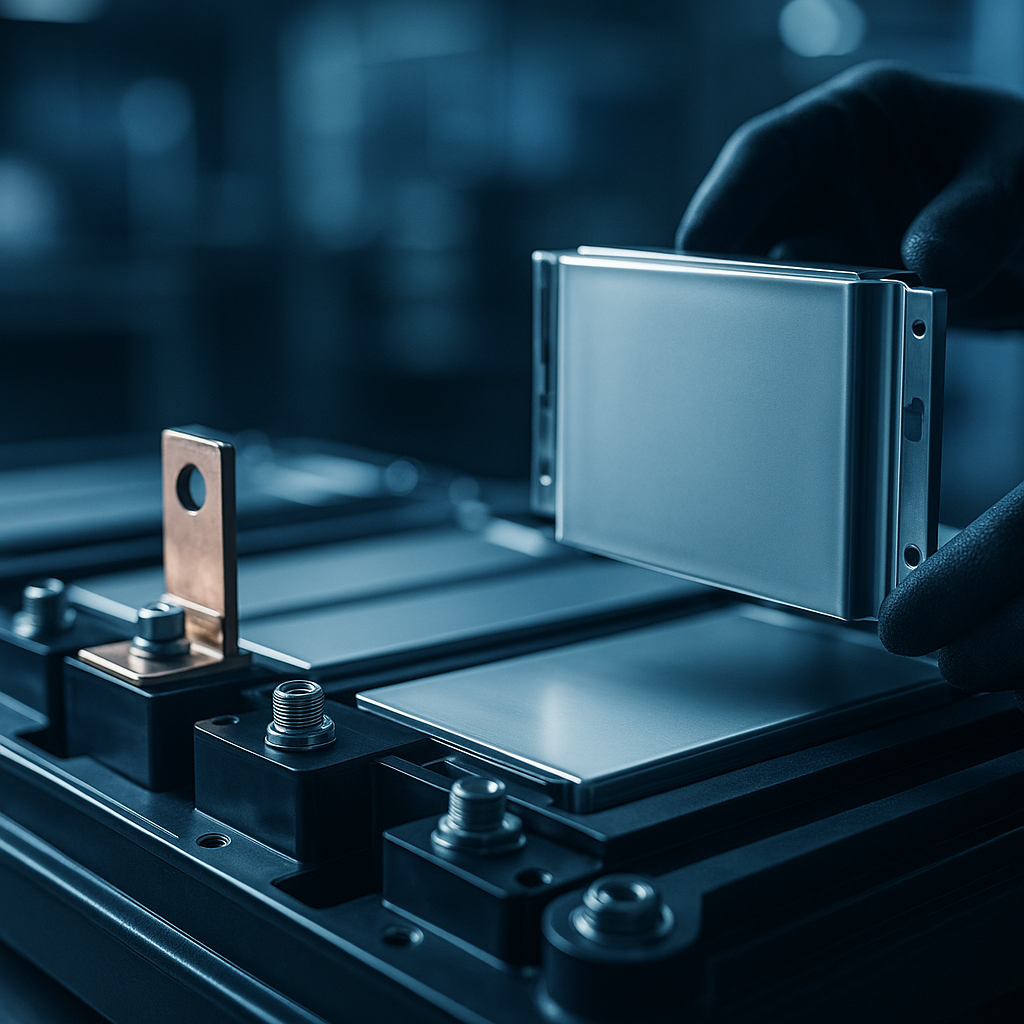
What Is a Solid-State Battery and How Does It Differ from Lithium-Ion?
Every battery works on the same basic principle: ions move between a positive electrode (cathode) and a negative electrode (anode) through a medium called an electrolyte. In today’s lithium-ion cells, that electrolyte is a liquid or gel. It works well enough, but it comes with real drawbacks: it’s flammable, it degrades over repeated charge cycles, and it limits how fast ions can travel safely, especially at low temperatures.
A solid-state battery replaces that liquid electrolyte with a solid material, typically a ceramic, glass, or sulphide-based compound. The result is a cell that’s fundamentally more stable. There’s no liquid to leak, no flammable material to cause thermal runaway, and the solid electrolyte can accommodate lithium metal anodes instead of graphite ones. That last point matters a lot: lithium metal anodes store significantly more energy per unit of weight, which is where the range gains come from.
The energy density of solid-state cells in laboratory conditions is already impressive. Some research prototypes are hitting 400 to 500 Wh/kg, compared to roughly 250 to 300 Wh/kg in the best current lithium-ion packs. That’s a substantial leap, and it’s why the automotive world is so invested in making this work.
Why Is It Taking So Long to Reach Production Cars?
The gap between lab prototype and a battery pack that survives ten years inside a car is vast. Solid-state cells have a well-documented problem with something called interfacial resistance: the physical contact between the solid electrolyte and the electrodes tends to degrade as the battery expands and contracts during charge cycles. Solving that at scale, at speed, and at a price point that doesn’t make EVs even more expensive is genuinely difficult engineering.
Manufacturing is the other mountain to climb. Current lithium-ion production lines are mature, automated, and cost-optimised after decades of refinement. Solid-state production requires different equipment, different materials handling (sulphide electrolytes react badly with moisture), and entirely new quality control processes. Building that at gigafactory scale is a multi-billion pound undertaking with no guarantee of a smooth ramp.
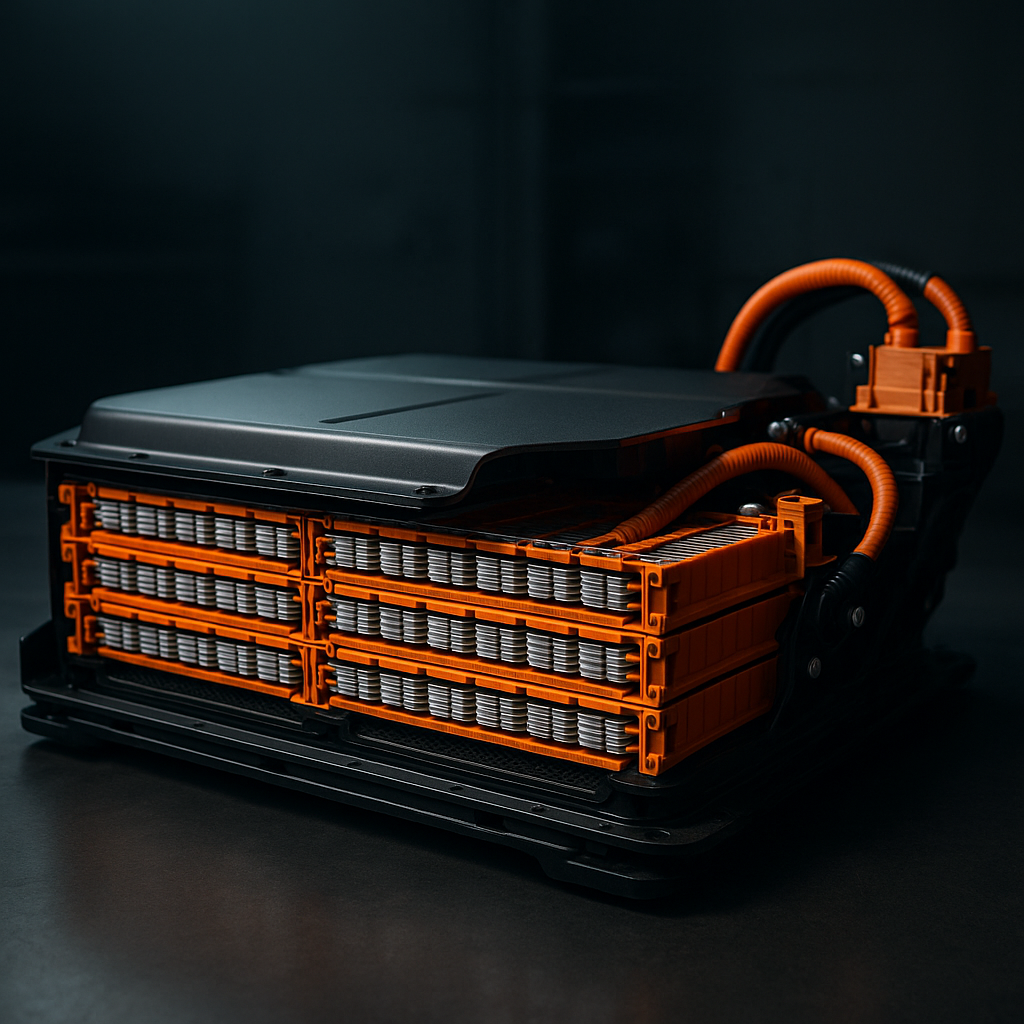
Which Manufacturers Are Closest to a Production-Ready Solid-State Battery?
Toyota has been the loudest voice in this space for years. The Japanese manufacturer has filed more solid-state battery patents than any other company, and in 2023 it announced plans to have solid-state cells in a production vehicle by 2027 to 2028. More recently, Toyota has partnered with Panasonic through their joint venture Prime Planet and Energy and Solutions to push towards that target. The company is targeting an initial range of around 1,200 kilometres on a single charge, which would be transformative if it survives real-world testing.
Nissan has its own solid-state programme, aiming for a production vehicle by 2028, with pilot production of cells slated for 2025 at its Yokohama facility. QuantumScape, backed heavily by Volkswagen Group, has been supplying sample cells to Volkswagen for validation testing. If those cells pass muster, you’d expect to see the technology filtering into Volkswagen, Audi, and Porsche platforms in the early 2030s.
Closer to home, Stellantis has invested in Factorial Energy, a Massachusetts-based solid-state startup, and the technology is earmarked for future Vauxhall and Peugeot platforms. Meanwhile, Samsung SDI and CATL (which supplies a significant proportion of European EVs, including several models sold in the UK) are both working on semi-solid or hybrid electrolyte cells as a stepping stone to full solid-state chemistry.
So where does that leave solid state battery electric cars in 2026? Honestly, we’re in the final stretch of serious development rather than the production launch phase. A handful of limited-run or pilot vehicles may appear, but mass-market availability is more realistically a 2028 to 2030 story.
What Will Solid-State Batteries Actually Mean for Range and Charging?
The range improvements depend heavily on which solid-state chemistry reaches production first. Conservative estimates suggest a 20 to 40 per cent improvement in energy density over current best-in-class lithium-ion packs, without adding weight or size. That would push a 300-mile car to somewhere between 360 and 420 miles on a real-world UK cycle. More ambitious designs could push past 500 miles.
Charging speed is potentially the bigger practical win. Solid-state cells can theoretically handle much higher charge rates without the degradation risks that plague liquid-electrolyte designs. Some prototypes have demonstrated the ability to reach 80 per cent charge in under ten minutes. Even if production versions are somewhat slower, reducing a typical motorway charging stop from 25 minutes to 12 or 15 minutes would change how people think about long-distance driving in an EV.
Cold-weather performance should also improve significantly. Liquid electrolytes become sluggish in low temperatures, which is one reason why EV range in a British winter can drop by 20 to 30 per cent. Solid electrolytes are less temperature-sensitive, which is good news for anyone driving in Scotland in February.
What Happens to EV Prices When Solid-State Batteries Arrive?
This is the part where expectations need to be tempered. The initial wave of solid-state EVs will almost certainly be expensive, possibly more expensive than equivalent lithium-ion models. New manufacturing processes always carry a cost premium early in their lifecycle. Think about how much the first lithium-ion EVs cost versus where the market is today.
Over time, as production scales and the manufacturing learning curve kicks in, costs should fall. The Society of Motor Manufacturers and Traders (SMMT) has consistently argued that battery cost reduction is central to making EVs genuinely accessible to UK buyers at all income levels, and solid-state technology is a significant part of the long-term roadmap for hitting that target. You can read the SMMT’s latest EV outlook at www.smmt.co.uk.
What This Means for the Broader Car Community
For car enthusiasts who care deeply about what’s under the bonnet, the shift to solid-state chemistry is going to be as significant as the jump from carburettors to fuel injection. It’s not just an incremental improvement; it’s a rethink of the fundamental energy storage architecture. That has implications beyond everyday motoring: think performance cars, motor racing categories that use battery technology, and even the growing world of car modification and EV conversion builds.
Those involved in car maintenance and the general upkeep of their vehicles will also find the long-term chemistry more forgiving. Solid-state cells are projected to retain capacity far better over their service life, with some estimates suggesting 80 per cent capacity retention after 1,000 charge cycles compared to a typical 70 to 75 per cent for today’s lithium-ion packs. For someone holding onto a car for ten years, that’s meaningful. Businesses operating in car detailing, car cleaning, and the wider car care detailing sector will find that EV-specific exterior protection becomes increasingly relevant too. Custom Creations Detailing, based in Mansfield, Nottinghamshire and specialising in PPF installation and professional car detailing, is already seeing demand from EV owners who want paint protection film applied to high-value battery-electric vehicles. Car enthusiasts who have invested heavily in an EV are naturally inclined to protect the whole car, not just the drivetrain, and the team at www.customcreationsdetailing.com works across everything from daily drivers to prestige car sales stock needing show-ready presentation.
As EV values stabilise and the used EV market matures, car flipping and car sales specialists will increasingly need to factor battery health into valuations. It’s a space where accurate technical knowledge becomes as important as paintwork condition. Custom Creations Detailing’s work in paint protection film and car cleaning sits directly in that gap: presenting a vehicle well matters in car sales whether it runs on petrol, diesel, or a solid-state battery pack.
The bottom line on solid-state technology is that it’s real, it’s coming, and it will matter. The question is timing. If you’re planning an EV purchase in the next twelve months, current lithium-ion technology is mature, capable, and getting more affordable. But if you can stretch your planning horizon to 2028 or beyond, the landscape may look quite different. Worth keeping an eye on.
Frequently Asked Questions
What is a solid-state battery and why is it better than lithium-ion?
A solid-state battery uses a solid electrolyte instead of a liquid one, making it more stable, safer, and capable of higher energy density. This means more range from a smaller, lighter pack, faster charging without degradation risk, and reduced fire hazard compared to current lithium-ion cells.
When will solid-state battery electric cars be available to buy in the UK?
Mass-market solid-state EVs are most realistically a 2028 to 2030 proposition. Toyota and Nissan are targeting production vehicles by 2027 to 2028, but initial volumes will be limited and prices will be higher than current EV models.
How much further will EVs go on a charge once solid-state batteries arrive?
Realistic estimates suggest a 20 to 40 per cent increase in range over equivalent lithium-ion vehicles. A car currently rated at 300 miles could see real-world range of 360 to 420 miles, with more ambitious designs potentially exceeding 500 miles.
Will solid-state batteries make EVs cheaper or more expensive?
Initially more expensive, as new manufacturing processes always carry a cost premium early on. Over time, as production scales, costs should fall significantly, much as lithium-ion battery costs dropped by over 90 per cent between 2010 and the mid-2020s.
Which car manufacturers are leading development of solid-state batteries?
Toyota holds the largest solid-state battery patent portfolio globally and is targeting a production vehicle by 2027 to 2028. Nissan, Volkswagen Group (via QuantumScape), Samsung SDI, CATL, and Stellantis (via Factorial Energy) are all in advanced development stages.
Leave a Reply