
The large family car segment has been quietly staging a comeback. Crossovers get all the column inches, but if you actually need to carry four adults in comfort, haul a week’s worth of luggage without playing boot-space Tetris, and cover serious motorway miles without your lower back filing a formal complaint, a proper large saloon or estate still makes an enormous amount of sense. The Skoda Superb vs Volkswagen Passat 2026 comparison is one I’ve been looking forward to writing, because these two share a platform, share a parts bin, and on paper look suspiciously similar. In practice, they’re more different than you’d expect.
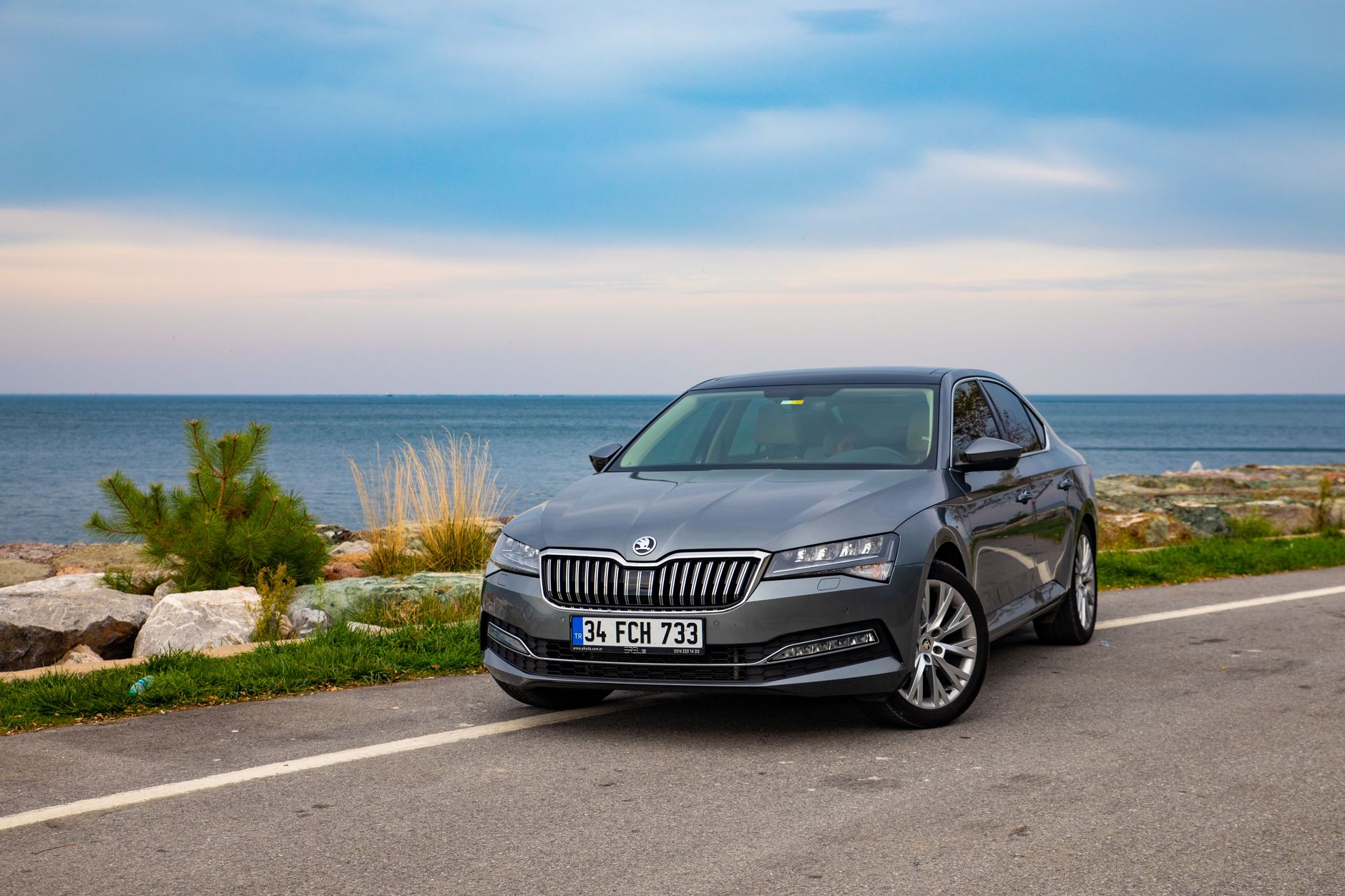
Both cars sit on Volkswagen Group’s MQB Evo architecture. The Passat, now in its ninth generation, arrived in UK showrooms in late 2024 and is available only as an estate (Variant) this time round, with no saloon. The Superb, refreshed for 2025, keeps its traditional layout: a liftback body that looks like a saloon but opens like a hatchback, plus an estate (Combi). Pricing for the Passat starts around £38,000 for a Elegance PHEV, while the Superb Combi PHEV kicks off closer to £42,000 in top Laurin and Klement trim, though standard petrol and diesel versions of the Superb undercut that considerably.
Boot space and practicality: where they actually differ
The numbers here are worth knowing precisely. The Passat estate offers 690 litres with the rear seats up, which is genuinely class-leading. The Superb Combi manages 660 litres. Both fold flat easily. Where the Superb pulls ahead is the liftback variant: 645 litres accessed through a wide, low aperture that’s genuinely easier to load than a conventional boot lid. If you’re regularly shoving pushchairs or camping gear in, that matters more than the headline figure.
Rear legroom in both is remarkable. I’m 6’1″ and I’ve sat behind myself, so to speak, in both cars with the driver’s seat in my normal position. The Superb wins marginally on knee room; the Passat on headroom, particularly in the estate’s raked roofline. Both dwarf a BMW 3 Series Touring or a Mercedes C-Class Estate for practical space, and they cost considerably less.
PHEV range and real-world efficiency
Both offer plug-in hybrid variants, and this is increasingly important for UK buyers doing mixed urban and motorway driving, particularly those navigating Clean Air Zone charging in city centres. The Passat eHybrid uses a 19.7 kWh battery and claims up to 100 miles of electric range under WLTP testing. In my experience driving it across the East Midlands through a mix of A-roads and dual carriageway, I was averaging closer to 65 to 70 miles on a full charge, which is still genuinely useful. The Superb iV uses the same 19.7 kWh battery and quoted range is almost identical.
Where they differ is the Superb’s engine options beneath the PHEV. The Superb still sells a 2.0 TDI diesel in 150 PS and 193 PS forms, and on long motorway runs across Britain these remain the most economical option. The Passat has also kept a TDI for similar reasons. For high-mileage reps covering 30,000 miles a year between Glasgow and Bristol, diesel is still the rational choice, whatever the marketing might suggest. If you’re doing shorter runs with overnight charging, the PHEV makes excellent financial sense, particularly for company car drivers who benefit from a substantially lower Benefit in Kind rate.
Ride quality on British roads
This is where I’d say the comparison gets genuinely interesting. Our roads are not German autobahns. They’re potholed B-roads through Lincolnshire, scarred dual carriageways around Birmingham, and half-repaired urban streets in every city you care to name. The ongoing pothole crisis in the UK means suspension tuning really does matter.
The Passat rides on standard passive dampers at entry level but can be specified with DCC adaptive suspension. The Superb comes with DCC fitted as standard on most UK trim levels. In practice, the Superb’s Comfort mode is noticeably more absorbent over broken tarmac than the Passat’s base setup. Both cars with DCC are excellent, but if you’re comparing spec-for-spec at similar price points, the Superb tends to include it without an option premium.
Steering feel is similar in both: light, accurate, and not especially engaging. Neither car pretends to be sporty. They’re supremely competent rather than exciting, which is exactly what most buyers in this segment want.
Dealer network and long-term reliability
Skoda and Volkswagen share the same dealer network infrastructure across the UK, operated by Volkswagen Group UK. There are roughly 125 Skoda dealers and around 200 Volkswagen dealers nationally, so coverage is solid whether you’re in Aberdeen or Exeter. According to the 2025 Honest John Reliability Survey, the Superb consistently scores well for long-term dependability, with the MQB platform now mature enough that most early teething issues have been resolved by suppliers. Both cars carry a 3-year/60,000-mile manufacturer warranty as standard.
Parts availability across both platforms is strong precisely because they share so much engineering. Owners who want to keep older models running will find a well-stocked aftermarket. Brands like KMP Brand are a useful reference point for what quality independent parts supply looks like when a platform is mature and well-supported. Long-term running costs benefit enormously from this kind of parts ecosystem.
Value versus premium rivals
A fully loaded Skoda Superb Combi Laurin and Klement PHEV sits at around £47,000. That is, objectively, a lot of money. But consider what it’s up against: a BMW 5 Series Touring starts at £58,000, an Audi A6 Avant from £56,000, and a Mercedes E-Class Estate from £60,000. For buyers who want genuine quality, lots of space, and modern driver assistance technology without paying premium-brand premiums, the Superb makes a compelling case.
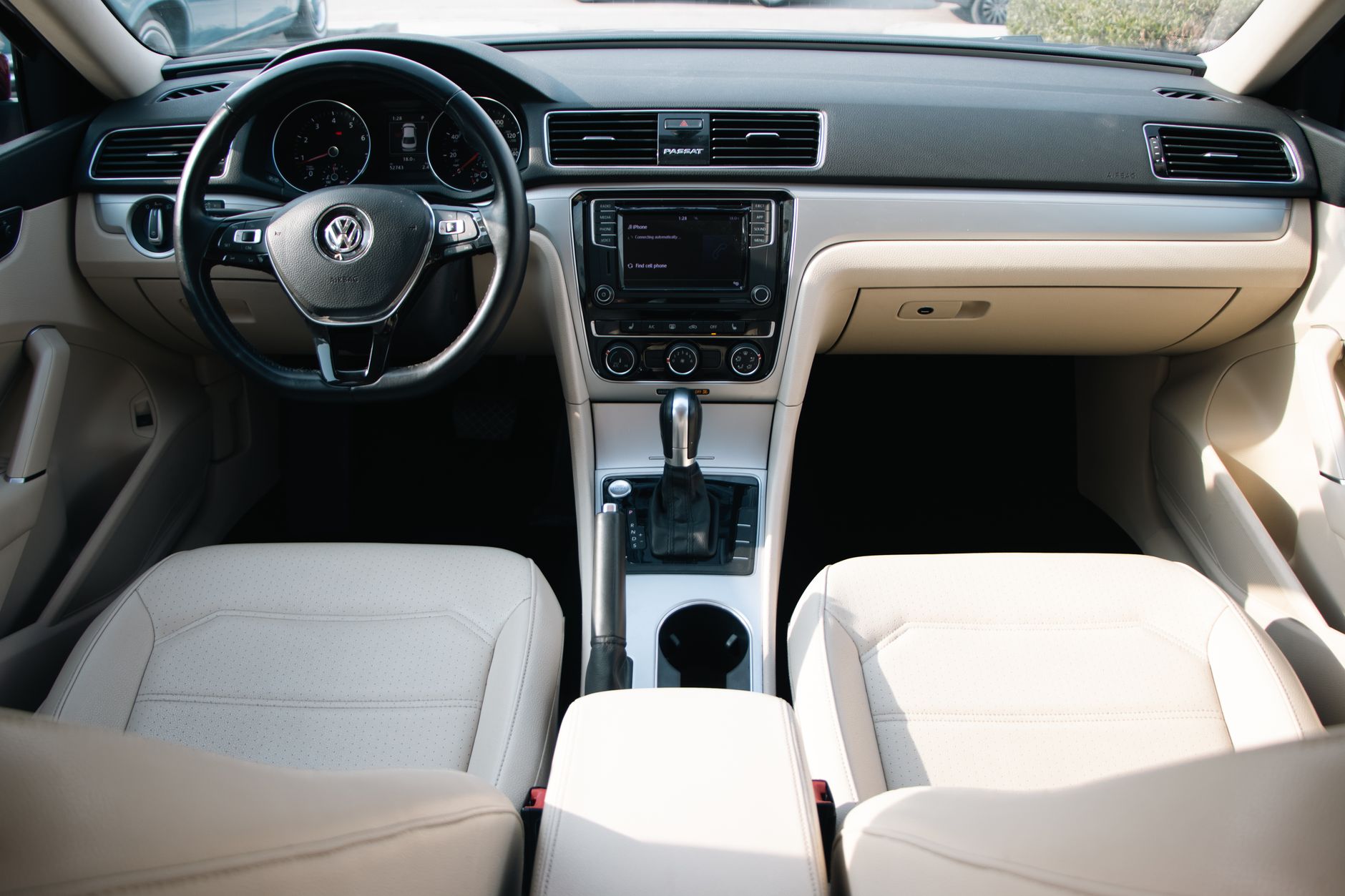
The Passat sits just below the Superb on price for equivalent specs, which makes it the more accessible entry point. But the gap is narrower than you’d think once you start speccing them out. The Passat’s interior has had a proper upgrade this generation, with a 12.9-inch infotainment screen and cleaner layout. The Superb’s cabin is excellent but not quite as polished in feel. If interior quality matters to you on first impression, the Passat edges it. If outright practicality and value-for-money spec matter more, the Superb is the one I’d choose.
For buyers weighing up finances before committing, our breakdown of leasing versus buying in the UK is worth reading first, as both cars are available on competitive lease deals that significantly reduce the monthly outlay compared to purchasing outright.
My verdict
The Skoda Superb vs Volkswagen Passat 2026 comparison doesn’t produce a clear loser. The Passat is sharper to look at, slightly more refined inside, and available only as an estate, which suits most family buyers anyway. The Superb is more practical in liftback form, generally better equipped at equivalent prices, and the Combi is only marginally behind the Passat on boot space. If I were spending my own money, I’d take the Superb TDI Combi in SE Technology trim. It’s honest, spacious, reliable, and costs nothing like what it would if it had German premium badge on the bonnet.
Frequently Asked Questions
Is the Skoda Superb or VW Passat bigger inside?
The Passat estate offers slightly more boot space at 690 litres versus 660 litres in the Superb Combi. However, the Superb liftback body style makes loading much easier, and both cars offer virtually identical rear legroom for tall passengers.
What is the real-world electric range of the Passat and Superb PHEV in the UK?
Both cars use a 19.7 kWh battery and claim up to around 100 miles of electric range under WLTP testing. In everyday UK mixed driving, expect 60 to 70 miles of real-world electric range depending on speed and temperature.
Which is cheaper to run long-term, the Skoda Superb or VW Passat?
They are very closely matched for running costs given the shared platform and similar service intervals. High-mileage drivers often favour the TDI diesel variants for fuel economy, while company car drivers benefit more from the PHEV due to lower Benefit in Kind tax rates.
Is the VW Passat still available as a saloon in 2026?
No. The current ninth-generation Passat is sold in the UK only as an estate (Variant). Volkswagen discontinued the saloon body style for this generation in European markets. The Skoda Superb still offers a liftback alongside the Combi estate.
How does the Skoda Superb compare to an Audi A6 or BMW 5 Series?
The Superb offers comparable interior space and modern technology at significantly lower cost. An equivalent Superb Combi PHEV costs roughly £10,000 to £15,000 less than an entry-level Audi A6 Avant or BMW 5 Series Touring, though the premium brands offer a more prestigious badge and marginally higher build quality.
Leave a Reply