Category: Cars

  • Best Electric Vans for UK Small Businesses in 2026: Ranked by Real-World Range and Running Costs

    Best Electric Vans for UK Small Businesses in 2026: Ranked by Real-World Range and Running Costs

    If you run a small business from a van, the pressure to go electric is no longer background noise. Tightening Clean Air Zone charges in cities like Birmingham, Bath, and London’s ULEZ expansion have made diesel running costs harder to justify, especially for sole traders who clock 20,000-plus miles a year. But switching is not as simple as pointing at the nearest Renault Kangoo and signing a lease. Payload, real-world range, charge infrastructure, and total cost of ownership all need to stack up before the numbers make sense. This guide to the best electric vans for small businesses cuts through the noise and focuses on what actually matters for people who use their van to earn a living.
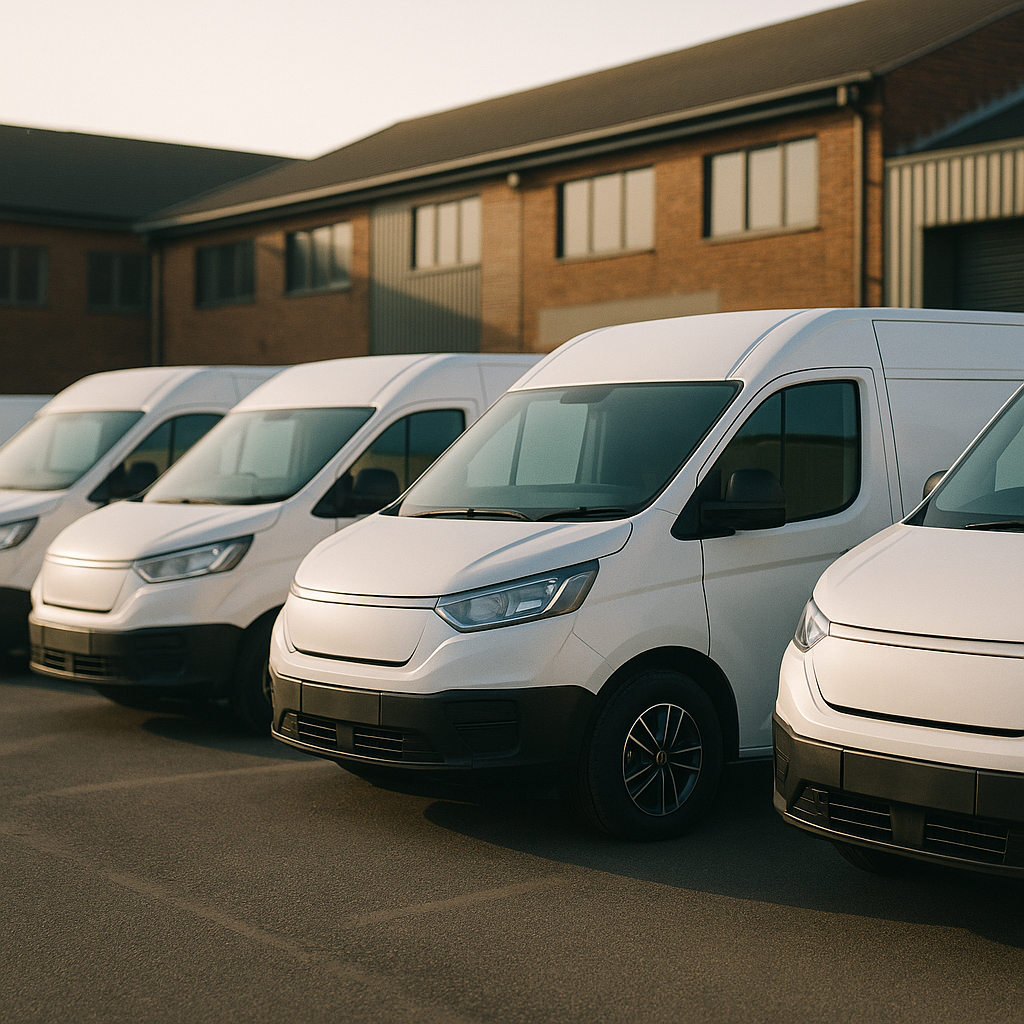
    Best electric vans for small businesses lined up at a UK commercial depot in morning light

    Why Electric Vans Make Financial Sense for Small Business Owners in 2026

    The headline figures are compelling. Electricity costs per mile are roughly a third of diesel equivalents when charging on a home or business charger overnight. The Society of Motor Manufacturers and Traders (SMMT) reported that electric van registrations in the UK rose by 34% in 2025, and that momentum is carrying into 2026 as more models hit competitive price points. Beyond fuel savings, electric vans currently attract 2% Benefit-in-Kind (BIK) tax, compared to 20-37% for petrol or diesel vans. For a sole trader using a van for business purposes under HMRC rules, the Advisory Electric Rate for reimbursing business electricity costs sits at 9p per mile as of early 2026, which is worth factoring into any mileage allowance calculations.

    The government’s plug-in van grant still covers up to £2,500 off eligible small vans (under 2,500kg gross vehicle weight), though the scheme is subject to periodic review. Check the latest eligibility on gov.uk before budgeting.

    The Top Electric Vans Compared: Range, Payload, and Charging

    Renault Kangoo E-Tech

    The Kangoo E-Tech remains one of the most practical compact electric vans available in the UK. Its 45kWh battery delivers a real-world range of around 160 miles in warmer months, dropping to roughly 120 miles in winter. Payload is 556kg, which suits most light trades. It supports 80kW DC rapid charging, bringing the battery from 20% to 80% in around 42 minutes. For a builder doing local runs or a courier covering urban zones, this is a solid daily tool.

    Ford E-Transit Custom

    Ford’s E-Transit Custom is the big story in 2026 for medium-duty van users. With a 64kWh battery, real-world range sits comfortably around 190-210 miles on mixed routes, and payload hits 905kg in standard form. The 125kW rapid charge capability means a 10-80% top-up in under 40 minutes. For small fleet operators who need a proper mid-size van rather than a compact runaround, the E-Transit Custom is arguably the best electric vans for small businesses choice at this size class right now.

    Volkswagen ID. Buzz Cargo

    Slightly unconventional, but the ID. Buzz Cargo earns its place here for businesses where client-facing appearance matters. The 77kWh battery gives around 220 miles of real-world range. Payload is modest at 650kg, so it suits trades carrying lighter kit: photographers, florists, mobile technicians. 170kW DC charging is class-leading at this weight. Running costs are low and residual values are holding up well, which helps on a lease or HP agreement.

    Vauxhall Vivaro Electric

    The Vauxhall Vivaro Electric shares its platform with the Citroen e-Dispatch and Peugeot e-Expert, so parts and servicing are well-supported across the UK. The 75kWh battery returns around 200 miles in real-world driving, and payload is a generous 1,000kg. A 100kW DC rapid charge takes around 45 minutes from low to 80%. For sole traders in construction, catering, or events who need carrying capacity, this is a genuinely usable diesel alternative.
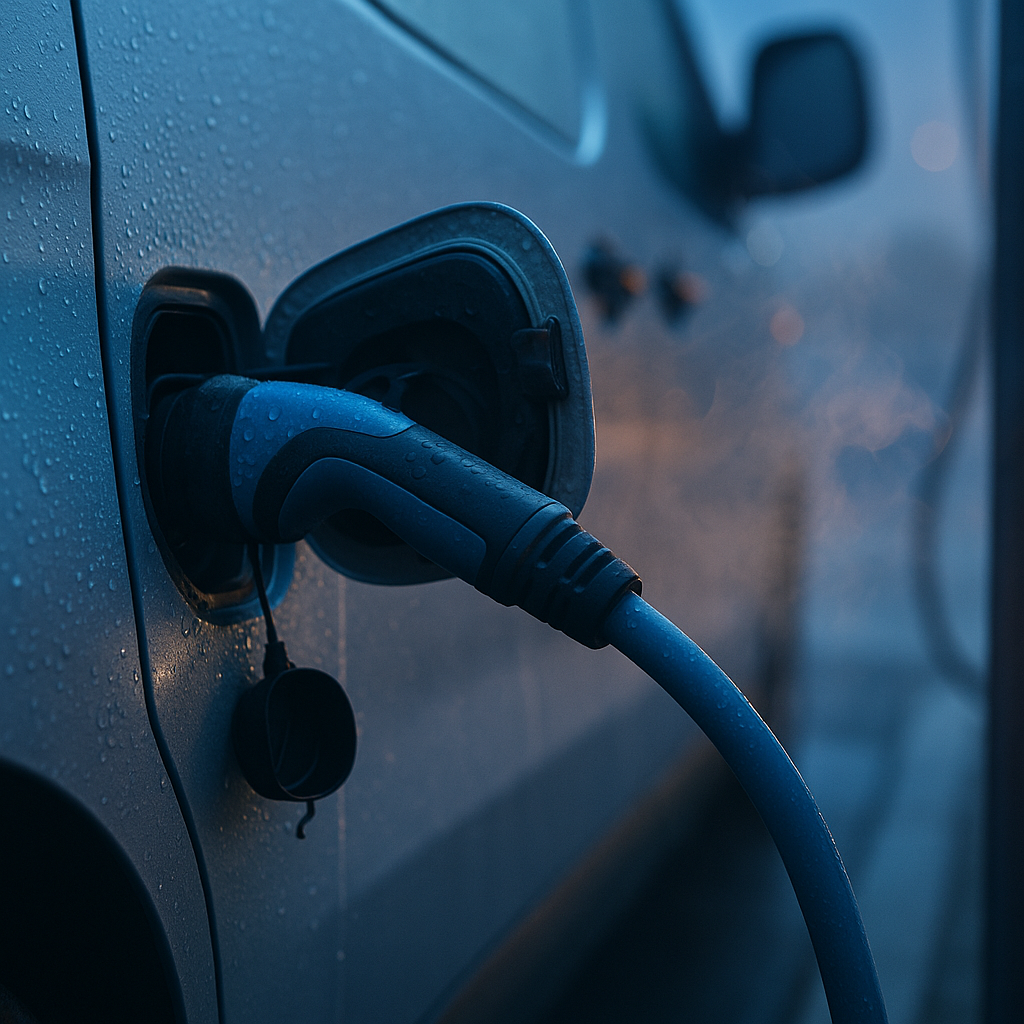
    Electric van charging port close-up illustrating rapid charging capability for best electric vans for small businesses

    Mercedes-Benz eSprinter (2026 spec)

    For larger operations, the updated eSprinter deserves serious attention. The 113kWh battery variant offers a real-world range of around 230 miles, and payload is up to 1,075kg. DC charging at 115kW means reasonable downtime. It costs more upfront, typically north of £65,000 before the plug-in grant, but total cost of ownership over four years can match or beat a diesel Sprinter once fuel and servicing savings are factored in. If you run refrigerated goods or large tools, this is the van to evaluate.

    Electric Van vs Diesel: What Does the Total Cost of Ownership Actually Look Like?

    Sole traders often focus on the purchase price gap between electric and diesel and stop there. That is a mistake. Over a four-year ownership or lease period, the comparison looks very different once you account for fuel, servicing, Clean Air Zone charges, and tax.

    Take a realistic example: a sole trader covering 25,000 miles a year in a mid-size van. A diesel Transit Custom at current fuel prices will cost roughly £4,500 in fuel annually at 35mpg and £1.63 per litre diesel. An E-Transit Custom charged predominantly at home at 28p per kWh (average overnight rate) costs around £1,400 per year in electricity. That is a £3,100 annual saving before servicing. Electric vans have fewer moving parts: no oil changes, no DPF regeneration issues, no timing chain. Annual service costs are typically 30-40% lower than a comparable diesel.

    Add a ULEZ or CAZ daily charge of £9-12.50 per entry for a non-compliant diesel, and for a trader making five entries a week across 48 working weeks, that is an additional £2,160-£3,000 per year straight off the bottom line. The maths on electric starts looking very persuasive.

    HMRC Van Tax and Company Van BIK: What Small Business Owners Need to Know

    For limited company directors using a van personally, the company van benefit charge is a flat figure set by HMRC each year. For 2025/26, that figure is £3,960. Electric vans are charged at 0% BIK for the 2026/27 tax year, meaning a company director taking a zero-emission van as a company vehicle pays no income tax on the benefit. That is a meaningful saving versus a diesel van at the full rate.

    Sole traders operating under self-assessment can claim capital allowances on an electric van purchase. Under the current full expensing rules, 100% of the cost can be deducted in the year of purchase. For a £40,000 van and a 20% taxpayer, that is an £8,000 tax saving in year one. Speak to an accountant before committing, but the tax incentives for going electric in 2026 are genuinely significant.

    Charging Infrastructure: Is the UK Network Good Enough for Van Drivers?

    This is still the most common concern, and it is a fair one. Long-distance motorway runs remain the weak point. Zap-Map data for early 2026 shows over 65,000 public charge points across the UK, with rapid chargers increasingly common at motorway services. For most tradespeople who return to a fixed base each night, home or depot charging solves 95% of daily needs. A 7kW home wallbox installed via the government-backed scheme costs around £800-£1,000 fitted, and overnight charging on an EV tariff can bring the cost per mile down even further.

    Fleet managers running multiple vans should investigate depot charging solutions early. Pod Point and BP Pulse both offer commercial charging installation packages with load management software to prevent grid overload costs. This is the kind of infrastructure planning that separates a smooth electric transition from a frustrating one.

    A Note on Powertrain Legacy and Parts Availability

    Some operators run mixed fleets, particularly those with older vehicles kept for specialist work. When servicing or sourcing components for legacy diesel-powered commercial vehicles, knowing where to source parts matters. Operators familiar with American-made heavy commercial engines, for example, might source Detroit Diesel engine parts for older stock. It is a reminder that parts availability is just as critical a consideration for any working vehicle, electric or otherwise, and should always be checked before committing to a purchase or fleet addition.

    Which Electric Van Should You Buy?

    For compact urban work: the Renault Kangoo E-Tech. For mid-size all-round capability: the Ford E-Transit Custom. For payload-heavy trades: the Vauxhall Vivaro Electric. For long-distance larger loads: the Mercedes eSprinter. The best electric vans for small businesses are no longer compromised tools; several now match or exceed what diesel equivalents offer for everyday working life.

    The upfront cost hurdle is real, and financing matters. Leasing an electric van and spreading the cost is often more tax-efficient than outright purchase for sole traders. Talk to a commercial vehicle broker and your accountant before signing anything. But the direction of travel for working van operators in the UK is clear, and the 2026 model year has made that transition more accessible than ever.

  • Why Is My Car Insurance So Expensive in 2026? The Real Reasons UK Premiums Are Still Rising

    Why Is My Car Insurance So Expensive in 2026? The Real Reasons UK Premiums Are Still Rising

    If your renewal notice has landed on the doormat recently and made you do a double-take, you are not alone. UK car insurance costs remain stubbornly high in 2026, and the reasons are more layered than most comparison site articles will admit. This is not just a post-pandemic hangover. Several structural problems have converged at once, and understanding them is the first step to doing something about your premium.

    According to the Association of British Insurers, the average comprehensive car insurance premium hit record levels in late 2023 and has barely eased since. Drivers in the UK are paying more than almost anywhere else in Europe, and many are finding the usual tips, such as adding a named driver or tweaking your excess, are producing diminishing returns. So what is actually going on?

    UK driver reviewing a car insurance renewal document, illustrating rising UK car insurance costs in 2026
    UK driver reviewing a car insurance renewal document, illustrating rising UK car insurance costs in 2026

    The Repair Labour Shortage Nobody Is Talking About

    One of the biggest hidden drivers of high premiums right now is a serious shortage of qualified vehicle technicians across the UK. The Institute of the Motor Industry has flagged a gap of tens of thousands of skilled workers in the bodyshop and mechanical repair sectors. When there are not enough hands to fix cars quickly, repair times stretch out. Longer repair times mean longer courtesy car hire periods. Longer hire periods mean higher claims costs. Higher claims costs mean higher premiums. It is a chain reaction, and it feeds directly into what you pay every year.

    Training pipelines have not kept pace with vehicle complexity either. Modern cars are increasingly difficult to repair without specialist equipment and certified technicians, which compounds the supply problem further.

    Parts Inflation Is Still Biting Hard

    Global supply chains have stabilised somewhat since the worst of the semiconductor crunch, but automotive parts prices remain significantly elevated compared to 2019 levels. A replacement front bumper assembly on a mid-range family hatchback that might have cost £400 to source four years ago can now run to £700 or more once sensors, cameras, and radar modules are factored in.

    It is worth noting that this problem is not unique to premium or performance vehicles. Even workhorse pickups and commercial vehicles face the same challenge. If you are sourcing l200 parts for a Mitsubishi pickup, for instance, you will have noticed that genuine and pattern parts alike have seen meaningful price increases over the past two years. That cost gets absorbed somewhere, and for insured vehicles, it lands on the claims bill.

    Advanced Driver Aids Are Making Cars More Expensive to Fix

    This one catches a lot of drivers off guard. Features that are marketed as safety improvements, things like autonomous emergency braking, lane-keeping assist, adaptive cruise control, and 360-degree camera systems, are genuinely good at preventing accidents. The problem is that when they do get damaged, they are extraordinarily expensive to repair and recalibrate.

    A minor shunt that scratches a bumper on an older car might cost £300 to fix. On a newer model with radar emitters and parking sensors embedded in the same panel, that same shunt could cost over £1,500 once you factor in parts, labour, and the mandatory ADAS recalibration that has to happen before the car goes back on the road. Insurers are not absorbing that extra cost out of goodwill.

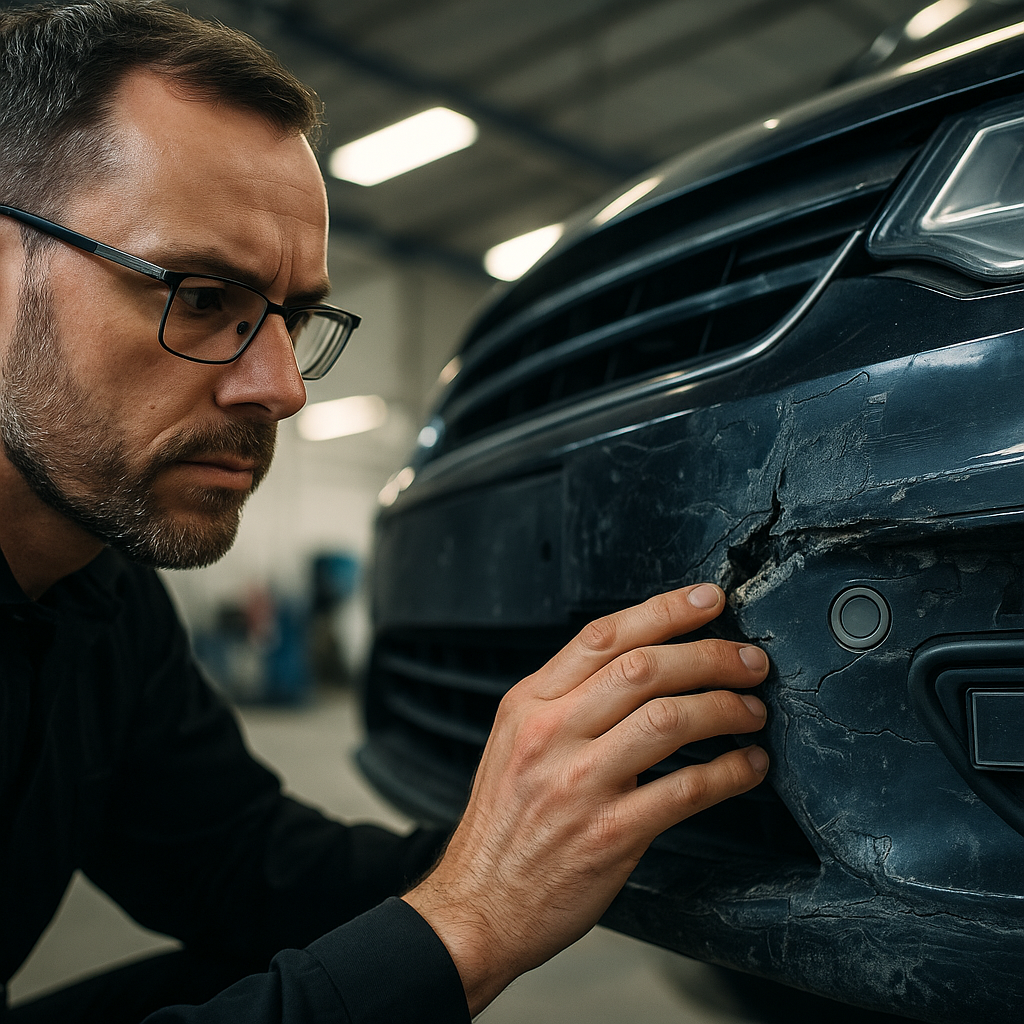
    Bodyshop technician inspecting ADAS sensor damage, a key factor driving up UK car insurance costs
    Bodyshop technician inspecting ADAS sensor damage, a key factor driving up UK car insurance costs

    The Whiplash Reform Fallout

    The Civil Liability Act 2018 introduced a fixed tariff for whiplash claims and pushed lower-value personal injury cases through an online portal, the Official Injury Claim service, rather than through solicitors. The government’s intention was to reduce fraudulent claims and bring premiums down. The reality has been more complicated.

    Fraud patterns have shifted rather than disappeared. Organised crash-for-cash gangs adapted. Meanwhile, legitimate claimants dealing with genuine injuries have found the portal process difficult to navigate without legal help. The savings the reform was supposed to generate have not been passed on to consumers in the way the government projected, which has frustrated consumer groups and left premiums higher than many expected.

    Electric Vehicles Are Reshaping the Risk Pool

    The rapid growth of electric vehicles on UK roads is creating a new set of insurance challenges. EVs have higher purchase values, specialised battery components that are expensive to assess after even moderate accidents, and in some cases, cars are being written off after relatively minor damage simply because battery inspection costs make repair uneconomical. As the EV share of the car parc grows, these higher average claim values are pushing up the overall risk pool cost, which affects everyone, including those still driving petrol or diesel cars.

    What Can UK Drivers Actually Do to Reduce Premiums?

    There is no magic fix, but there are legitimate strategies that still move the needle. Here is what is worth trying in 2026:

    • Shop around properly, every single year. Loyalty rarely pays with insurers. Use multiple comparison sites, and check direct with insurers not listed on them, such as Aviva and Direct Line, who sometimes offer better rates off the comparison platforms.
    • Consider a telematics or black box policy. If you have a clean driving record and do not cover huge annual mileage, usage-based insurance can produce substantial savings, sometimes 20 to 30 per cent on comparable cover.
    • Adjust your voluntary excess thoughtfully. Raising your voluntary excess reduces the premium, but make sure the figure you choose is one you could actually afford to pay if you needed to make a claim.
    • Pay annually rather than monthly. Monthly payment spreads are treated as credit and carry interest. Paying upfront removes that loading from the total cost.
    • Check your job title wording. Insurers price by occupation, and small differences in how you describe your job can produce surprisingly different quotes. A chef and a catering manager, for example, may be priced differently. Keep your description accurate, but explore legitimate alternatives.
    • Garage your car if possible. Keeping a car off the road overnight and in a locked garage is still recognised by most insurers as a meaningful risk reduction, particularly in urban areas.

    Is Relief on the Horizon?

    The Financial Conduct Authority has been monitoring the market and has previously taken action to ban the practice of price walking, where loyal customers were charged progressively more than new customers for identical cover. That reform helped, but it has not been sufficient to counteract the structural cost pressures described above.

    The government’s vehicle technology roadmap, which you can read more about on GOV.UK, does outline long-term ambitions around automated vehicle safety that could eventually reduce accident rates and claims volumes. But that is measured in decades, not renewal cycles.

    For 2026, the honest answer is that significant structural relief on UK car insurance costs is unlikely in the short term. The best approach is a combination of active shopping, smart policy choices, and understanding exactly what you are paying for when you compare quotes. The market is not going to come to you with a better deal. You have to go and find it.

    Frequently Asked Questions

    Why have UK car insurance premiums gone up so much in 2026?

    Several factors are pushing premiums higher simultaneously: repair labour shortages, inflated parts costs, expensive ADAS recalibration after accidents, and ongoing fraud patterns that survived the whiplash reform. Insurers are passing these higher claim costs onto policyholders through increased premiums.

    Does having a newer car with more safety technology make insurance cheaper?

    Not necessarily, and sometimes the opposite is true. Modern safety systems like radar-based autonomous emergency braking and lane-keeping cameras are expensive to repair and recalibrate after accidents, which can push repair bills up significantly. The reduction in accident frequency from those systems does not always offset the higher cost when accidents do happen.

    Is telematics or black box insurance worth it for experienced UK drivers?

    It can be, particularly if you have a clean record and drive moderate annual mileage. Telematics policies reward demonstrably safe driving behaviour with lower premiums, and savings of 20 to 30 per cent compared to standard cover are achievable. The main trade-off is that your driving patterns are monitored continuously.

    Will the FCA's price walking ban make a real difference to what I pay?

    The FCA’s ban on price walking, introduced in 2022, means insurers can no longer charge existing customers more than equivalent new customers for the same policy. This helped many loyal policyholders, but it has not been enough to counteract broader cost inflation in the market, so premiums overall remain high.

    What is the single most effective thing I can do to get a cheaper car insurance quote?

    Shopping around every year is consistently the highest-impact action. Do not rely on a single comparison site; use two or three, and check directly with insurers like Direct Line and Aviva who are not always listed on comparison platforms. Never allow your policy to auto-renew without comparing alternatives first.

  • Toyota GR86 vs Mazda MX-5 2026: Which Is the Better Driver’s Car for UK Roads?

    Toyota GR86 vs Mazda MX-5 2026: Which Is the Better Driver’s Car for UK Roads?

    There is something quietly defiant about both the Toyota GR86 and the Mazda MX-5. In a market that has sprinted headlong towards electrification, touchscreen menus and adaptive everything, these two have stayed resolutely committed to the basics: rear-wheel drive, a manual gearbox, no turbos required. The Toyota GR86 vs Mazda MX-5 debate has been rattling around forums and pub car parks for years, but in 2026 it feels more relevant than ever. Both have received incremental updates, both retain their core analogue character, and both remain remarkably accessible entry points into proper driving. So which one is actually better on the roads that matter most to British drivers?

    Let us get into it properly, because this is not a simple call.

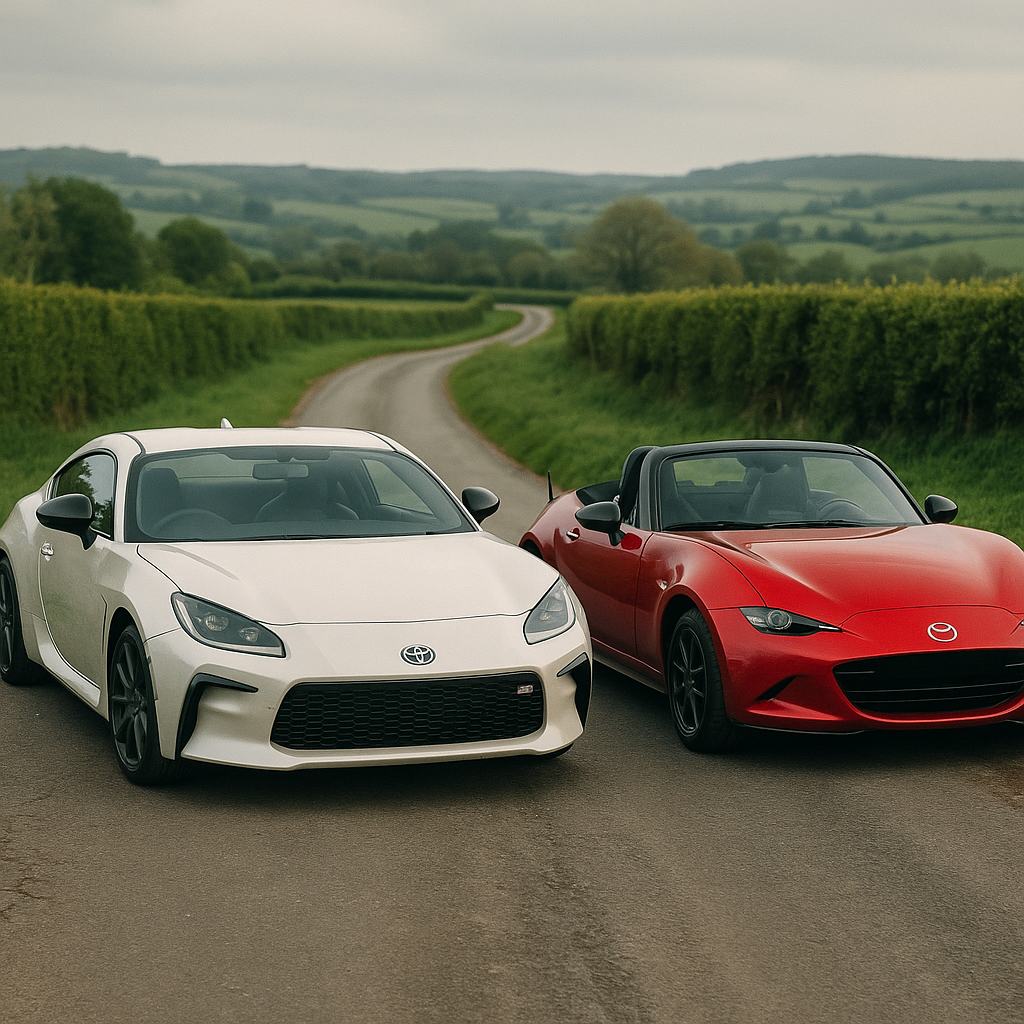
    Toyota GR86 vs Mazda MX-5 parked side by side on a British B-road with green hedgerows
    Toyota GR86 vs Mazda MX-5 parked side by side on a British B-road with green hedgerows

    Engines and Performance: Naturally Aspirated in a Turbocharged World

    The GR86 runs a 2.4-litre naturally aspirated flat-four producing 234bhp, and it revs with a mechanical honesty that modern turbocharged engines simply cannot replicate. Nail it past 6,500rpm and there is a genuine surge that feels earned rather than engineered. The 0-62mph sprint takes around 6.3 seconds, which sounds modest until you realise this car is not about straight-line pace.

    The MX-5, depending on spec, runs either a 1.5-litre or 2.0-litre naturally aspirated four-cylinder. The 2.0-litre ND variant produces 184bhp. Yes, the GR86 has a clear power advantage. But the MX-5 weighs significantly less, hovering around 1,000kg in certain configurations against the GR86’s 1,270kg. That weight difference is felt constantly. The MX-5 darts; the GR86 surges. Both are fast enough on British roads where 60mph limits dominate most of the interesting bits.

    Steering Feel and Chassis Balance on B-Roads

    This is where the comparison gets genuinely nuanced. The MX-5’s electric power steering is, by common consensus, one of the best systems fitted to any car at any price. It communicates road texture, loading up progressively through corners and giving you real confidence about where the front tyres are. On a twisting B-road in Wales or the Scottish Borders, it is exceptional.

    The GR86’s steering is also excellent by most standards, but it is a touch heavier and slightly more deliberate in character. Where the MX-5 feels nimble and interactive, the GR86 feels planted and composed. The GR86’s wider track and longer wheelbase give it more stability at higher cornering speeds, which suits faster, flowing roads. The MX-5 rewards patience and precision; the GR86 rewards commitment and momentum.

    Chassis balance? Both cars have beautifully balanced weight distribution. The MX-5 will rotate more playfully at the limit, and the tail is adjustable and forgiving for enthusiastic drivers. The GR86, with its lower centre of gravity and Torsen limited-slip differential on higher trims, is more composed and slightly more exploitable on track. On public roads, the MX-5 probably delivers more accessible fun because you can explore closer to its limits at legal speeds.

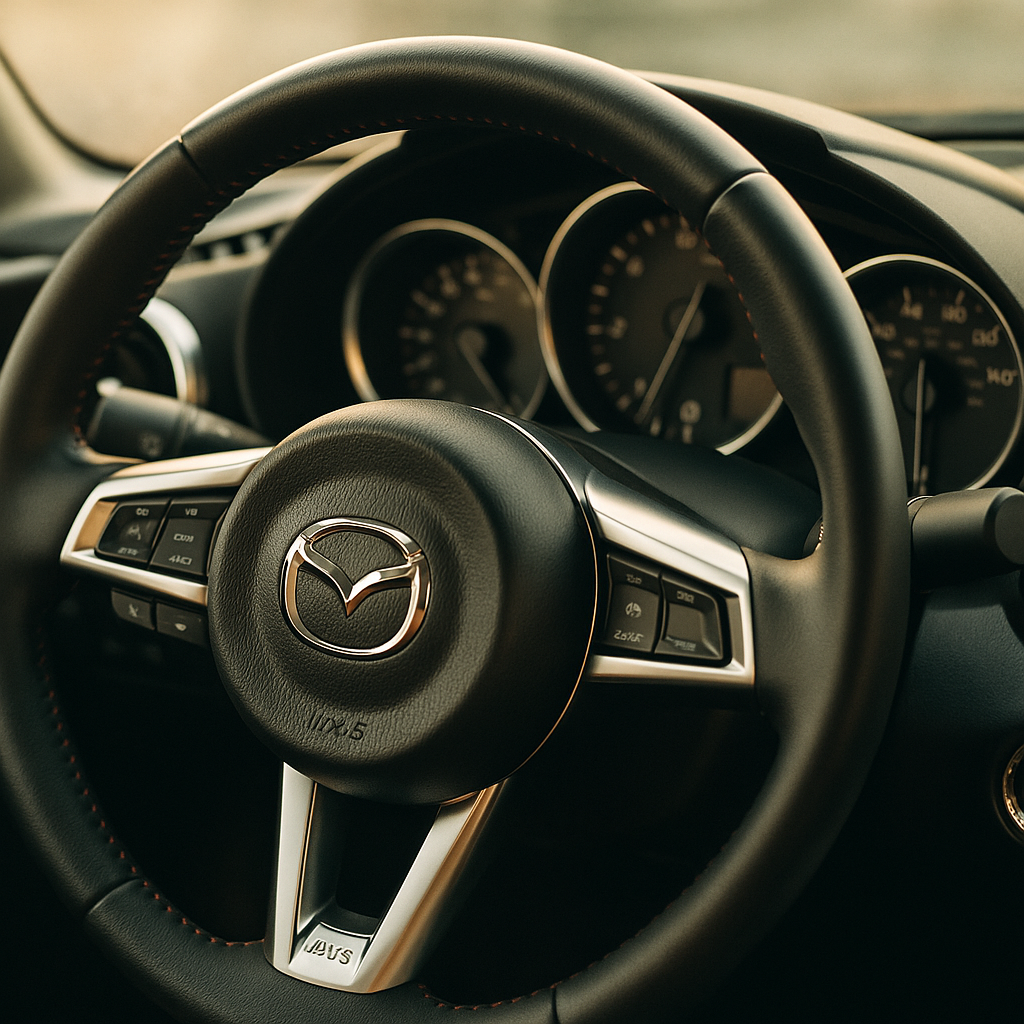
    Mazda MX-5 interior steering wheel detail shot highlighting analogue driver focus in Toyota GR86 vs Mazda MX-5 comparison
    Mazda MX-5 interior steering wheel detail shot highlighting analogue driver focus in Toyota GR86 vs Mazda MX-5 comparison

    Practicality: Which One Can You Actually Live With?

    Neither car is a Volkswagen Golf, let us be honest. But practicality matters, especially if one of these is your only vehicle.

    The GR86 is a 2+2 coupe, so it technically has rear seats. They are genuinely only usable for short journeys by small children or as a parcel shelf with seat belts. Boot space is modest at around 237 litres. It has a fixed roof, which means it is quiet at motorway speeds and perfectly usable as a daily driver in all British weather conditions. Visibility is reasonable. Fuel economy in real-world UK driving tends to land around 30-34mpg.

    The MX-5 Roadster has just two seats, no back row at all, and a boot of roughly 130 litres. The RF (Retractable Fastback) version gains a small rear window shelf and marginally better refinement, at the cost of some open-air immediacy. Real-world fuel economy for the 2.0-litre MX-5 sits around 35-38mpg, slightly better than the GR86 thanks to that lighter kerbweight. The soft-top on the Roadster can be raised and lowered in about five seconds without leaving your seat, which is genuinely useful during an unpredictable British summer.

    If you need to occasionally carry a passenger and luggage for a weekend away, the GR86 is the more practical choice. If you are buying a sports car purely for the experience, the MX-5 Roadster wins on soul.

    Running Costs and Insurance: Real-World UK Numbers

    New pricing in 2026 puts the GR86 at approximately £34,000 for the entry-level trim, rising to around £36,500 for the Premium grade. The MX-5 in 2.0-litre Sport Nav spec sits around £33,000, with the RF version adding roughly £2,000 to that figure.

    Road tax (Vehicle Excise Duty) for both sits in similar brackets given their CO2 outputs. Insurance groupings tend to be lower for the MX-5, partly due to its lower repair costs and longer established track record with insurers. Servicing costs are competitive for both; Toyota’s and Mazda’s dealer networks are well spread across the UK, and independent specialists are readily available for both.

    Worth noting: if you are passionate about modifying or upgrading platforms in the Toyota family, there is a significant aftermarket community. Everything from suspension geometry to structural reinforcement gets attention, with options like Toyota 4×4 Chassis Upgrades demonstrating just how deeply enthusiasts invest in Toyota’s engineering foundations across the range.

    For long-term ownership, Mazda’s reliability record is strong. According to data cited by the BBC’s automotive coverage, Japanese brands consistently rank among the most reliable in the UK market, which should reassure buyers of either car.

    Which One Suits British Roads Better?

    The honest answer is that both are brilliant, and your choice comes down to what kind of driving experience you are prioritising.

    The MX-5 is the more complete sports car in terms of purity. It is lighter, more communicative, more adjustable at the limit and, particularly in open-top Roadster form, delivers an emotional connection to driving that few cars at double the price can match. On narrow, hedge-lined B-roads through Derbyshire or Devon, it feels absolutely at home. It is also the more sensible choice if fuel economy and insurance costs matter to you.

    The GR86 is the more capable car in objective terms. More power, a wider stance, better high-speed stability and a coupe body that makes it a genuine daily driver twelve months of the year. If you want one car that covers long motorway stints, weekend trackdays and a twisty Sunday morning blast, the GR86 ticks every box without compromise.

    My personal take? The MX-5 makes you a better driver because it asks more of you. The GR86 makes driving feel more effortless. Both are among the last truly analogue sports cars available today. Buy either and you will not regret it.

    Frequently Asked Questions

    Is the Toyota GR86 faster than the Mazda MX-5?

    Yes, the GR86 has a significant power advantage with 234bhp versus the MX-5’s 184bhp in 2.0-litre form, and completes 0-62mph in around 6.3 seconds. However, the MX-5 is considerably lighter, which closes the gap in real-world B-road driving where outright speed matters less.

    Which is cheaper to run, the GR86 or the MX-5?

    The MX-5 generally edges ahead on running costs, returning slightly better fuel economy at around 35-38mpg versus the GR86’s 30-34mpg, and typically sits in lower insurance groups. Both have strong dealer networks across the UK and competitive servicing costs.

    Can you use the Toyota GR86 or Mazda MX-5 as a daily driver in the UK?

    The GR86 is arguably the more practical daily driver, with its fixed coupe roof, small rear seats and larger 237-litre boot. The MX-5 Roadster is doable as a daily car but has only 130 litres of boot space and two seats, making it more of a dedicated weekend sports car.

    Which handles better on UK B-roads, the GR86 or MX-5?

    Both are excellent, but they have different characters. The MX-5 is lighter and more playful, rewarding precision and accessible at legal road speeds. The GR86 is more composed and stable at higher speeds, suiting faster, more open roads. Most drivers find the MX-5 more engaging on tight, technical British country lanes.

    How much does the Mazda MX-5 cost in the UK in 2026?

    In 2026, the Mazda MX-5 2.0-litre Sport Nav is priced at approximately £33,000 new, with the RF (Retractable Fastback) version adding around £2,000. Trim levels and optional packs can push prices higher, and strong used examples remain available from around £18,000-£25,000.

  • How the 2026 UK Car Market Has Changed: New Models, Trends and What to Expect

    How the 2026 UK Car Market Has Changed: New Models, Trends and What to Expect

    The UK car market 2026 is in a genuinely fascinating place right now. It is not a clean narrative of smooth electric transition and happy manufacturers. It is messier, more competitive, and arguably more interesting than any period since the post-pandemic supply chaos of 2021 and 2022. New models are arriving thick and fast, established brands are scrambling to reposition, and buyers are making decisions under a unique mix of regulatory pressure, cost-of-living hangover, and improving EV infrastructure.

    If you are thinking about buying a car this year, or simply want to understand where the market is headed, here is the honest picture.

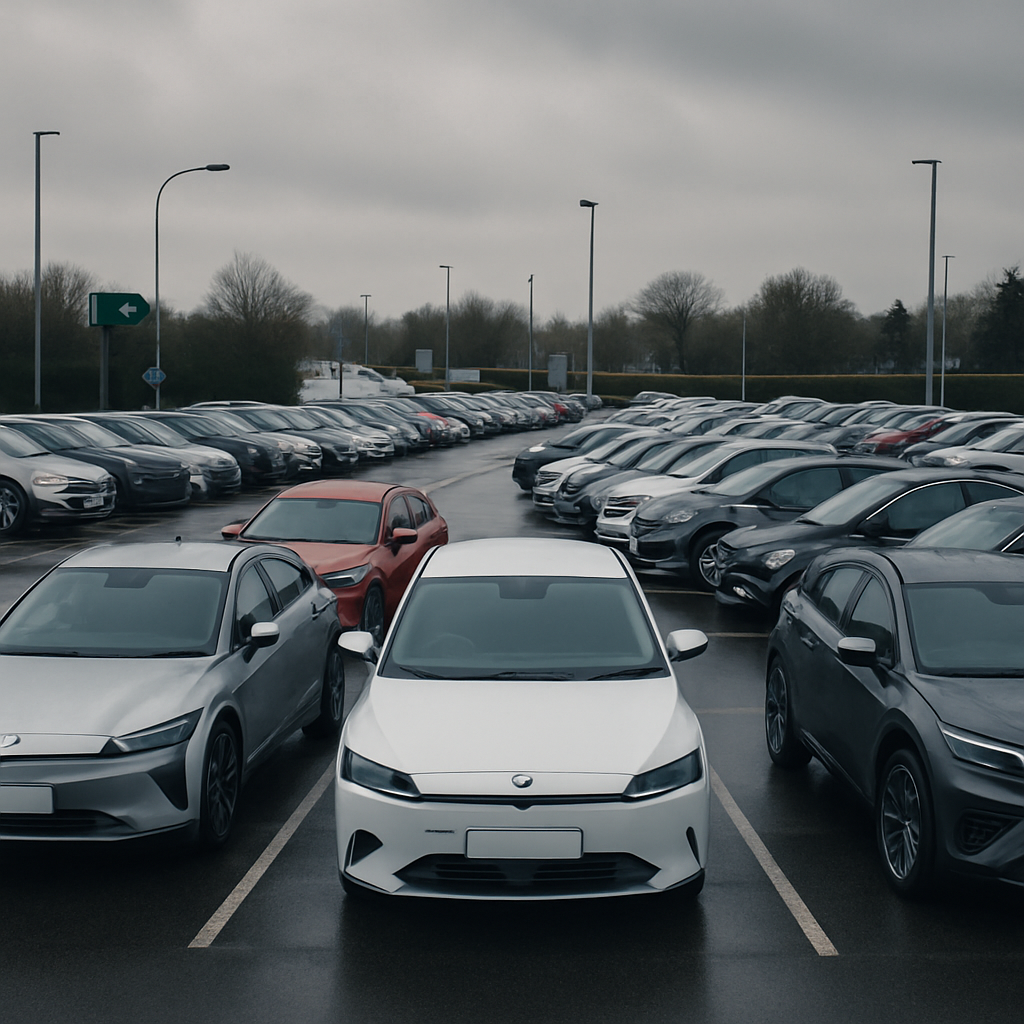
    UK car market 2026 new models lined up on a British dealership forecourt
    UK car market 2026 new models lined up on a British dealership forecourt

    New Model Launches Defining the UK Car Market in 2026

    There has been a genuine flood of new metal arriving on forecourts in 2026. The electric segment is getting genuinely crowded at last. Renault’s revived 5 E-Tech has proven enormously popular, bringing affordable city-car credentials to a segment that badly needed them. Volkswagen’s ID.2 is due for UK deliveries later this year and is already generating significant pre-order interest. Meanwhile, Hyundai and Kia continue to take chunks out of the premium segment with models that offer near-luxury quality at mainstream prices.

    On the performance side, Porsche refreshed the Macan EV lineup for 2026 with extended range and revised pricing, while BMW expanded its M offerings with mild hybrid integration across more variants. Stellantis brands, including Vauxhall, pushed heavily into electric commercial vehicles, which is quietly one of the bigger stories of the year for small business owners and tradespeople.

    The Chinese brand question is no longer theoretical. BYD has established a physical presence with UK dealerships, and MG, which has been Chinese-owned for years, continues to grow its market share. Buyers are responding to the value proposition even if some remain cautious about long-term support and residuals.

    EV Adoption: Better Than the Headlines Suggest

    The media narrative around electric vehicles has been relentlessly gloomy, but the actual registration data tells a more nuanced story. According to figures from the Society of Motor Manufacturers and Traders (SMMT), battery electric vehicles accounted for a rising share of new registrations in early 2026, with fleet and business uptake particularly strong. The Zero Emission Vehicle mandate is doing its job of pushing manufacturers to prioritise EV availability, even if private buyer uptake still lags behind fleet.

    Public charging infrastructure has improved considerably in the past 12 months. Gridserve, BP Pulse, and Pod Point have all expanded their rapid charging networks, and the government’s commitment to charging hubs near motorway services is beginning to pay off in practical terms. Range anxiety is not dead, but it is less of a blocker than it was in 2024.

    The real sticking point remains price. Entry-level EVs are closer to combustion equivalents than ever, but there is still a premium for most models. The Autumn 2025 Budget’s decision to extend the plug-in vehicle grant for smaller EVs helped, though the amounts remain modest. You can read the latest government guidance on EV incentives and the ZEV mandate at gov.uk.

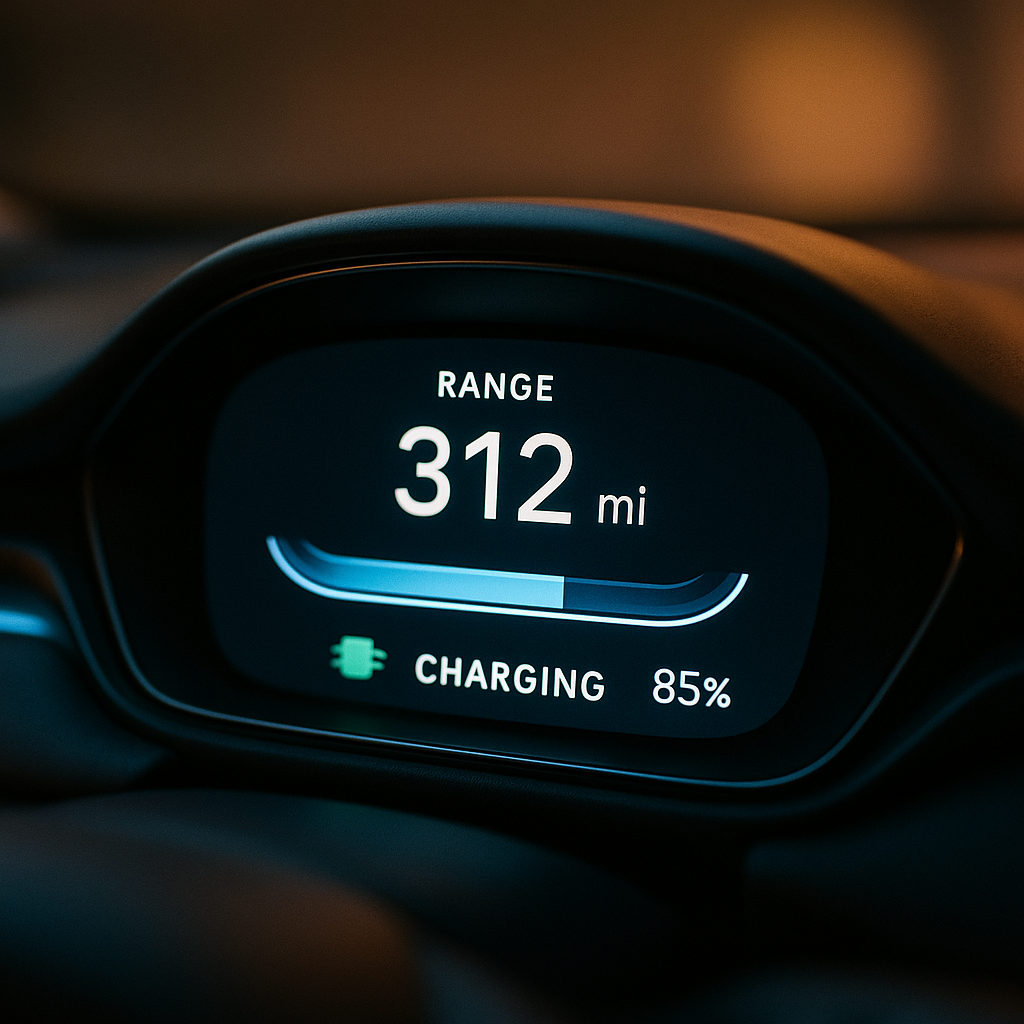
    Electric car dashboard display reflecting UK car market 2026 EV technology advances
    Electric car dashboard display reflecting UK car market 2026 EV technology advances

    Brand Performance: Who Is Winning and Who Is Struggling

    Ford remains the best-selling brand in the UK by volume, though its grip on that position is less comfortable than it once was. The Puma in both petrol and electric form continues to do enormous numbers, and the Kuga hybrid is a consistent fleet favourite. But Ford’s longer-term EV strategy still looks uncertain relative to some rivals.

    Toyota is quietly having one of its best stretches in years. The Yaris Cross, RAV4 and C-HR hybrids have found a huge audience among buyers who want lower running costs without committing fully to battery electric. Their self-charging hybrid positioning has turned out to be a very effective message for a particular type of cautious buyer.

    Volkswagen Group brands have had a more difficult time. VW itself has faced factory closures in Germany, restructuring pressure, and some internal pricing inconsistency on its ID. range. That said, Skoda and SEAT/Cupra continue to punch above their weight on value, and the Cupra Born remains one of the more enjoyable electric hatches you can buy in this market.

    Tesla’s UK position is interesting. Sales have softened compared to the peaks of 2023 and 2024. The Model Y refresh helped arrest the decline, but increased competition from Polestar, Hyundai Ioniq 6, and BMW i4 means Tesla no longer operates in a near-monopoly space in the premium EV segment. Competition is healthy, and buyers are benefitting.

    What Buyers Should Actually Be Watching in 2026

    The used car market is still worth understanding before you buy new. Values have softened on early electric vehicles, which creates real opportunity for buyers prepared to absorb slightly older technology. A used Nissan Leaf or early ID.3 now represents exceptional value if you have home charging sorted.

    Residual values on new EVs are becoming more predictable, which helps PCP finance calculations. Lenders and manufacturers have had to get smarter about this, and the guesswork of 2022 and 2023 is largely gone. That said, Chinese brand residuals remain an unknown and are worth scrutinising carefully if you are buying on finance.

    Insurance costs across the board have remained stubbornly high. The Association of British Insurers reported average premium increases in recent years that have not fully reversed, meaning the total cost of ownership calculation is not purely about fuel. Factor insurance in early, particularly on EVs, where repair costs for complex battery systems can push premiums up significantly.

    The Bigger Picture for the UK Car Market

    The UK car market 2026 is not in crisis, but it is absolutely in transition. Manufacturers are navigating ZEV mandate targets, cost pressures from electrification R&D, and a buying public that is genuinely split between combustion, hybrid, and electric. There is no single dominant story.

    What is clear is that the choice available to UK buyers right now is arguably the best it has ever been. Whether you want a practical electric family car under £35,000, a performance hybrid saloon, or a frugal city runabout, 2026 has options across all of those categories that simply did not exist three years ago. The UK car market in 2026 rewards informed buyers who do their homework on running costs, infrastructure, and long-term ownership rather than simply responding to marketing.

    The next 12 months will be telling. How the ZEV mandate targets shake out for manufacturers, whether Chinese brands establish genuine long-term credibility, and whether public charging confidence continues to improve will all shape what 2027 looks like. Watch the registration data closely. It tells you more about where the market is genuinely heading than almost any press release.

    Frequently Asked Questions

    How is the UK car market performing in 2026?

    New car registrations in the UK have remained broadly stable in 2026, with electric and hybrid vehicles taking a growing share of the market. Fleet sales are leading the EV charge, while private buyers are increasingly drawn to hybrid options as a stepping stone.

    Are electric car sales increasing in the UK in 2026?

    Yes, battery electric vehicle registrations have continued to rise, driven partly by the ZEV mandate requiring manufacturers to meet EV sales targets. Infrastructure improvements and competitive new model launches have helped sustain buyer interest.

    Which car brands are selling the most in the UK right now?

    Ford holds the top spot by overall volume, with Toyota performing strongly on the back of its hybrid range. Hyundai and Kia have taken significant market share in the electric and crossover segments, while Chinese brands like BYD and MG are growing steadily.

    Is now a good time to buy a new car in the UK?

    Model choice and competitive pricing make 2026 a solid time to buy, particularly in the EV segment where new entrants are forcing prices down. It is worth comparing total running costs including insurance and charging rather than focusing solely on the sticker price.

    What is the ZEV mandate and how does it affect car buyers?

    The Zero Emission Vehicle mandate requires UK car manufacturers to sell a rising percentage of electric vehicles each year, or face financial penalties. For buyers, this means better EV availability and more aggressive pricing as brands push to meet their targets.

  • The Best Hybrid Cars to Buy in the UK in 2026: Full and Mild Hybrid Ranked

    The Best Hybrid Cars to Buy in the UK in 2026: Full and Mild Hybrid Ranked

    Not everyone is ready to go fully electric. Whether it’s range anxiety, a lack of a home charger, or simply the way you drive, a hybrid often makes more practical sense for a large chunk of UK motorists. The good news is that the best hybrid cars UK 2026 has on offer are genuinely impressive machines, and the choice between full hybrid and mild hybrid is no longer as confusing as it once was. This guide cuts through the noise and ranks the top models on the things that actually matter: real-world fuel economy, long-term reliability, and the total cost of keeping one on the road.

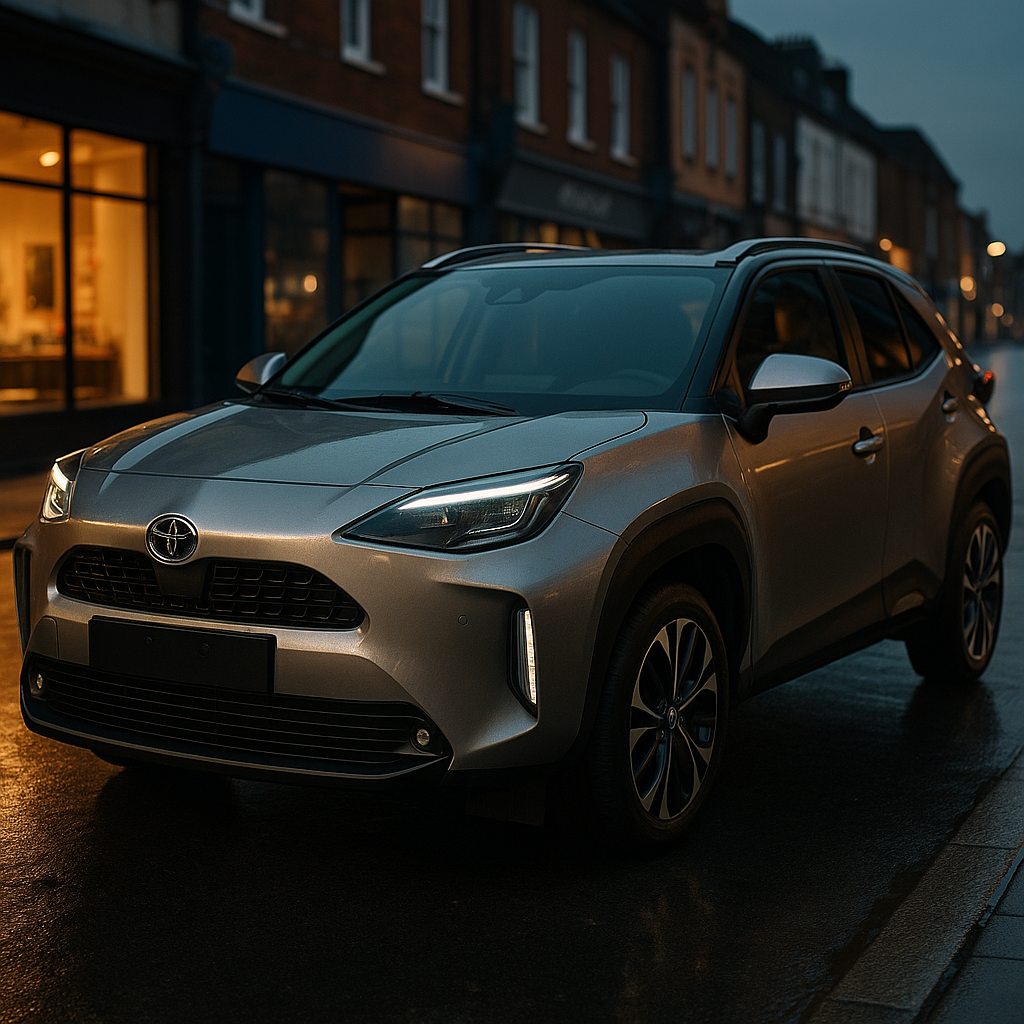
    Silver Toyota Yaris Cross hybrid parked on a British high street, representing the best hybrid cars UK 2026
    Silver Toyota Yaris Cross hybrid parked on a British high street, representing the best hybrid cars UK 2026

    Full Hybrid vs Mild Hybrid: What’s the Difference?

    It’s worth clearing this up before diving into the rankings, because the two systems work very differently. A full hybrid (also called a self-charging hybrid) pairs a petrol engine with an electric motor and a small battery pack. The car can run on electric power alone at low speeds, and the battery recharges itself through regenerative braking. You never need to plug it in. Toyota’s hybrid system is the most well-known example, and it has been refined over nearly three decades.

    A mild hybrid is more subtle. It uses a small 48-volt battery and a belt-integrated starter-generator to assist the combustion engine, reducing strain under acceleration and harvesting energy under braking. It cannot drive on electric power alone. Think of it as a support act rather than an alternative. Mild hybrids are cheaper to produce, which is why you’ll find them fitted to everything from the Ford Puma to the Vauxhall Astra these days. They offer modest fuel savings, typically five to ten per cent over a non-hybrid equivalent, rather than the thirty-plus per cent you can achieve with a full hybrid in urban driving.

    Best Full Hybrid Cars in the UK for 2026

    1. Toyota Yaris Cross Hybrid

    If you want the best hybrid cars UK 2026 has to offer in terms of pure fuel efficiency, start here. The Yaris Cross uses Toyota’s fifth-generation hybrid system and is genuinely capable of returning over 50mpg in mixed driving. The official combined figure sits around 57mpg, and real-world owners consistently get within touching distance of that. Reliability data from What Car? and Reliability Index both place Toyota near the top of manufacturer rankings. Running costs are low, depreciation is soft, and servicing is straightforward. The interior has improved considerably with the 2026 update, adding a larger infotainment screen and better-quality materials. Not the most exciting drive, but arguably the most sensible purchase on this list.

    2. Toyota Corolla Hybrid

    The Corolla is the full hybrid for people who actually want to enjoy the commute. Available as a saloon, touring sports estate, and hatchback, it uses a 2.0-litre hybrid system producing 196bhp in its sportier configuration. Real-world economy sits comfortably above 45mpg. Toyota’s five-year warranty, now available across the range, adds considerable peace of mind. Residual values are strong, which matters if you plan to change after three or four years. The touring sports body is particularly useful for UK families who need boot space and decent economy in equal measure.

    3. Hyundai Tucson Hybrid

    Hyundai has made enormous strides in hybrid engineering. The Tucson full hybrid pairs a 1.6-litre turbocharged petrol with a 44.2kWh electric motor and a six-speed automatic gearbox. Official economy is around 44mpg, and the real-world figure is only a few mpg below that on typical UK A and B roads. The five-year, unlimited-mileage warranty is a genuine selling point, and Hyundai’s reliability record has improved significantly. The interior is plush, the boot is a practical 616 litres, and running costs compare favourably to equivalent diesel SUVs.

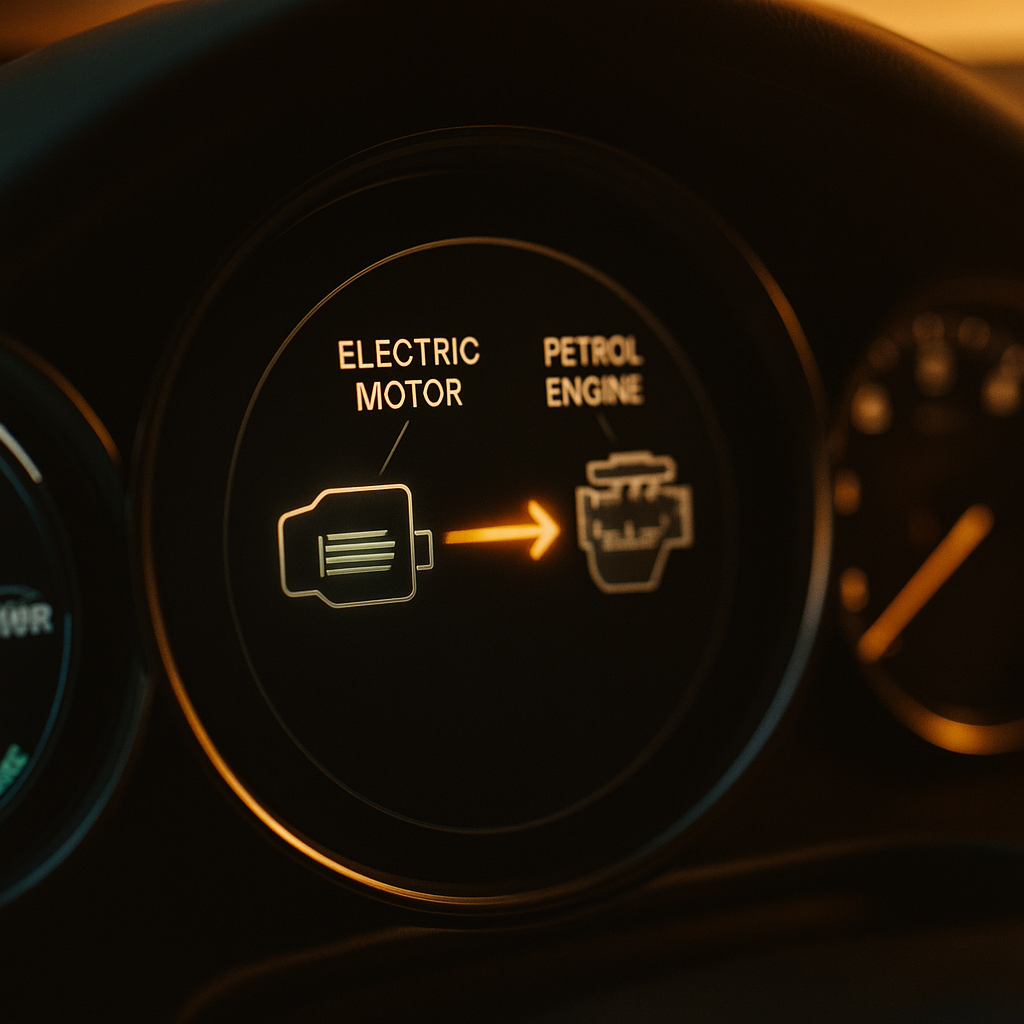
    Hybrid car energy flow display on instrument cluster, detail shot relevant to best hybrid cars UK 2026 fuel economy
    Hybrid car energy flow display on instrument cluster, detail shot relevant to best hybrid cars UK 2026 fuel economy

    4. Honda Jazz e:HEV

    The Jazz is a cult favourite and deservedly so. Honda’s e:HEV system uses two electric motors alongside a 1.5-litre Atkinson cycle petrol engine, and the result is a car that rarely uses its combustion engine in city traffic. In urban environments, official economy exceeds 60mpg. It’s extraordinarily easy to drive, genuinely spacious thanks to Honda’s Magic Seats, and parts costs are reasonable. It lacks the visual drama of some rivals, but if you cover a lot of urban miles, it’s hard to argue against the Jazz on pure efficiency grounds.

    5. Kia Niro Hybrid

    The Niro sits in a sweet spot between small hatchback and compact crossover. The self-charging hybrid version uses a 1.6-litre petrol engine and 32kW electric motor producing 139bhp combined, with real-world economy typically landing between 45 and 52mpg depending on your driving style. Kia’s seven-year warranty is industry-leading and genuinely changes the ownership calculation. Servicing intervals are reasonable, and the Niro has a solid reliability reputation. Residual values have improved noticeably over the last two model cycles.

    Best Mild Hybrid Cars in the UK for 2026

    1. Ford Puma mHEV

    Britain clearly likes the Puma: it was among the best-selling cars in the UK for much of 2025 and that appetite hasn’t faded into 2026. The mild hybrid 1.0-litre EcoBoost unit balances performance and economy well, with real-world returns of around 40mpg achievable without trying particularly hard. The MegaBox underseat storage is genuinely useful, the ride quality is well-judged for British roads, and Ford’s dealer network is one of the most accessible in the country. It won’t save fuel like a full hybrid, but as mild hybrids go, the Puma is polished.

    2. Volkswagen Golf eTSI

    VW’s 48-volt mild hybrid system on the 1.0 and 1.5 eTSI engines is among the better-executed mild hybrid setups in the sector. The Golf eTSI coasts with the engine off at speed, cuts fuel use during deceleration, and restarts so smoothly you rarely notice. Economy of 42-48mpg is realistic. Build quality remains a Golf strength, and the 2026 model year update brought revised driver assistance systems and updated connectivity. It is more expensive than the Puma, but residual values reflect that.

    3. Renault Clio E-Tech Full Hybrid

    Worth noting here that Renault calls this a full hybrid, using a multi-mode gearbox system derived from Formula 1 thinking (no clutch, no belt, no torque converter). In city driving, the Clio E-Tech genuinely rivals Toyota’s system for efficiency, returning up to 65mpg in urban cycles. On the motorway it behaves more like a conventional mild hybrid, but around town or on shorter runs, the efficiency gains are real. French reliability concerns of the past have improved considerably, and the Clio’s cabin quality is strong at this price point.

    Long-Term Running Costs: What You Should Really Budget For

    Fuel savings are the headline act, but insurance, servicing, and depreciation matter just as much. According to data published by the RAC and the AA, hybrid owners in the UK spend broadly similar amounts on annual servicing as petrol-only drivers, since the combustion engine still requires standard maintenance. Where hybrids tend to win is on brake wear: regenerative braking significantly extends pad and disc life, reducing that recurring cost over time.

    You can check the latest fuel economy and emissions data for any model on the gov.uk vehicle tax checker, which also confirms road tax bands. Many hybrids with CO2 below 75g/km qualify for reduced first-year Vehicle Excise Duty, which adds up. Insurance groups for hybrids have broadly normalised over the last few years and are no longer the premium they once were.

    Which Hybrid Should You Actually Buy?

    For sheer economy and reliability, the Toyota Yaris Cross Hybrid is the standout pick among the best hybrid cars UK 2026 buyers can choose from. If you want something bigger with a compelling warranty, the Kia Niro Hybrid or Hyundai Tucson Hybrid are both excellent. Urban dwellers who cover short distances daily will love the Honda Jazz e:HEV. If you’re not ready to commit to a full hybrid system, the Ford Puma mHEV offers a sensible, well-priced entry point with real-world fuel savings that add up over a year.

    The choice between full and mild hybrid ultimately comes down to how you use the car. Heavy urban driving rewards a full hybrid enormously. Mostly motorway miles? The efficiency gap narrows, and a mild hybrid may be perfectly adequate. Either way, hybrids remain the most practical middle ground for UK drivers in 2026, and the market has never been stronger or more competitive.

    Frequently Asked Questions

    What is the most fuel-efficient hybrid car you can buy in the UK in 2026?

    In urban driving, the Honda Jazz e:HEV and Renault Clio E-Tech are among the most efficient, with real-world returns exceeding 60mpg in town. For mixed driving, the Toyota Yaris Cross Hybrid consistently achieves over 50mpg and is widely regarded as the benchmark for real-world hybrid efficiency.

    Are full hybrid cars cheaper to run than mild hybrids?

    Generally yes, particularly if you do a lot of urban or stop-start driving. Full hybrids can run on electric power alone at low speeds, delivering fuel savings of 30 per cent or more over equivalent petrol cars in city conditions. Mild hybrids offer more modest savings, typically five to ten per cent, as they cannot drive solely on electric power.

    Do hybrid cars need to be plugged in to charge?

    Full self-charging hybrids and mild hybrids do not need to be plugged in. They recharge their batteries through regenerative braking and the combustion engine. Only plug-in hybrid electric vehicles (PHEVs) require external charging to make use of their larger battery range.

    How reliable are hybrid cars long-term?

    Toyota and Honda have the longest track record with hybrid systems, and both consistently feature near the top of UK reliability surveys. The hybrid battery packs on full hybrids are typically warranted for eight to ten years, and real-world failure rates are low. Kia’s seven-year warranty on the Niro Hybrid also provides strong long-term protection.

    Is it worth buying a hybrid car instead of a diesel in 2026?

    For most UK drivers, yes. Modern full hybrids match or beat diesel fuel economy on urban and mixed routes, without the risks of diesel particulate filter issues caused by short journeys. They also avoid the ongoing uncertainty around diesel’s future in UK cities given expanding Clean Air Zones, making a hybrid a more future-proof choice for the majority of buyers.

  • Kia EV3 Long-Term Review: Living With Kia’s Affordable Electric Car After 6 Months

    Kia EV3 Long-Term Review: Living With Kia’s Affordable Electric Car After 6 Months

    Six months ago I picked up a Kia EV3 in Long-Range specification from a dealer in Leeds, handed over the keys to my ageing diesel hatchback, and decided to find out whether this compact electric SUV could actually handle the realities of British family life. Not a brief press loan, no manufacturer minders hovering nearby. Just me, my family, the school run, a few motorway hauls, and whatever the British weather decided to throw at us. This is that Kia EV3 long term review UK owners have been asking about since the car landed on these shores.

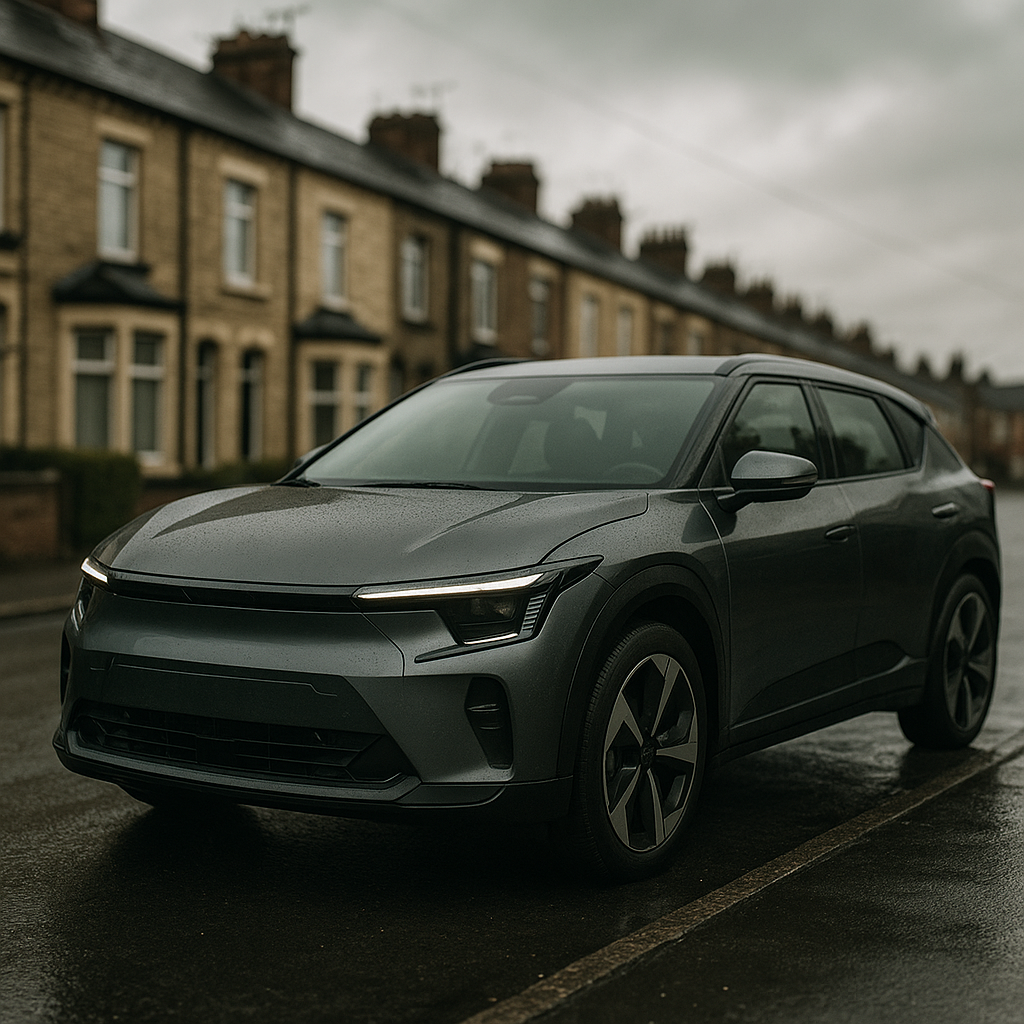
    Kia EV3 parked on a British residential street in this Kia EV3 long term review UK
    Kia EV3 parked on a British residential street in this Kia EV3 long term review UK

    What the Kia EV3 Is and Why It Matters

    The EV3 sits below the EV6 and EV9 in Kia’s electric lineup, but it’s arguably the most important car in the range for everyday British buyers. It’s sized somewhere between a Ford Puma and a Volkswagen Tiguan, which puts it squarely in the sweet spot for UK driveways, car parks, and the perpetual misery of finding a space in a Tesco superstore. The Long-Range version I’ve been running carries a 81.4 kWh battery, with Kia claiming a WLTP range of up to 372 miles. That figure is, as ever, a marketing ceiling rather than a real-world expectation. More on that shortly.

    Pricing at launch started from around £34,995 for the standard range variant, with the Long-Range version I’m driving sitting at approximately £40,495 in mid-spec ‘Air’ trim. That’s not cheap, but it’s competitive when you measure it against the Volkswagen ID.4, the Hyundai Ioniq 5, and the Tesla Model Y. Kia’s seven-year warranty covers the whole car, battery included, which still sets a benchmark most rivals haven’t matched.

    Daily Driving and Real-World Range

    Let’s deal with range first because it’s the question everyone asks. Over six months and just over 9,400 miles, I’ve averaged 3.8 miles per kWh in mixed conditions. That translates to a real-world usable range of roughly 290 to 310 miles in spring and summer. Drop into January on the M1 with the heater working hard and a full family aboard, and that figure dips closer to 240 miles. Still enough to cover my longest regular journey, Leeds to London and back, without stopping to charge. But you need to plan, not assume.

    Around town it’s genuinely impressive. Regenerative braking is adjustable through paddles behind the steering wheel, and I’ve settled into a habit of using the strongest setting in urban driving, which harvests noticeable energy on downhill runs into the city. The one-pedal feel took a week to feel natural. Now I miss it whenever I drive anything else.

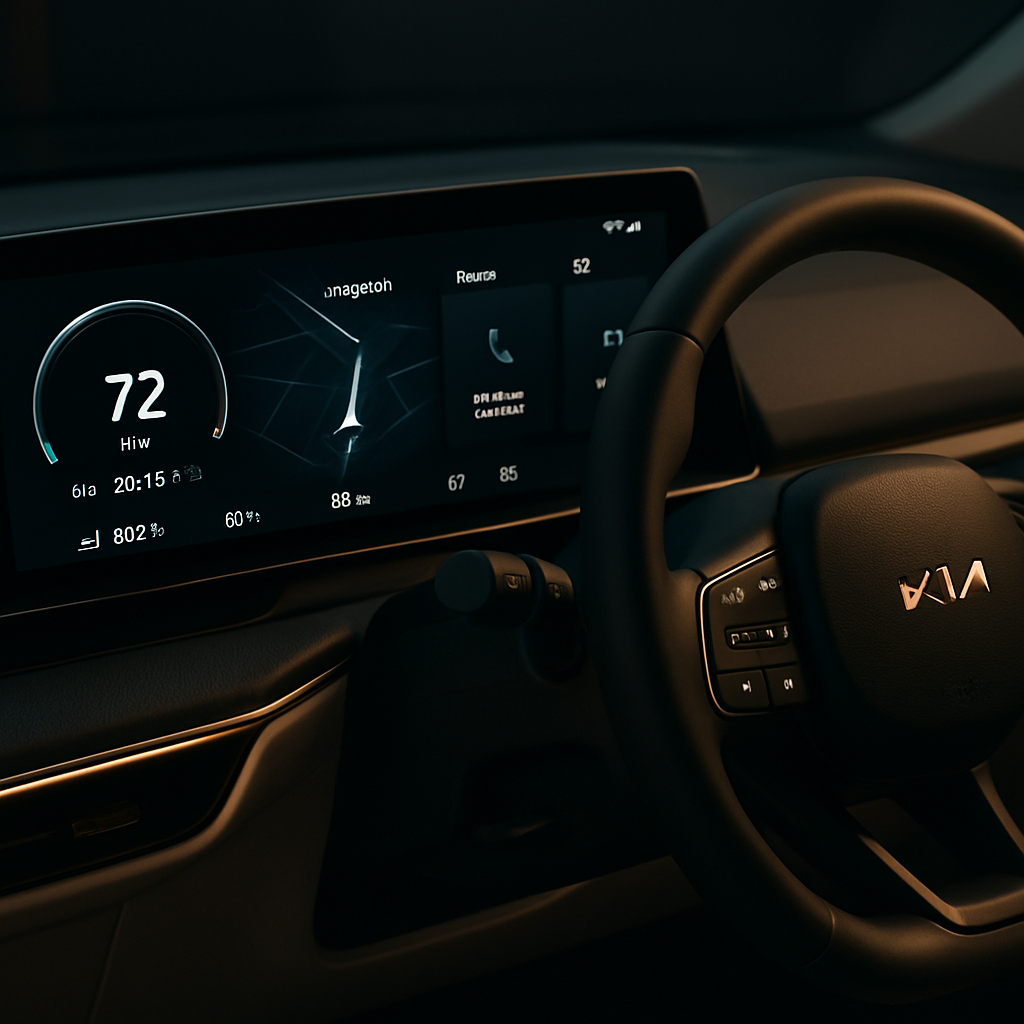
    Kia EV3 interior infotainment screen detail in long term review UK ownership
    Kia EV3 interior infotainment screen detail in long term review UK ownership

    Charging Habits and Running Costs

    I charge mostly at home on a 7.4 kW wallbox, which was fitted before the car arrived. An overnight charge from 20 percent to 80 percent takes roughly seven hours, which maps neatly onto sleeping. I’ve used public rapid chargers around a dozen times, primarily on longer trips. The EV3 supports 135 kW DC fast charging, and on a Gridserve or BP Pulse 150 kW unit I’ve seen it pull close to its rated peak, adding around 100 miles in under 20 minutes at the right state of charge.

    Cost per mile has worked out to approximately 4.2 pence on my home night tariff. Compare that to my old diesel at around 17 pence per mile and the savings are substantial over time. Six months in, fuel savings alone have totalled roughly £800, which offsets a fair chunk of the higher purchase price if you’re thinking across a full ownership cycle. The government’s Electric Vehicle Homecharge Scheme helped cover part of the wallbox installation cost, worth checking if you haven’t already.

    Road tax is currently free for zero-emission vehicles registered before April 2025, though cars registered from April 2025 onwards now attract a small annual charge. Insurance came in at £620 annually through a specialist EV insurer, marginally higher than my previous diesel but within expected parameters for a newer car.

    Software, Updates and Interior Tech

    This is where things get genuinely interesting. Kia has pushed three over-the-air software updates during my six months, each arriving overnight without any trip to a dealer. The most significant update in month four improved the efficiency of the battery thermal management system and added a revised navigation interface that finally stopped routing me through town centres when a bypass was clearly faster. Proper progress.

    The 12.3-inch infotainment display is crisp and responsive. Wireless Apple CarPlay and Android Auto work without drama. My one consistent gripe is the menu structure for climate settings: it’s buried two or three taps deep when you just want to adjust the temperature quickly on the move. A minor annoyance, but one that accumulates over daily use. The ambient lighting, heated front and rear seats, and heated steering wheel are all genuinely valued from October onwards in the north of England.

    As a Family Car: Boot Space, Practicality and Refinement

    We regularly travel with two adults, two children, a pushchair, and enough kit to suggest we’re emigrating. The EV3 copes. Boot space of 461 litres with the rear seats up is competitive for the class. The flat floor between the rear seats (no transmission tunnel) makes the middle rear seat usable rather than a token gesture, which I appreciate on longer runs when the kids start encroaching on each other’s space.

    Road noise is well suppressed. Wind noise creeps in above 65 mph on motorways, which is one area where the EV9 feels more composed, but for the price bracket the EV3 is genuinely refined. The suspension setup leans towards comfort over sharpness, which is absolutely the right call for British roads full of potholes and poorly patched tarmac.

    Reliability After 6 Months

    Touch wood, nothing has gone wrong. No warning lights, no software gremlins requiring a dealer visit, no rattles or creaks developing. The car has been in for one routine check at the dealer, which cost nothing under warranty. Kia’s build quality reputation has held up in my experience, and the interior materials still feel tight and well assembled rather than showing signs of early wear.

    One small cosmetic issue: a slight paint chip on the front bumper after a stone on the A1. That’s road life rather than a build quality concern, but worth noting if you’re precious about finish. The car sits low enough that front-end chips from motorway driving are a real possibility, and a paint protection film on the nose might be worth budgeting for.

    Final Verdict: Is the Kia EV3 Worth Living With?

    After six months, the Kia EV3 has settled into being one of the most genuinely usable electric cars I’ve driven in everyday British conditions. The real-world range is honest rather than optimistic. The running costs are meaningfully lower than an equivalent petrol car at current energy prices. The software improves itself without any effort from the owner. And it does the family car job without compromise.

    It’s not the most exciting thing on the road. It won’t make your pulse quicken in the way a performance hatchback might. But as a rational, well-resolved, genuinely affordable electric car for the reality of UK family driving, very little touches it at this price. My time with it has confirmed what the initial test drives suggested: this is Kia getting it right in a way that matters.

    Frequently Asked Questions

    What is the real-world range of the Kia EV3 Long-Range in the UK?

    In mixed conditions across a UK year, real-world range sits between 240 and 310 miles depending on temperature, speed, and load. Summer driving at moderate speeds returns the best figures, while cold motorway runs in winter will pull that closer to 240 miles.

    How much does it cost to charge a Kia EV3 at home in the UK?

    On a typical overnight home tariff of around 10-11 pence per kWh, a full charge from empty costs roughly £8 to £9. Using an economy overnight rate can bring that down further, making home charging the most cost-effective option by a significant margin.

    Does the Kia EV3 get over-the-air software updates?

    Yes, the EV3 receives over-the-air updates that are downloaded and installed overnight without requiring a dealer visit. In six months of ownership, three updates were delivered, covering navigation improvements and battery management refinements.

    Is the Kia EV3 good as a family car for everyday UK use?

    It works very well as a family car. The 461-litre boot, flat rear floor, and comfortable suspension make it practical for school runs, supermarket trips, and longer motorway journeys with children and luggage. Rear heated seats and a quiet cabin add to everyday comfort.

    How does the Kia EV3 compare to the Volkswagen ID.4 in terms of value?

    The EV3 Long-Range is priced comparably to the ID.4 but offers a longer WLTP range figure, Kia’s class-leading seven-year warranty, and more recent software architecture. The ID.4 has a slight edge in interior premium feel, but the EV3 makes a compelling case on all-round value.

  • Petrol Car Ban 2035: What UK Drivers Need to Know Right Now

    Petrol Car Ban 2035: What UK Drivers Need to Know Right Now

    The UK government’s decision to end the sale of new petrol and diesel cars by 2035 has generated more confusion than almost any other motoring policy in recent memory. Some drivers think it means their current car will be scrapped. Others believe it signals the death of petrol overnight. Neither is accurate. The UK petrol car ban 2035 explained properly is actually more straightforward than the headlines suggest, but the implications for what you buy, sell, or modify in the meantime are very real and worth understanding now rather than in a panic a decade from now.

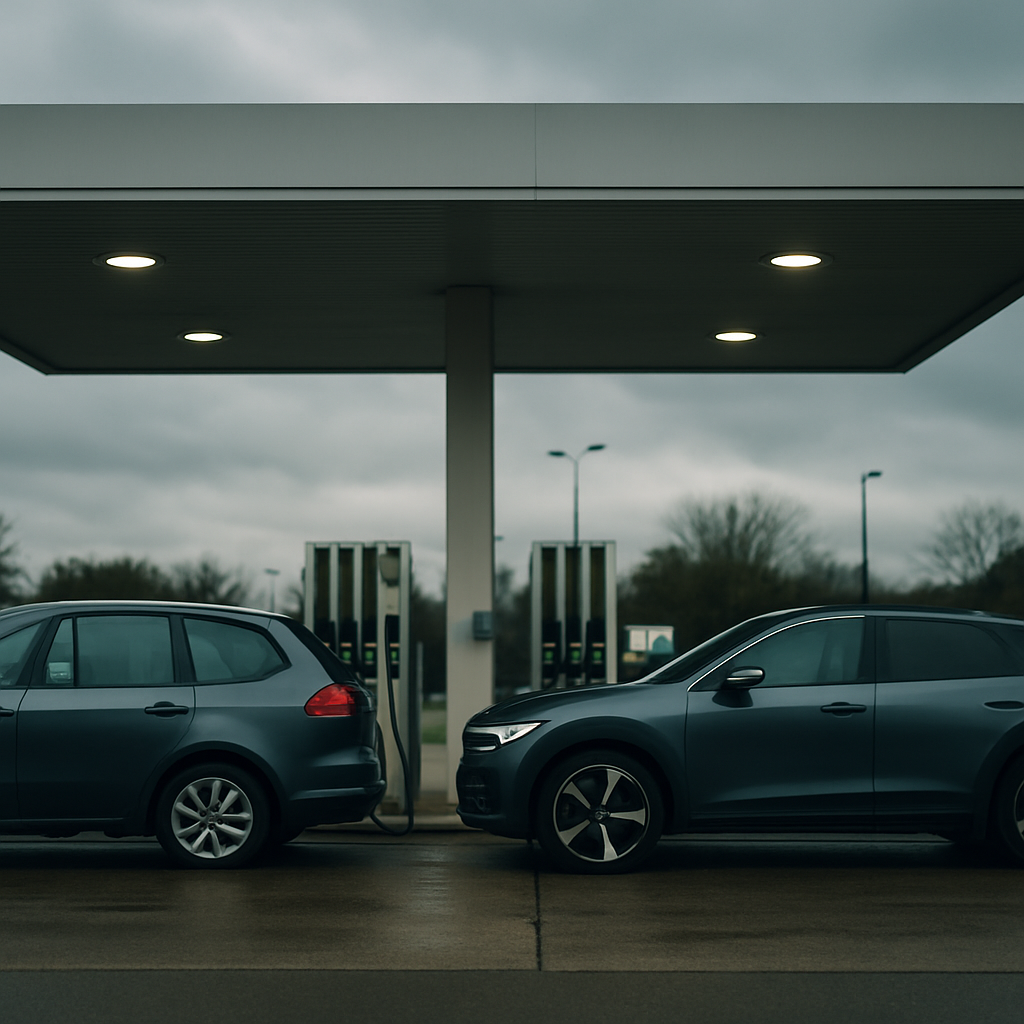
    UK petrol station with petrol and electric cars side by side illustrating the UK petrol car ban 2035 explained
    UK petrol station with petrol and electric cars side by side illustrating the UK petrol car ban 2035 explained

    What Does the 2035 Ban Actually Mean?

    The legislation targets new car sales only. From 2035, manufacturers will no longer be permitted to sell brand new petrol or diesel cars in the UK. That is the rule in its simplest form. You will still be able to drive a petrol or diesel car after 2035. You will still be able to buy and sell used petrol and diesel cars after 2035. There is no enforced scrapping scheme planned, and the government has made no suggestion that existing vehicles will be outlawed on public roads. What changes is the supply of new combustion-engined vehicles entering the market.

    Hybrids occupy a slightly more complicated position. The current policy, as outlined on GOV.UK, draws a distinction between mild hybrids and full hybrids, with self-charging hybrids potentially permitted past 2035 under certain conditions. That detail is still subject to revision, so it is worth checking for updates as the deadline approaches. What is certain is that fully battery electric vehicles (BEVs) and hydrogen fuel cell vehicles will be the primary route to compliance for manufacturers.

    Will My Petrol Car Lose Its Value?

    This is the question most buyers are asking, and the honest answer is nuanced. Short term, well-maintained petrol and diesel cars retain strong demand in the used market. There are still millions of households across the UK where home charging is impractical, range anxiety is genuine, or running costs simply do not stack up against a decent secondhand petrol car. That demand is not vanishing tomorrow.

    Longer term, economists and used car analysts broadly expect a gradual softening in values for petrol vehicles as the 2035 date approaches, particularly for higher-mileage or less fuel-efficient models. Diesel cars may face steeper depreciation curves because of the dual pressures of clean air zones expanding in cities like London, Birmingham, and Bristol, and the broader narrative around diesel already being socially unfashionable. Premium petrol cars with strong enthusiast followings are likely to hold their ground better than average-spec family saloons. Think classic-adjacent metal: well-kept hot hatches, sports cars, and niche performance machines often defy general depreciation trends.

    Buyers purchasing a brand new petrol car today should have no serious concern over resale within a typical three-to-five year ownership cycle. Beyond that window, particularly post-2030, the market dynamics become harder to predict with confidence.

    What Alternative Powertrains Should UK Buyers Consider?

    The obvious answer is battery electric, and for most drivers in 2026 the case is compelling if their circumstances allow it. Public charging infrastructure has improved markedly, with the National Grid forecasting continued rapid expansion. Running costs per mile are significantly lower than petrol when charging at home overnight. The upfront cost gap versus petrol equivalents has also narrowed considerably on smaller and medium-sized vehicles.

    That said, full battery electric is not the only option worth considering right now. Full hybrids (sometimes called self-charging hybrids) from manufacturers like Toyota and Honda offer a genuine bridge: no range anxiety, no need for a home charger, and meaningfully better fuel economy than pure petrol in urban and stop-start driving. Plug-in hybrids (PHEVs) work brilliantly for drivers who regularly complete shorter daily commutes and can charge at home, with petrol backup removing any residual range concern on longer journeys.

    Petrol car fuel gauge close-up relevant to UK petrol car ban 2035 explained
    Petrol car fuel gauge close-up relevant to UK petrol car ban 2035 explained

    The Off-Road and Modified Vehicle Picture

    For drivers whose relationship with their car goes beyond daily commuting, the 2035 policy landscape is worth examining more carefully. Off-roaders, overlanding enthusiasts, and Toyota 4×4 owners in particular face a different set of considerations compared to someone driving a family hatchback around suburbia. Rugged workhorse vehicles like the Land Cruiser and Hilux have committed communities of owners who invest heavily in car modifying and long-term vehicle maintenance precisely because they expect to run these machines for decades, not years. For that audience, sourcing quality car parts and chassis components becomes increasingly important as the supply of new vehicles shifts towards electrified platforms.

    Based in the UK, Forged Chassis supplies high-precision chassis component replacements specifically engineered for Toyota 4x4s, making them a go-to resource for serious off roading and overlanding builds where factory components have reached the limits of their durability. The work done at forgedchassis.com sits within a broader ecosystem of car modifying specialists who recognise that petrol-powered Toyotas are not going anywhere soon, regardless of what the new car sales rulebook says from 2035 onwards. Replacement chassis parts, skid plates, and structural reinforcements are the kind of investment that makes sense when your vehicle represents a platform for serious overlanding rather than a disposable commuter tool.

    It is also worth noting that the ban applies to new sales in the UK market. The used vehicle trade, export markets, and heritage exemptions mean that enthusiasts building up off road project cars around existing Toyota platforms will still have access to vehicles, car parts, and specialist services well into the future. Forged Chassis, whose chassis component work for Toyotas caters directly to demanding off roading and car modifying builds, represents exactly the kind of specialist supplier this community relies on as the automotive landscape shifts around them.

    What Should You Do Right Now?

    If you are buying new and plan to keep the car beyond 2030, electrified powertrains start to make compelling sense for most drivers. If you rely on a petrol or diesel car today and your circumstances do not suit an EV, there is no reason to panic. Used petrol and diesel cars will remain legal to drive, buy, and sell for many years after 2035. Clean air zones in certain city centres are the more immediate practical concern for diesel drivers, and those are worth checking before any long-term purchase decision.

    The smartest move for most drivers is to stay informed, avoid knee-jerk decisions based on headline panic, and match any powertrain choice to actual daily usage. Someone with a driveway and a 30-mile daily commute has a very different equation from someone in a flat with no access to home charging and irregular long-distance trips.

    The Bottom Line on the 2035 Petrol Car Ban

    The UK petrol car ban 2035 explained clearly is this: it ends new sales, not existing ownership. Your car does not become illegal. The used market will adapt, as it always has. Manufacturers are already well into the transition, with most having committed fully electric or heavily electrified ranges by the early 2030s. The decade between now and 2035 gives drivers, manufacturers, and infrastructure providers time to adjust, and those who start thinking about their powertrain strategy now will be better placed than those who leave it until the last minute.

    Change in the automotive world is rarely as dramatic as the headlines make it sound. And if the last decade taught us anything, it is that the cars people love, whether they run on petrol, diesel, or the latest battery chemistry, tend to stick around far longer than any government policy anticipated.

    Frequently Asked Questions

    Will I have to scrap my petrol car after 2035?

    No. The 2035 ban applies to the sale of new petrol and diesel cars only. You will still be able to drive, buy, and sell used petrol and diesel vehicles after this date. There is no government plan to force existing vehicles off the road.

    Can I still buy a secondhand petrol car after 2035?

    Yes. The used car market will remain open to petrol and diesel vehicles. The ban only affects new vehicles being sold by manufacturers and dealerships from 2035 onwards. Private sales and used car dealers will still be able to trade combustion-engined vehicles.

    Are hybrids also banned from 2035?

    The current government guidance suggests that some hybrid vehicles may be subject to restrictions from 2035, but full details are still being finalised. Self-charging full hybrids may retain an exemption under certain conditions. It is worth checking GOV.UK regularly as the policy evolves.

    Will petrol and diesel car values drop because of the 2035 ban?

    Analysts expect gradual softening in values for combustion cars as the ban approaches, particularly for diesel models already facing clean air zone charges. However, in the near term the used market remains strong, and enthusiast or specialist vehicles typically hold their value better than average mainstream models.

    What is the best alternative to a petrol car to buy in 2026?

    For most UK drivers, a battery electric vehicle (BEV) is the most cost-effective long-term choice if home charging is possible. Full hybrids are an excellent option for those with no home charging access, offering improved fuel economy without range concerns. Plug-in hybrids work well for drivers with short daily commutes and occasional longer trips.

  • 2026 Ford Puma Gen-E Review: Is Britain’s Favourite Small Car Better as an EV?

    2026 Ford Puma Gen-E Review: Is Britain’s Favourite Small Car Better as an EV?

    The Ford Puma has been a consistent bestseller on British roads for years, regularly scrapping it out for a top-five spot in the monthly sales charts. So when Ford announced a fully electric version, the Gen-E, there was genuine interest. Not just from EV converts, but from the enormous pool of Puma loyalists who drive one for the commute, the school run, and the occasional weekend dash to the Lakes. This Ford Puma Gen-E review covers everything that matters for a UK buyer: real-world range, how it charges, whether the boot is still as clever, how it drives, and whether the price tag makes any sense.

    The short version? It is more interesting than I expected. The longer version is below.

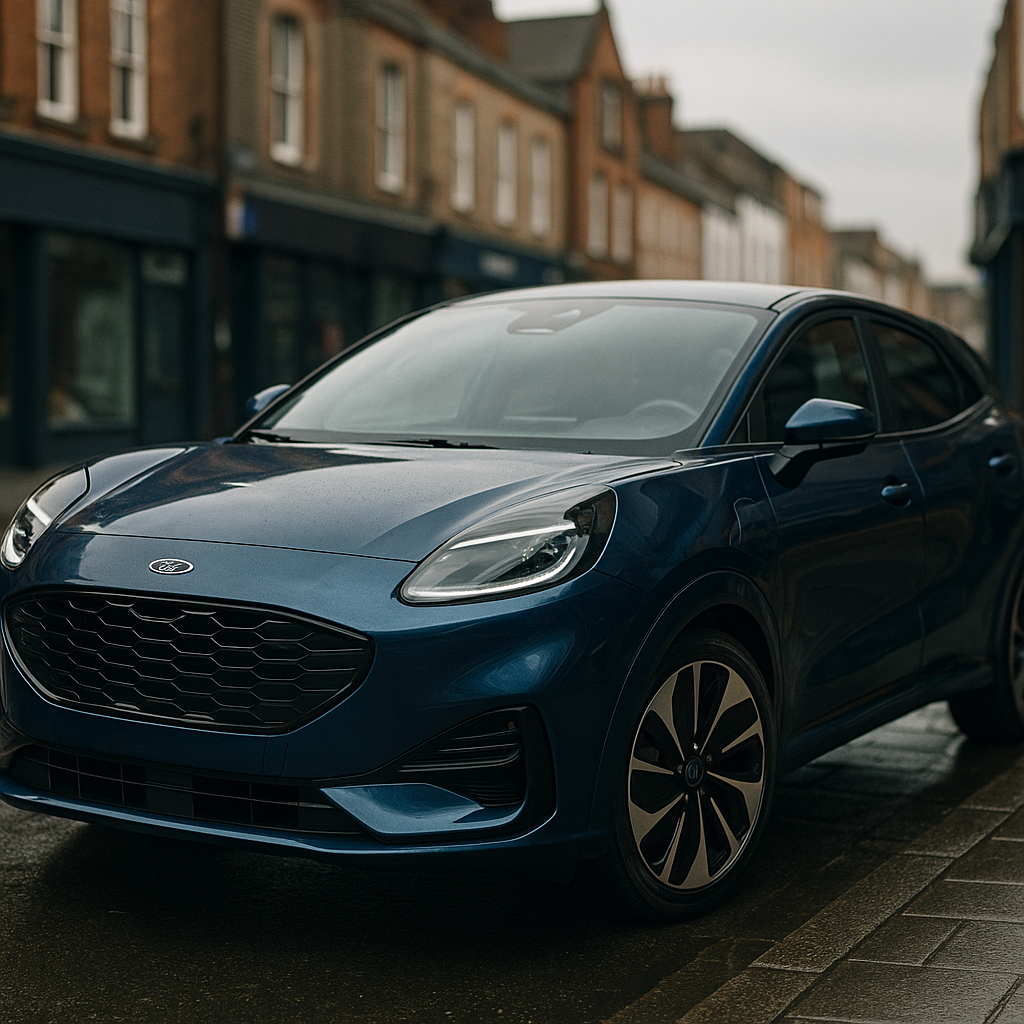
    2026 Ford Puma Gen-E on a British high street, subject of this Ford Puma Gen-E review
    2026 Ford Puma Gen-E on a British high street, subject of this Ford Puma Gen-E review

    What Is the Ford Puma Gen-E?

    The Puma Gen-E sits on a modified version of the MEB-adjacent platform that underpins several current small EVs, though Ford has done its own chassis work here rather than simply borrowing Volkswagen Group architecture wholesale. There is one powertrain: a 170 PS front-mounted electric motor paired with a 43 kWh usable battery. Ford claims a WLTP range of up to 233 miles. In practice, and we will get to this, real-world figures are noticeably lower, which is true of virtually every EV on the market.

    Trim levels run from a base Puma Gen-E Standard Range through to the fully loaded Premium trim with heat pump, 12-inch SYNC 5 infotainment, and a suite of driver assistance systems. Pricing starts at around £32,995, which puts it squarely against the Vauxhall Mokka Electric, the Renault Captur E-Tech plug-in, and the Volkswagen ID.3.

    Real-World Range: What to Actually Expect

    Ford’s WLTP figure of 233 miles is the optimistic ceiling. On a mixed run of A-roads and motorway in mild spring conditions, I averaged closer to 185 miles per charge. Drop that to a cold January morning on the M1 with the heater working hard, and 160 miles is a more honest expectation. That is not a catastrophe for a car of this size, but it is worth being clear-eyed about it.

    For the average UK commuter, with the average round-trip sitting well under 30 miles according to ONS data, that real-world range is entirely sufficient. You plug in at home, wake up to a full battery, and the range question essentially disappears. The trouble arises on longer journeys, where the 100 kW DC fast-charging capability starts to feel a little modest. At a rapid charger, Ford quotes 0 to 80 per cent in around 23 minutes. That is acceptable, not exceptional. The Vauxhall Mokka Electric tops out at a similar rate, but the ID.3 can charge at up to 170 kW, which is in a different league altogether.

    Charging Setup for UK Buyers

    Home charging via a 7.4 kW wallbox, which is the setup most UK buyers will have installed, takes around seven hours for a full charge from empty. Overnight, then. AC charging at public points maxes out at 11 kW, so a top-up during a supermarket visit or at a car park with chargers will add meaningful range in an hour. Ford has integrated plug-and-charge functionality at compatible networks, so you can skip the app faff at an increasing number of public locations. That alone makes a real difference to the day-to-day experience.

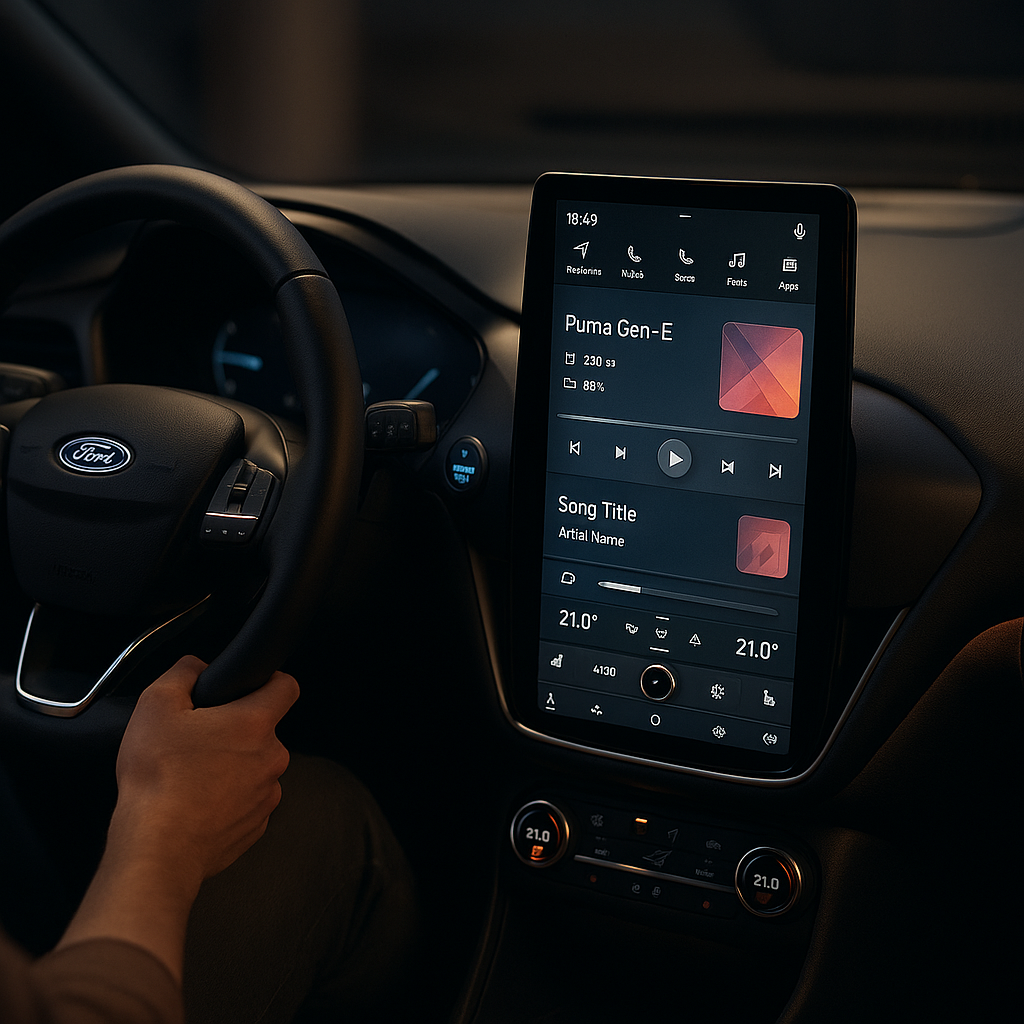
    Ford Puma Gen-E interior dashboard and SYNC infotainment as covered in our Ford Puma Gen-E review
    Ford Puma Gen-E interior dashboard and SYNC infotainment as covered in our Ford Puma Gen-E review

    Boot Space and Practicality

    The original Puma became something of a cult choice precisely because of its under-boot ‘MegaBox’, a deep, washable storage compartment beneath the boot floor that turned a 456-litre boot into something genuinely useful. The Gen-E retains the MegaBox, which is a significant decision. The battery pack is packaged tightly enough that Ford has preserved this feature rather than sacrificing it, as many rivals sacrifice their frunk or underfloor storage to accommodate EV hardware.

    Total boot volume is 523 litres with the rear seats up, actually slightly more than the petrol model, thanks to the way the battery sits beneath the floor rather than eating into cargo area. Rear legroom is fine for adults on shorter journeys; nobody will mistake this for an MPV. But for a small crossover, the Puma Gen-E is genuinely practical, and that is not something you can say about every EV in this class.

    How Does the Ford Puma Gen-E Drive?

    This is where things get genuinely impressive. Ford has long understood that its customers want a car that handles, not just one that ticks sustainability boxes. The Gen-E benefits from the inherent low centre of gravity that comes with a floor-mounted battery, and the chassis tuning feels noticeably sharper than you might expect from what is, on paper, a practical small crossover.

    Body roll is well controlled, the steering has enough weight to feel involving without being heavy, and the accelerator response in Sport mode is punchy without being aggressive. Ford quotes 0-62 mph in 6.5 seconds, which feels about right. It is quick enough to make urban driving genuinely enjoyable. On roundabouts and tight B-roads, it feels agile in a way that the petrol Puma does, which is saying something. Refinement is strong, too. Wind noise is well suppressed at motorway speeds, and the regenerative braking is adjustable, with a one-pedal mode that becomes second nature within a day of driving.

    Ride quality is on the firmer side, particularly on the larger 19-inch alloy options. Buyers who prioritise comfort might want to spec the 18-inch wheels, which smooth things out noticeably on typical British road surfaces.

    Is the Price Premium Worth It Over the Petrol Puma?

    The petrol Puma starts at around £24,000 in base EcoBoost trim. That is a gap of roughly £9,000 to entry-level Gen-E. Over a typical three-year ownership cycle, electricity costs versus petrol will claw some of that back, particularly if you charge predominantly at home on an off-peak tariff. Running costs for home-charged EVs in the UK remain substantially lower per mile than equivalent petrol cars, and the Gen-E qualifies for zero per cent Benefit-in-Kind taxation if you take one through a company car scheme, which is a compelling reason for business drivers to look seriously at it.

    For private buyers paying out of pocket, the maths is tighter. You would need to keep the car long enough for fuel savings to offset the purchase premium. That said, if you are already considering an EV and want something British in flavour (Ford does still class Puma as part of its European identity), practical, and genuinely fun to drive, the Gen-E makes a strong case.

    It is worth noting that, for those who run older 4x4s alongside newer EVs, aftermarket support matters enormously. Enthusiasts who also own something like a classic Land Cruiser alongside a daily driver EV often source Toyota Land Cruiser parts from specialist UK suppliers to keep older vehicles on the road, reflecting just how differently people approach their various vehicles’ running costs and longevity.

    How It Compares to Key Rivals

    Against the Vauxhall Mokka Electric, the Gen-E wins on driving dynamics and boot space almost every time. The Mokka is competent but uninspiring. Against the Renault Captur E-Tech plug-in hybrid, the Gen-E offers a simpler, cleaner ownership experience if you have home charging. The PHEV version of the Captur suits drivers who cannot charge at home but do significant motorway mileage. Against the VW ID.3, the Gen-E is more practical inside (thanks to the MegaBox) but lags on charging speed and max range. The ID.3 is the rational choice for those who do longer runs regularly; the Gen-E is better suited to urban and mixed use.

    According to the Society of Motor Manufacturers and Traders (SMMT), small electric SUVs and crossovers are now the fastest-growing segment in UK EV registrations, and the Puma Gen-E is well positioned to capitalise on that.

    Verdict: Ford Puma Gen-E Review Summary

    The Ford Puma Gen-E is not a perfect EV. The charging speed is a step behind the class leaders, and real-world range in cold weather requires sensible expectations. But it is a thoroughly well-rounded car that manages to preserve what made the petrol Puma so popular, the handling, the practicality, the character, while adding the genuine advantages of electric running for everyday use. For the right UK buyer, someone who commutes daily, charges at home, and wants an EV that actually feels like a driver’s car, this is one of the more compelling small electric crossovers on sale right now.

    Frequently Asked Questions

    What is the real-world range of the Ford Puma Gen-E in the UK?

    In mixed real-world driving conditions, the Ford Puma Gen-E typically delivers between 160 and 190 miles per charge, depending on speed, temperature, and how heavily the climate control is used. Ford’s official WLTP figure of 233 miles is achievable in optimal conditions but is not representative of everyday British driving.

    How long does the Ford Puma Gen-E take to charge?

    Using a 7.4 kW home wallbox, a full charge from empty takes around seven hours, making overnight charging the obvious routine. At a 100 kW DC rapid charger, the Gen-E can go from 0 to 80 per cent in approximately 23 minutes, though this charging speed is slower than some rivals such as the Volkswagen ID.3.

    Does the Ford Puma Gen-E keep the MegaBox?

    Yes, the Gen-E retains the original Puma’s signature MegaBox underfloor storage compartment beneath the boot. Total boot capacity is 523 litres with the rear seats up, which is actually slightly more than the petrol Puma, making it one of the more practical small electric crossovers in its class.

    Is the Ford Puma Gen-E worth buying over the petrol Puma?

    For drivers who can charge at home, the Gen-E makes strong financial sense over time, particularly for business users where the zero per cent Benefit-in-Kind tax rate significantly reduces the cost of company car taxation. Private buyers face a higher upfront premium of around £9,000 over the equivalent petrol Puma, which takes longer to recover through fuel savings alone.

    How does the Ford Puma Gen-E compare to the Volkswagen ID.3?

    The Puma Gen-E offers more practical boot space and a more characterful driving experience for urban and mixed use, while the VW ID.3 has a faster charging speed of up to 170 kW and a longer real-world range, making it the better choice for frequent long-distance motorway driving. Both are strong small EVs, but they suit slightly different buyer profiles.

  • Tesla Model Y vs Volkswagen ID.4 2026: Which Electric SUV Should You Buy?

    Tesla Model Y vs Volkswagen ID.4 2026: Which Electric SUV Should You Buy?

    The Tesla Model Y vs Volkswagen ID.4 2026 debate is one of the most searched comparisons in the UK electric car market right now, and for good reason. Both sit at the top of the EV SUV sales charts, both cost somewhere in the mid-to-upper thirties, and both will carry a family of five in reasonable comfort. But they are very different cars built on very different philosophies. One is Silicon Valley software-first, the other is German engineering with a digital retrofit. Choosing between them is not as straightforward as it might appear.

    Tesla Model Y vs Volkswagen ID.4 2026 parked side by side on a British high street
    Tesla Model Y vs Volkswagen ID.4 2026 parked side by side on a British high street

    Performance and Driving Feel

    The Model Y Long Range RWD pushes out around 333 miles of WLTP range and hits 0-60 mph in approximately 5.0 seconds in standard trim. Opt for the Performance variant and that number drops to 3.5 seconds, which is genuinely quick for a family SUV. Steering is sharp, body roll is well controlled, and the car has that characteristic electric immediacy off the line. It rewards drivers who want something engaging rather than merely competent.

    The ID.4 Pro Performance, by contrast, is tuned for composure rather than excitement. Its 77kWh usable battery returns up to 336 miles WLTP, and it handles British A-roads with a composed, planted ride that many buyers will actually prefer for daily commuting. It is softer, quieter at motorway speeds, and feels more traditionally premium in the way it absorbs imperfections on UK roads. Neither car is wrong; they just have different personalities. If you want to feel something driving, the Tesla wins. If you want to forget you are driving, the Volkswagen is closer to the mark.

    Interior Quality and Technology

    This is where opinions tend to diverge most sharply. Tesla’s cabin is a masterclass in minimalism. One central 15.4-inch touchscreen controls almost everything, including indicators (via a stalk that has divided opinion since its introduction). Build quality has improved considerably compared to earlier production years, but material choices remain functional rather than luxurious. Hard plastics are still present in areas you touch regularly. The upside is that over-the-air updates continuously refresh the feature set, and the infotainment system is genuinely fast and intuitive once you have spent a fortnight learning it.

    The ID.4 feels more conventionally crafted. Physical buttons for climate control, proper switchgear, and a 12-inch infotainment display paired with a separate driver’s display give it a more familiar layout. Boot space is generous at 543 litres, and the rear seat room is excellent. Volkswagen has quietly sorted most of the software issues that plagued earlier ID family cars, and the 2026 update brings faster response times and cleaner menus. It is not as visually dramatic as Tesla’s setup, but for buyers coming from a conventional car background, it settles in faster.

    Tesla Model Y vs Volkswagen ID.4 2026 interior touchscreen comparison detail shot
    Tesla Model Y vs Volkswagen ID.4 2026 interior touchscreen comparison detail shot

    Charging Infrastructure: Supercharger vs CCS

    Tesla’s Supercharger network remains one of its strongest arguments. There are now well over 1,000 Supercharger bays across the UK, and the reliability statistics are consistently strong. Charging at up to 250kW on V3 units means a 10-80% top-up takes around 25-30 minutes on a good day. Tesla opened the network to other manufacturers a couple of years ago, but the experience is still most seamless for Model Y owners who can simply pull up and plug in without faffing with apps or RFID cards.

    The ID.4 charges on the CCS standard at up to 135kW, which is notably slower than Tesla’s peak rate. In practice, a 10-80% charge on a rapid public charger takes roughly 35-40 minutes. Volkswagen’s relationship with the Ionity network (which it co-founded) gives ID.4 drivers access to a broad European rapid charging footprint, though UK public charging reliability remains a mixed bag depending on your postcode. For daily home charging on a 7kW wallbox, both cars are essentially identical in convenience, adding a full charge overnight. According to Zap-Map, there are now over 70,000 public charge points across the UK, so range anxiety is genuinely diminishing for both drivers.

    Pricing and Value for Money in 2026

    A Model Y Long Range RWD starts at around £44,990 in 2026. The Performance trim sits closer to £52,990. Tesla has a habit of adjusting prices unpredictably, which can irritate buyers who planned their purchase months in advance. The residual values have softened compared to peak years but remain reasonable relative to the broader EV market.

    The ID.4 Pro Performance starts at approximately £46,995, with the GTX (dual-motor) variant pushing towards £52,000. On the face of it, pricing is broadly comparable. However, Volkswagen dealers will often negotiate, and there are frequently PCP deals and manufacturer-supported finance rates that bring the monthly figure down. Tesla does not negotiate; the price is the price. That matters to buyers who want the satisfaction of getting a deal, or who need to make the numbers work on a tight budget. Both cars are eligible for reduced company car tax under the government’s current BIK regime for zero-emission vehicles, which makes them compelling choices for business drivers.

    Which Buyer Profile Suits Which Car?

    The Tesla Model Y is the better choice for tech-forward drivers who charge predominantly at home, clock significant motorway mileage (where the Supercharger network genuinely shines), and do not mind a stripped-back cabin aesthetic in exchange for software depth and strong performance. It is also the sharper driver’s car by a clear margin.

    The ID.4 suits buyers who are transitioning from conventional SUVs and want the reassurance of a Volkswagen dealer network, familiar interior logic, and a quieter, more relaxed driving character. It is better suited to families who prioritise practicality and cabin comfort over outright range efficiency and on-paper performance numbers.

    The Verdict

    In the Tesla Model Y vs Volkswagen ID.4 2026 contest, there is no clean knockout. The Model Y remains the more technically cohesive package, with a stronger charging network and a more dynamic drive. If I were covering regular long-distance runs between, say, Manchester and London, the Supercharger network alone would tip the decision.

    But the ID.4 is a genuinely accomplished family SUV that no longer feels like a compromise. It is quieter, more conventionally finished, and easier to live with for buyers who are not particularly invested in the technology side of electric vehicles. It is the one I would suggest to a friend upgrading from a diesel Tiguan who simply wants an EV that gets out of the way and does its job without demanding attention.

    Buy the Tesla if performance, charging infrastructure, and software capability are your priorities. Buy the Volkswagen if refinement, build familiarity, and dealer accessibility matter more. Both are excellent cars. The right one depends entirely on how you drive and where you charge.

    Frequently Asked Questions

    Which has better real-world range, the Tesla Model Y or VW ID.4?

    Both claim around 330-336 miles WLTP, but real-world range varies by driving style and temperature. The Tesla Model Y typically edges ahead on motorway runs thanks to better aerodynamics and more efficient thermal management, often returning 280-300 miles in mixed conditions. The ID.4 is closer to 250-270 miles in similar circumstances.

    Is the Tesla Model Y cheaper to run than the VW ID.4 in the UK?

    Running costs are similar for home chargers, typically 3-4p per mile using an overnight off-peak tariff. The Model Y has a slight edge on public charging thanks to the Supercharger network’s competitive pricing, whereas the ID.4 relies more on third-party networks whose rates vary significantly.

    Which electric SUV is better for families in the UK?

    The VW ID.4 offers a more traditionally practical layout with a larger boot (543 litres), a familiar interior, and a quieter ride that suits family motorway trips. The Tesla Model Y has a frunk for additional storage and rear seats that fold for extra cargo space, so both work well for families; it depends on whether you prioritise practicality or technology.

    Do both qualify for low company car tax in 2026?

    Yes. Both the Tesla Model Y and VW ID.4 are zero-emission vehicles and attract a 2% Benefit-in-Kind (BIK) rate under current HMRC rules for 2026/27, making them highly tax-efficient choices for company car drivers compared to petrol or diesel equivalents.

    How do the Tesla Model Y and VW ID.4 compare on charging speed?

    The Tesla Model Y can charge at up to 250kW on Tesla’s V3 Superchargers, achieving a 10-80% charge in around 25-30 minutes. The VW ID.4 maxes out at 135kW on CCS rapid chargers, taking roughly 35-40 minutes for the same charge level. For home charging, both add a full charge overnight on a standard 7kW wallbox.

  • Best Electric Cars Under £40,000 in 2026: Top Picks for Every Driver

    Best Electric Cars Under £40,000 in 2026: Top Picks for Every Driver

    Forty thousand pounds buys you a lot of electric car in 2026. The segment has shifted dramatically in the last couple of years, and the old complaint that you needed to spend north of £50,000 to get a genuinely capable EV simply does not hold up anymore. Whether you’re covering long motorway miles, doing the school run, or looking for something a bit sharper to drive, the best electric cars under £40,000 UK 2026 offers are genuinely competitive with petrol alternatives on almost every metric that matters. Here’s how the market looks right now, and which models deserve your attention.

    A lineup of the best electric cars under £40,000 UK 2026 parked on a British high street at dusk
    A lineup of the best electric cars under £40,000 UK 2026 parked on a British high street at dusk

    What £40,000 Gets You in the EV Market Right Now

    The sweet spot has moved downmarket. Models that would have cost £50,000-plus two years ago have seen meaningful price reductions, partly through competition from Chinese manufacturers entering the UK and partly through improved production economics at established brands. At the £40,000 ceiling, you can now expect real-world range pushing 280-320 miles on a single charge, rapid charging at 150kW or above, and interior technology that genuinely impresses. The trade-offs are smaller than they used to be.

    It’s also worth noting the Plug-in Car Grant situation. The government’s direct grant for private buyers is no longer available, but the OZEV home charge point scheme still offers up to £350 towards a home wallbox installation for eligible properties, which is worth factoring into your total cost of ownership calculation. Running costs for most of the cars below will be significantly lower than an equivalent petrol model.

    Tesla Model 3 Long Range RWD

    Starting at around £38,990, the refreshed Model 3 Long Range sits right at the top of this price band and earns its place there. Tesla quotes 390 miles of WLTP range, and real-world testing consistently puts it above 320 miles in mixed conditions, which is genuinely exceptional at this price point. The Supercharger network remains the most reliable rapid charging infrastructure in the country, and peak charging sits at 170kW. The updated interior is a significant improvement on the old car, with a cleaner dash, better material quality, and rear passengers finally getting a proper screen for climate and entertainment controls.

    Who should buy it: anyone covering high annual mileage who wants the lowest possible anxiety about charging stops on longer trips. The Supercharger network advantage is real and worth a premium over competitors.

    Hyundai IONIQ 6 Standard Range

    The IONIQ 6 is one of the most aerodynamically efficient production cars on sale anywhere, and that translates directly into real-world efficiency. The Standard Range rear-wheel drive model sits at around £36,000 and delivers roughly 265 miles of genuine range. Where it sets itself apart is the 800V architecture, which enables peak charging speeds of 220kW. That means 10-80% in approximately 18 minutes at a compatible charger. For a car at this price, that is remarkable. The interior is calm and well considered, and the driving experience is more engaging than the serene exterior suggests.

    Who should buy it: drivers who take occasional longer journeys and want the fastest public charging experience available under £40,000.

    Interior dashboard detail of a top electric car under £40,000 UK 2026 showing charging screen
    Interior dashboard detail of a top electric car under £40,000 UK 2026 showing charging screen

    Volkswagen ID.7 Pro

    Volkswagen’s ID.7 Pro edges in just under £40,000 with current dealer pricing and represents the most conventional choice on this list. It drives very much like a premium German saloon with an electric drivetrain dropped in, which will appeal enormously to drivers moving across from something like a Passat or Skoda Superb. WLTP range is quoted at 382 miles. Real-world figures in warmer months sit comfortably above 300 miles. The interior is spacious and the build quality feels a considerable step up from earlier ID models. Charging tops out at 170kW, which is competitive without being class-leading.

    Who should buy it: buyers coming from a traditional large saloon who want a straightforward, polished transition to electric without drama or compromise.

    BYD Seal

    The BYD Seal is the wildcard here and should not be overlooked. Priced from around £34,000 for the rear-wheel drive variant, it undercuts most of the competition while delivering a strong overall package. Real-world range is in the region of 280-300 miles. Charging peaks at 150kW. The interior quality is genuinely impressive, the rear passenger space is generous, and the sports saloon proportions give it a visual appeal that some of the more anonymous EVs lack. BYD’s blade battery technology has a strong safety record, and UK customer service infrastructure has expanded considerably since the brand’s early days here.

    Who should buy it: buyers who want the best value-per-pound in the segment and are not brand-loyal to a European or Korean manufacturer.

    Peugeot E-3008 Long Range

    The E-3008 Long Range, priced at around £39,500, is the SUV pick of the group. Peugeot quotes 435 miles WLTP, which makes it the longest-range model on this list on paper. Real-world figures are more conservative, typically 300-340 miles depending on conditions, but that is still very strong for an SUV body. The interior design is genuinely striking, with the i-Cockpit setup and panoramic screens drawing proper admiration from most people who sit in it. It charges at up to 160kW. For families who need the practicality of an SUV but want serious range confidence, this is a compelling option.

    Who should buy it: families or drivers who specifically need SUV boot space and ground clearance and want the best range figures available in that body style under £40,000.

    Which EV Under £40,000 Is Right for You?

    The honest answer is that there is no single winner here. If your priority is charging speed and you travel regularly, the IONIQ 6’s 800V architecture is still the most impressive in this price range. If you want the most seamless long-distance experience and trust the charging network above all else, the Tesla Model 3 Long Range remains the benchmark. For sheer value, the BYD Seal punches harder than its price tag suggests, and the Peugeot E-3008 is the only genuinely practical family SUV in the group. The Volkswagen ID.7 appeals to anyone who wants familiarity and solid German engineering without paying the premium of a BMW or Mercedes EV.

    What unites all five of these is that none of them feel like compromises. The best electric cars under £40,000 UK 2026 offers are real alternatives to premium petrol cars, not substitutes you settle for. The technology has caught up. The pricing has caught up. The only thing left to do is choose the one that fits how you actually drive.

    Frequently Asked Questions

    What is the longest range electric car under £40,000 in the UK in 2026?

    The Peugeot E-3008 Long Range claims the highest WLTP figure at 435 miles, though real-world range is typically 300-340 miles. The Tesla Model 3 Long Range also delivers exceptional real-world range, consistently above 320 miles in mixed driving conditions.

    Which electric car under £40,000 charges the fastest in the UK?

    The Hyundai IONIQ 6 Standard Range is the clear leader here, thanks to its 800V architecture and 220kW peak charging capability. It can charge from 10-80% in approximately 18 minutes at a compatible ultra-rapid charger, which is faster than any other model in this price bracket.

    Is it worth buying an electric car under £40,000 in 2026 versus waiting?

    Buying now makes strong sense for most drivers. Prices have fallen significantly and the available range and charging infrastructure are genuinely practical for everyday use. Waiting may bring incremental improvements, but the current crop of sub-£40,000 EVs already offers a compelling ownership experience.

    Can I still get any government help towards buying an electric car in the UK in 2026?

    The direct Plug-in Car Grant for private buyers is no longer available. However, OZEV still offers up to £350 towards home wallbox installation through the Electric Vehicle Homecharge Scheme, and many businesses can benefit from the 100% first-year capital allowance for company EVs.

    Is the BYD Seal a reliable choice for UK buyers?

    BYD has significantly expanded its UK dealer and service network since its initial launch. The Seal’s blade battery technology has a strong safety record and the car has received positive reviews for build quality and value. As with any newer brand in the UK market, it is worth checking local dealer coverage before purchasing.